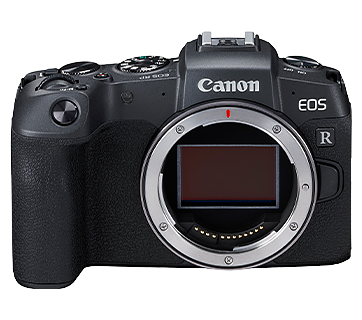
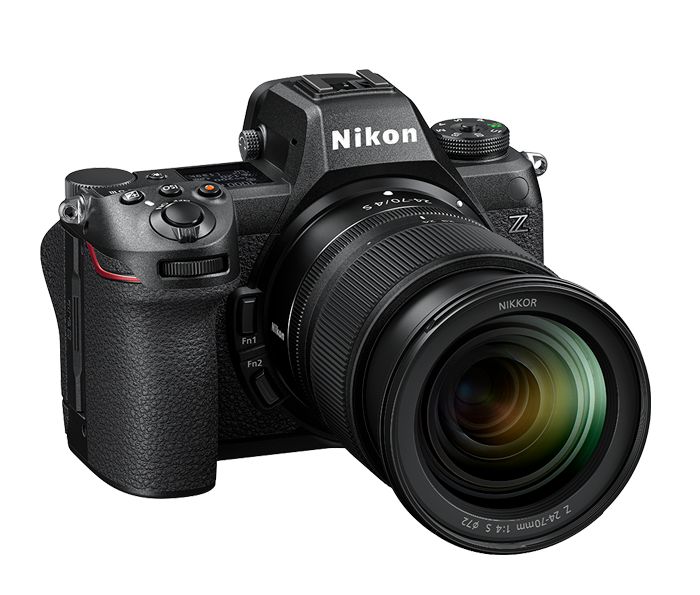
The Canon EOS RP and Nikon Z6III are two full-frame mirrorless cameras that target both enthusiasts and professionals seeking advanced photographic capabilities. While the Canon EOS RP appeals to those looking for a lightweight, budget-friendly option in the Canon RF lens ecosystem, the Nikon Z6III is tailored for users who desire higher specifications and robust features, particularly in demanding shooting environments. The choice between these two models often hinges on criteria such as image quality, autofocus performance, video capabilities, and overall build quality.
Specifications Comparison
Detailed Comparison
Image Quality
The Canon EOS RP features a full-frame sensor with 26 megapixels, providing striking image detail and dynamic range. Its ISO range extends from 100 to 40000, expandable to 50-102400, allowing it to perform well in low-light conditions. Photographers will appreciate the EOS RP's color science, often yielding pleasing skin tones and vibrant landscapes. In contrast, the Nikon Z6III has a slightly lower resolution with 25 megapixels but boasts a more robust ISO range of 100-64000, making it capable of excellent low-light photography. The Z6III's images are characterized by fine detail and a wide dynamic range, appealing to professionals who require the best performance in critical low-light situations. Overall, while both cameras deliver impressive image quality, the Canon EOS RP edges slightly ahead due to its higher resolution and favorable low-light performance, though the practical difference may be negligible for many users. Therefore, when the emphasis is on pure image quality and versatility of use, the winner is the Canon EOS RP.
Autofocus System
The Canon EOS RP is equipped with a highly advanced autofocus system featuring 4779 AF points, making tracking fast-moving subjects easier. This sophisticated AF capability is ideal for portrait and action photography, raising the expectation for sharpness and focus precision. The Nikon Z6III, however, has only 273 autofocus points. While this sounds lower, it is effective due to its strong face and eye detection abilities, which are enhanced by the newer firmware updates. The Z6III's autofocus system shines in continuous shooting, particularly for sports and wildlife. Despite the Canon's higher number of focus points, the real-world performance makes this a competitive race. The accuracy and tracking of both systems are effective, yet Nikon's system tends to excel in scenarios requiring quick adjustments and tracking. Due to the overall performance and reliability, the Nikon Z6III takes the win in autofocus capability.
Video Capabilities
When it comes to video capabilities, the Canon EOS RP is somewhat limited, supporting only 4K at 24p. This restriction may deter serious videographers who seek more diverse options in frame rates and resolutions. In comparison, the Nikon Z6III shines with its robust video features, supporting 4K up to 60p, full HD recording options up to 120p, and advanced features like N-Log and HDR video support. This makes it a much more versatile choice for filmmakers looking for high-quality video output and flexibility. The difference in capabilities is palpable, particularly for videographers who prioritize frame rates and creative options in video capture. Although both cameras include electronic viewfinders and decent screen technology, the Nikon Z6III's superior video specs clearly differentiate its offering. Thus, when assessing which camera provides a more comprehensive video feature set, it's evident that the Nikon Z6III is the clear winner.
Build & Ergonomics
In terms of build quality, the Canon EOS RP is considerably lighter at 485 grams and designed for portability, making it an excellent option for travel and everyday photography. Its dimensions are compact, which can aid in handling and convenience for casual shooters. The Nikon Z6III, on the other hand, weighs 760 grams and provides a more substantial feel in hand, which some users might prefer as it can contribute to better stability when shooting. Additionally, the Z6III is weather-sealed, providing added durability against the elements, a significant factor for outdoor photography. The Canon EOS RP is more user-friendly for those new to photography or those preferring a lightweight system, while the Nikon Z6III is designed with a more professional user in mind, who needs robust performance and additional durability. Given these characteristics, for users prioritizing professional-grade sturdiness and ergonomics, the Nikon Z6III wins this round.
Battery & Storage
The battery life of the Canon EOS RP is rated around 250 shots, which can be limiting for heavy use, especially in professional settings where extended shooting periods are needed. It relies on the LP-E17 battery, which may require frequent recharges or spares during extensive sessions. In contrast, the Nikon Z6III offers a significantly improved battery life with approximately 380 shots on a single charge using the EN-EL15c battery. This allows for longer shooting sessions without the constant need for recharging, making it more suitable for event, portrait, or wildlife photographers who require reliability during extended shoots. Moreover, both cameras support UHS-II compatible SD card slots, but the Z6III's efficiency and longevity during continuous use gives it an edge. Therefore, users who prioritize extended battery life for demanding shoots will find the Nikon Z6III is clearly superior.
Value for Money
With a current price point of $1299, the Canon EOS RP represents a strong value for entry into full-frame photography. It delivers excellent image quality and a robust set of features suited for both beginners and enthusiasts. Conversely, the Nikon Z6III at $2500 presents a more expensive option, but this price tag reflects its higher-end features meant for professional photographers. The added cost justifies itself through enhanced build quality, superior video capabilities, and improved autofocus. While both cameras provide good value propositions, the distinguished features and reliability of the Z6III may appeal more to professionals who require the best tools for serious work, whereas the Canon EOS RP may be exciting for those beginning their full-frame journey. Ultimately, for entry-level buyers looking for a full-frame experience on a budget, the Canon EOS RP offers greater value for money.
Our Verdict
While the Canon EOS RP has commendable strengths in image quality and value for beginners, the overall advantages of the Nikon Z6III in autofocus performance, video capabilities, build quality, and battery life lead it to be the better all-round choice for serious users. The Z6III is ideal for professionals who need reliability in a range of shooting conditions, while the EOS RP remains an excellent choice for enthusiasts aiming for a lightweight and affordable entry into full-frame photography.