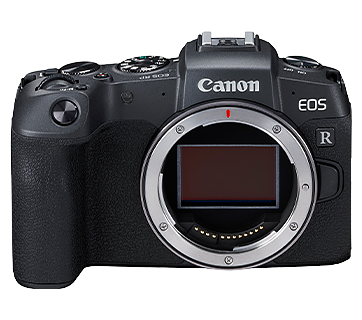
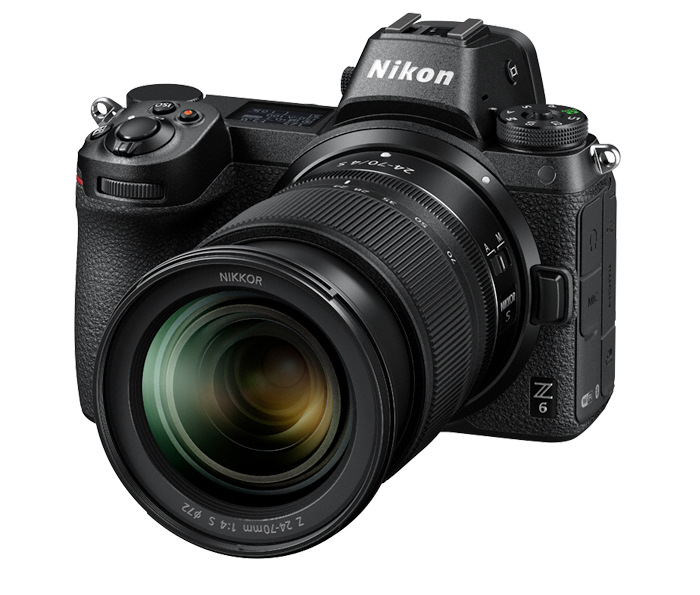
The Canon EOS RP and the Nikon Z6 are two highly regarded full-frame mirrorless cameras that cater to different segments of the imaging market. They are often compared because both offer compelling features for photographers ranging from enthusiasts to professionals. Buyers may be choosing between these models based on factors like image quality, autofocus performance, video capabilities, and overall value. While the Canon EOS RP appeals to those looking for a lightweight, user-friendly entry into full-frame photography, the Nikon Z6 is positioned as a robust, versatile camera with superior performance tailored for both stills and video work.
Specifications Comparison
Detailed Comparison
Image Quality
Both cameras utilize full-frame sensors, with the Canon EOS RP featuring a 26-megapixel sensor and the Nikon Z6 slightly trailing with 25 megapixels. However, when it comes to ISO performance, the Nikon Z6 has a wider native range, from 100 to 51200, expandable to 204800, compared to the EOS RP's ISO range of 100 to 40000, expandable to 102400. This gives the Z6 an edge in low-light conditions. In terms of dynamic range and color rendering, both cameras perform admirably, but the Z6 is often noted for richer colors and better high ISO performance. Thus, for photographers prioritizing overall image quality, especially in challenging lighting, the Z6 stands out.
Moreover, the EOS RP produces images that are vibrant with Canon's characteristic color science, appealing particularly to those who enjoy straight-out-of-camera JPGs. Ultimately, while both cameras offer excellent image quality, the Nikon's slight edge in low-light capabilities and better dynamic range gives it the upper hand.
Autofocus System
The Canon EOS RP boasts an impressive autofocus system with 4779 autofocus points, which is significantly higher than the 273 points of the Nikon Z6. This allows for greater precision and tracking capabilities in various shooting situations. However, the Nikon Z6 employs a hybrid autofocus system that combines both phase detection and contrast detection, providing faster and more reliable autofocus performance, particularly in low light.
In practice, while the EOS RP's expansive point count appears advantageous, users have reported mixed experiences with its tracking accuracy in dynamic scenes. Conversely, the Z6 has shown superior subject tracking capabilities, making it a better choice for action and wildlife photographers. Consequently, when comparing autofocus performance, the Z6's robust system that offers reliable performance in various lighting conditions gives it the advantage.
Video Capabilities
The video capabilities of the two cameras illustrate a stark difference. The Canon EOS RP can shoot 4K video at 24 frames per second, while the Nikon Z6 offers 4K video at 30 frames per second along with greater options for video codecs and pro-grade outputs. The Z6 also includes 5 stops of in-body stabilization, which is a significant feature for videographers seeking smooth footage. In contrast, the EOS RP lacks in-body stabilization, relying solely on stabilized lenses.
Furthermore, the Z6 provides higher-quality HDMI output, broader color profiles, and features such as 10-bit output over HDMI, which can be crucial for serious video producers. Given these enhanced features, the Nikon Z6 is particularly suited for those pursuing high-quality video performance, making it the clear choice for videographers and hybrid shooters.
Build & Ergonomics
While both cameras are made from durable materials, the Nikon Z6 has an edge in build quality due to its weather-sealing, making it more appropriate for outdoor use in various environments. The EOS RP, while lightweight at 485 grams, lacks weather resistance, which could be a concern for photographers who frequently shoot in challenging conditions. The ergonomics of both cameras are generally well-reviewed, with the Z6's slightly larger grip providing better handling, especially with larger lenses.
Furthermore, the Z6's LCD screen is larger at 3.2 inches and has a higher resolution of 2,100,000 dots compared to the 3-inch, 1,040,000 dots of the EOS RP. This feature can enhance the shooting experience, providing clearer visibility for composition. Consequently, for photographers concerned about durability and ergonomics, the Nikon Z6 takes the lead in this aspect.
Battery & Storage
When it comes to battery life, the Nikon Z6 has a longer lifespan, offering approximately 310 shots per charge compared to the Canon EOS RP's 250 shots. This difference could be pivotal for those anticipating long shooting sessions without frequent recharging. Both cameras use compact flash memory cards, with the EOS RP utilizing the Canon RF mount and the Z6 incorporating the Nikon Z mount, allowing for a good selection of native lenses. While the EOS RP is designed for portability and ease, the Z6's increased battery life provides an advantage for serious users, especially in demanding environments where charging options may be limited. Hence, for users prioritizing battery life in demanding scenarios, the Z6 is the better choice.
Value for Money
The Canon EOS RP is priced at $1299, making it significantly more affordable compared to the Nikon Z6, which retails for $1995. This pricing places the EOS RP in a more accessible zone for hobbyists or those just starting in full-frame photography who seek a capable camera without breaking the bank. Despite the lower price point, users still enjoy solid performance and image quality, ensuring good value for the money.
On the other hand, the Nikon Z6, while more expensive, delivers advanced features that justify its cost, making it an appealing option for professionals who demand quality, particularly in autofocus and video capabilities. In terms of value, the EOS RP presents an excellent entry point for beginners, while the Z6 offers better performance for serious photographers willing to invest more.
Our Verdict
Overall, the Nikon Z6 emerges as the more versatile and capable camera, particularly excelling in autofocus performance, video capabilities, and build quality. Photographers focused on professional results and advanced features will find the Z6 justifies its higher price. Conversely, the Canon EOS RP is an excellent choice for those seeking a lightweight and cost-effective entry into full-frame photography, making it suitable for beginners and casual shooters. Ultimately, the decision boils down to budget and specific needs; those prioritizing advanced functionality should lean towards the Z6, while those looking for value will appreciate the EOS RP.
Canon EOS RP
Nikon Z6
Also Compare
Frequently Asked Questions
Which camera is better for low-light photography?
The Nikon Z6 is better for low-light photography due to its higher ISO range and superior low-light performance.
Are both cameras suitable for video recording?
While both cameras can record video, the Nikon Z6 offers more video capabilities including 4K at 30p, in-body stabilization, and advanced video features.
Which camera has a better autofocus system?
The Nikon Z6 has a better autofocus system due to its advanced tracking features and faster performance compared to the Canon EOS RP.
Is the Canon EOS RP good for beginners?
Yes, the Canon EOS RP is an excellent choice for beginners due to its user-friendly interface and lower price point.
How do both cameras compare in terms of weight and portability?
The Canon EOS RP is lighter and more compact compared to the Nikon Z6, making it easier to carry for extended shooting sessions.