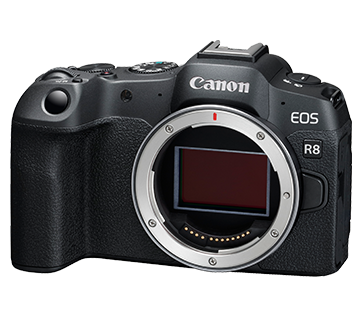

The Canon EOS R8 and Sony ZV-E1 are two compelling choices for photographers and videographers looking for high-quality full-frame mirrorless cameras. Both are released in 2023 and cater to different segments within the market. The Canon EOS R8 is geared more towards overall photography with a solid feature set that appeals to a wide range of users, while the Sony ZV-E1 is designed specifically for content creators and vloggers, offering features and advantages that prioritize video performance. Buyers may find themselves comparing these two models as they seek to identify which strengths align best with their shooting style and needs.
Specifications Comparison
Detailed Comparison
Image Quality
The Canon EOS R8 features a 24-megapixel full-frame sensor, which is effective for capturing rich details and vibrant colors across a wide range of shooting conditions. With an ISO range extending from 100 to 102400, it performs well in low light. In contrast, the Sony ZV-E1 has a lower resolution 12-megapixel sensor but compensates for this with expanded ISO performance that ranges from 80 up to 102400, extending to 40-409600 using Auto settings. While this expansion is beneficial, the lower resolution may be limiting for those who wish to print large images.
Autofocus System
The Canon EOS R8 boasts an impressive autofocus system with 1053 points, providing extensive coverage and reliability in capturing fast-moving subjects. This is particularly advantageous for photographers capturing action or wildlife. On the other hand, the Sony ZV-E1 features a slightly fewer 759 autofocus points, although it uses a highly regarded Real-Time Eye Autofocus system that excels in tracking both humans and animals. While both cameras offer commendable autofocus capabilities, the sheer number of points in the R8 gives it an edge in varied photographing scenarios.
Video Capabilities
Both cameras are capable of recording 4K video at up to 60p, which is a highlight for users focused on high-quality video. However, the Sony ZV-E1 has the added advantage of in-body image stabilization rated at 5 stops, which significantly aids in achieving smooth video capture, especially for handheld shooting. The Canon EOS R8, in contrast, does not offer stabilization, which could be a dealbreaker for content creators prioritizing video work. Ultimately, for video-focused shooters, the Sony ZV-E1's stabilization serves as a compelling feature.
Build & Ergonomics
Both cameras are weather-sealed, adding to their durability for outdoor shooting. The Canon EOS R8, with dimensions of 133 x 86 x 70 mm and a weight of 461 grams, offers a more traditional DSLR-like feel, which may be more comfortable for extended photography sessions. In contrast, the Sony ZV-E1 is slightly lighter at 483 grams and more compact in size at 121 x 72 x 54 mm, which can be appealing for vloggers and creators seeking portability. Each design has its merits, but those accustomed to heavier, sizeable cameras may favor the R8.
Battery & Storage
The battery life on the Canon EOS R8 is competitive, but the Sony ZV-E1 takes the lead with a substantial battery life rated for approximately 570 shots. This is significantly advantageous for long shooting days, particularly in video work where battery drain can be substantial. Additionally, both cameras support UHS-II SD cards for fast storage, allowing users to manage large files without lag. The longevity of the Sony ZV-E1's battery gives it a dependable edge for users focused on extensive shooting sessions.
Value for Money
With a price point of $1499, the Canon EOS R8 presents solid value for those who want a full-frame camera that performs efficiently in both photography and quality video. The Sony ZV-E1, priced at $2200, includes features that may justify its higher cost for videographers, such as in-body stabilization and superior autofocus for moving subjects. To gauge true value, a potential buyer must assess their primary use case: if photography is their focus, the R8 provides better bang for the buck. Conversely, for content creators prioritizing premium video quality, the ZV-E1 might be seen as a worthwhile investment.
Our Verdict
Overall, the Canon EOS R8 emerges as the winner for a diverse range of photographers seeking a balance of image quality, autofocus performance, and value. Its superior resolution and number of autofocus points make it a solid choice for still photography. That said, the Sony ZV-E1 excels in video-focused features such as image stabilization, which makes it the ideal choice for dedicated content creators who thrive in video production environments. Buyers should ultimately consider their shooting preferences and needs to determine the right fit between these two impressive full-frame cameras.
Canon EOS R8
Sony ZV-E1
Also Compare
Frequently Asked Questions
Which camera is better for low light photography?
The Canon EOS R8 has a higher resolution sensor which, combined with its wider ISO range, generally performs better in low light conditions compared to the lower resolution Sony ZV-E1.
Is the Sony ZV-E1 worth the extra cost?
If you're primarily focused on video creation, the features like in-body stabilization and advanced autofocus tracking make the Sony ZV-E1 a worthwhile investment. For still photography, the Canon EOS R8 is a more cost-efficient choice.
How important is in-body stabilization?
In-body stabilization is critical for videographers and those capturing handheld shots, as it greatly enhances smoothness in footage. For photographers, it may be less essential depending on the shooting style.
What type of user should choose the Canon EOS R8?
The Canon EOS R8 is ideal for traditional photographers and general users who want versatile performance for both photography and videography at a reasonable price point.
Can both cameras use interchangeable lenses?
Yes, both cameras support interchangeable lenses; the Canon EOS R8 uses Canon RF mounts, while the Sony ZV-E1 is compatible with Sony E-mount lenses.