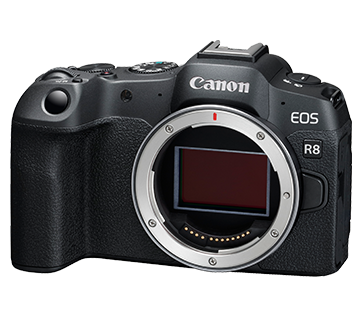
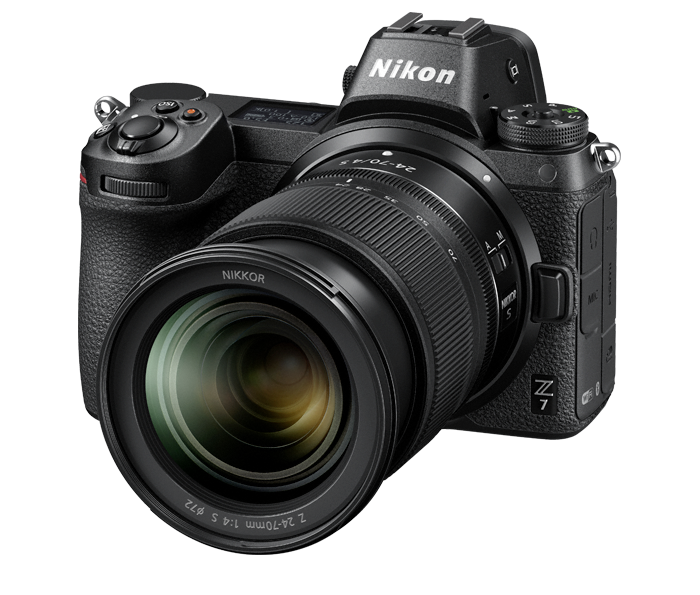
The Canon EOS R8 and Nikon Z7 are two prominent models in the mirrorless camera market, often compared by photographers looking for a blend of performance, features, and price. While both are aimed at enthusiasts and professionals, they stand out due to their distinct specifications and capabilities. Buyers may be choosing between these two cameras based on their specific needs such as image quality, autofocus performance, video recording capabilities, and overall build quality. The key differentiators lie in their sensor design, megapixel count, video performance, and stabilization features, which can significantly influence the user experience for different types of photography and videography.
Specifications Comparison
Detailed Comparison
Image Quality
The image quality between the Canon EOS R8 and Nikon Z7 reflects their sensor specifications. The Nikon Z7 boasts a higher resolution with its 46-megapixel sensor, providing enhanced detail and allowing for larger prints. This advantage is particularly notable in landscapes and portraiture where clarity is paramount. In contrast, the Canon EOS R8's 24-megapixel sensor may suffice for general photography and allows for faster processing, making it advantageous for action shots.
ISO performance is another factor to consider. The Canon EOS R8 supports an ISO range of 100-102400, which may give it an edge in low-light scenarios by extending its sensitivity. On the other hand, the Nikon Z7, while having a lower base ISO of 64, expands to match the R8's ISO ceiling. This means while the R8 is optimized for low-light performance, the Z7 compensates with its higher details, making it versatile for various shooting conditions.
Ultimately, for those prioritizing resolution and detail, the Nikon Z7 is likely the preferred choice, whereas the Canon EOS R8 could appeal to users needing adequate image quality in varied situations without the need for extreme resolutions.
Autofocus System
Autofocus capabilities are vital for capturing fast-moving subjects, and both the Canon EOS R8 and Nikon Z7 offer robust systems. The R8 features an impressive 1053 autofocus points that provide expansive coverage and focus accuracy. This high number allows for continuous tracking in dynamic conditions. Canon's Dual Pixel technology enhances performance, especially in video and low-light situations.
Conversely, the Nikon Z7 also includes an advanced autofocus system with 493 points, which although fewer, still represents a capable system for precision focusing in both stills and video. The Z7's autofocus system is especially praised for its reliability in tracking subjects, creating a strong performance during action photography.
While both cameras perform well, the Canon EOS R8's superior autofocus point count gives it a distinct advantage in versatility and responsiveness in a wider array of scenarios. Therefore, for those who primarily capture sports or wildlife, the R8 would be the go-to option for its enhanced tracking capabilities.
Video Capabilities
When comparing video capabilities, the Canon EOS R8 excels with its ability to record 4K at 60 frames per second, making it suitable for high-frame-rate video projects and vlogs that require smooth motion. The R8 does not offer in-body stabilization, which may be a drawback for handheld shooting but compensates with its high frame rate for cinematic effects.
The Nikon Z7, however, is limited to 4K at 30 frames per second. Although it incorporates 5 stops of in-body image stabilization, providing significant assistance in stabilizing video footage, the lower frame rate can restrict creative video opportunities compared to the R8's capabilities.
In summary, for videographers seeking higher frame rates for action or dynamic content, the Canon EOS R8 is the preferred choice. However, if stability is a primary concern, the Z7's built-in stabilization might appeal more to those who prioritize smooth video capture.
Build & Ergonomics
Both the Canon EOS R8 and Nikon Z7 are designed with durable construction, including weather-sealing to handle various environmental conditions. The R8 is lighter at 461 grams, which can be advantageous for those who prioritize portability during long shoots. The compact dimensions also make it a convenient option for travel.
However, the Nikon Z7, weighing 675 grams, features a more robust build and a slightly larger grip, which may provide a better handling experience for users who prefer a heftier camera. The larger 3.2-inch LCD with 2,100,000 dots resolution on the Z7 offers better visibility in bright conditions, while the Canon R8's 3-inch display is still sharp but slightly less detailed.
In terms of ergonomics, the sturdiness and control layout of the Nikon Z7 can enhance the shooting experience for some users. Thus, while the R8 has advantages in weight and size, the Z7 offers a more premium feel and handling experience for extended use.
Battery & Storage
Regarding battery life, the Nikon Z7 is rated for approximately 330 shots, which is decent but not exceptional for a mirrorless camera. In contrast, the Canon EOS R8 does not provide a specific battery life rating but may experience shorter life due to its higher video frame rates and processor demands when shooting at maximum settings.
Storage options also differ. Both cameras utilize SD memory formats; however, Z7 features dual card slots, which provides redundancy and flexibility for extended shooting sessions. The R8, with a single card slot, could pose limitations for heavy shooters, especially in terms of backup options during important events.
Considering these factors, while the Z7 offers a more extensive battery life and improved storage flexibility, the R8 is yet to be thoroughly evaluated in real-world scenarios, affecting the immediate conclusion on whether it's an advantage or point of concern.
Value for Money
The pricing of the Canon EOS R8 at $1499 places it in a more accessible range, making it an appealing option for enthusiasts and those looking to step up from entry-level models. Given its features, including excellent autofocus, solid image quality, and superior video capabilities, it presents a strong value proposition.
Conversely, the Nikon Z7's price of $3399 positions it more as a premium offering. While it commands a higher price, it does provide impressive image quality due to its higher resolution sensor, robust build, and additional features advantageous for specific types of photography, such as landscapes and studio work.
Ultimately, for those who prioritize high image quality and are willing to invest more for slightly better performance in stationary and high-resolution contexts, the Z7 serves as a worthwhile investment. In contrast, users seeking a capable yet affordable option will find the R8 represents excellent value for money.
Our Verdict
In the overall comparison, the Nikon Z7 emerges as the winner primarily due to its image quality and build stability, making it ideal for resolution-focused photography and high-end use. However, for a versatile option with excellent video capabilities and a more budget-friendly price, the Canon EOS R8 stands out. Therefore, photographers should choose based on their needs: the R8 for an excellent entry into full-frame videography with great autofocus, or the Z7 for professional-grade photography with high detail.