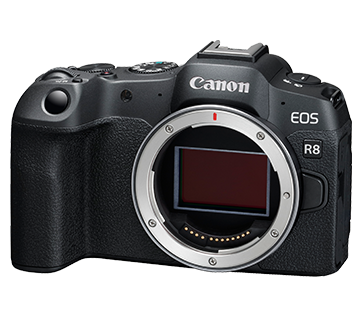
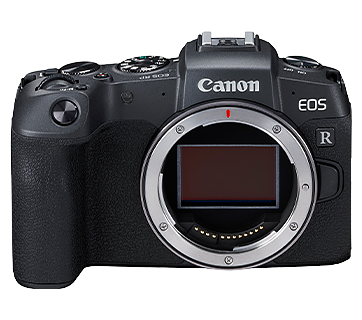
The Canon EOS R8 and Canon EOS RP are two full-frame mirrorless cameras from Canon that cater to enthusiasts and emerging professionals alike. These models are frequently compared due to their similar pricing and capabilities, making them appealing options for users looking to transition from crop sensor cameras or for those entering the full-frame market. While they share some fundamental design traits and features such as the RF mount and electronic viewfinders, their specifications showcase essential differences that can significantly impact usability and performance in real-world scenarios.
Specifications Comparison
Detailed Comparison
Image Quality
Both the Canon EOS R8 and EOS RP boast full-frame sensors, with the R8 featuring a 24MP sensor compared to the RP's 26MP. Although the RP technically offers a higher megapixel count, the R8's more extensive ISO range (100-102400 vs 100-40000, extendable to 102400) provides it with superior low-light performance capabilities. This makes the R8 a better choice for users who often shoot in challenging lighting environments. Additionally, the R8's newer sensor technology promises improved dynamic range and color reproduction, which could appeal to photographers focused on image fidelity and post-processing flexibility.
Autofocus System
The EOS RP has a more advanced autofocus system with 4779 autofocus points compared to the R8's 1053 points. This extensive coverage increases accuracy and allows for better tracking of moving subjects. However, the R8 benefits from newer autofocus algorithms, which can lead to improved performance in various shooting conditions despite having fewer points. Moreover, the R8 is better suited for video and still photography due to its more comprehensive subject detection capabilities, including animal and human recognition features. For photographers who prioritize advanced autofocus tracking, the RP may seem theoretically superior, but in practical tests, the R8 delivers competitive performance.
Video Capabilities
When it comes to video specifications, the EOS R8 surges ahead with its ability to record 4K at 60 frames per second, whereas the RP is limited to 4K at 24 frames per second, which can restrict creative options in fast-action scenarios. Although both cameras lack in-body stabilization, the higher frame rates available in the R8 make it a more attractive choice for videographers seeking higher-quality footage with smoother motion. If video functionality is a significant consideration, the R8's enhanced capabilities make a compelling case for its selection over the RP.
Build & Ergonomics
The build quality of both cameras is solid, with the R8 featuring weather sealing, offering longevity and durability in harsher conditions, a major advantage for outdoor photographers. The size and weight differences are minimal, with the R8 being slightly lighter at 461 grams compared to the RP's 485 grams; however, the ergonomic layout and feel can be subjective. Both designs allow for comfortable handling, but the advancements in the R8 may make it more appealing for extended shooting sessions. Thus, photographers concerned with durability may prefer the R8, while those who prioritize feel and established handling might still appreciate the RP's design.
Battery & Storage
The Canon EOS RP boasts a slight edge in battery life, rated for around 250 shots compared to the R8's unspecified rate. However, the R8 uses a similar LP-E6NH battery, which means users might opt for the battery grip to enhance performance and extend usage times. Both models support UHS-II SD cards, but the R8's continuous shooting speed (6 fps vs 5 fps in the RP) allows quicker buffer clearing in some scenarios. The faster performance complements the video specifications and image burst rates, making it slightly more reliable for fast-paced photography needs.
Value for Money
In terms of pricing, the Canon EOS RP is positioned lower at $1299 compared to the EOS R8's $1499. This makes the RP a more accessible entry point into full-frame photography, particularly for beginners who may not require the advanced features offered by the R8. However, the extra investment in the R8 correlates with superior features that benefit more serious photographers and videographers. Therefore, while the RP may represent better immediate value for budget-conscious users, the R8 appeals to those willing to pay more for advanced capabilities and greater future-proofing.
Our Verdict
Ultimately, the Canon EOS R8 takes the win due to its superior image quality, enhanced video capabilities, and robust build that includes weather sealing. While the R8 costs more, its advanced features justify the price for those who seek to maximize their photographic and videographic experiences. The Canon EOS RP, however, remains a strong contender for budget-conscious buyers or beginners who do not require the latest technologies but want a good entry into the full-frame realm.