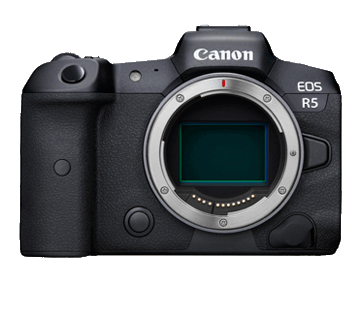

The Canon EOS R5 and Sony A9 II are two flagship mirrorless cameras that have garnered significant attention from professional photographers and enthusiasts alike. Both cameras are excellent choices for sports, wildlife, and event photography, due to their high-speed performance, advanced autofocus systems, and robust builds. However, they cater to slightly different user preferences and needs, making them frequently compared against each other in the crowded mirrorless camera market. Key differentiators include resolution, autofocus capability, video specifications, and battery life, which often influence the purchasing decisions of aspiring professionals and seasoned shooters.
Specifications Comparison
Detailed Comparison
Image Quality
In terms of image quality, the Canon EOS R5 has a significant advantage with its 45 megapixel sensor compared to the 24 megapixel sensor of the Sony A9 II. The higher megapixel count allows for greater detail and larger prints, making the R5 ideal for landscape, portrait, and commercial photography where image fidelity is essential. Additionally, the R5 has an ISO range of 100-51200, expandable to 102400, providing versatility in low-light situations. On the other hand, the A9 II, while having a lower resolution, boasts an ISO range that can be extended to an impressive 204800, which may appeal to photographers who prioritize low-light performance over resolution. Both cameras produce exceptional image quality but the R5's larger pixel count generally tips the scale in its favor when it comes to resolution-driven tasks.
Autofocus System
The autofocus systems of both cameras are highly capable, with Canon's R5 featuring 1,053 autofocus points versus Sony's 693 points. The R5 utilizes Dual Pixel CMOS AF technology which provides rapid and accurate focusing, particularly in challenging conditions. This is beneficial for capturing fast-moving subjects such as in sports or wildlife photography. Conversely, the A9 II employs Sony's advanced Fast Hybrid AF system, which is renowned for its speed and reliability. It supports Eye-AF for both humans and animals, providing precise tracking in dynamic environments. While both systems excel, the sheer number of focus points in the R5 offers an edge in versatility. However, the A9 II's tracking capabilities may give it a slight advantage during action photography due to its refined performance.
Video Capabilities
When it comes to video features, the Canon EOS R5 stands out with its capability to record 4K video at up to 120 frames per second, ideal for producing smooth slow-motion footage. This makes it suitable for filmmakers looking to create high-quality video content. In contrast, the Sony A9 II supports 4K video at 30 frames per second, which, while decent, doesn't match the R5 in terms of flexibility and cinematic quality. The R5 also features advanced video codecs and offers 10-bit 4:2:2 internal recording. Furthermore, its full sensor readout minimizes rolling shutter effects, crucial for action-packed scenes, making it a more appealing option for videographers. Overall, the R5 leads in video capabilities, appealing more to those who are serious about video production.
Build & Ergonomics
Both the Canon EOS R5 and Sony A9 II offer robust, weather-sealed bodies that are designed to withstand challenging conditions. The R5 is slightly larger and heavier, weighing 738g compared to the A9 II's 678g, which may impact comfort during extended shooting sessions. The R5 also features a larger 3.2-inch, 2,100,000-dot touchscreen, providing a better interactive experience for navigating settings and reviewing images. In contrast, the A9 II has a 3-inch, 1,440,000-dot screen that, while functional, may lack the clarity and responsiveness that some users prefer. The button layout and ergonomic design are generally well-received on both cameras, allowing for efficient handling. However, if screen size and responsiveness are crucial, the R5 may be more appealing.
Battery & Storage
Battery life is another important consideration for photographers. The Canon EOS R5 holds a battery life of approximately 320 shots per charge, which is relatively modest despite the power demands of its higher resolution and advanced features. Conversely, the Sony A9 II offers a substantially longer battery life, rated at around 690 shots per charge, making it a more reliable choice for extended shooting sessions without frequent recharges. Both cameras utilize different proprietary battery types, with the R5 using the LP-E6NH and the A9 II using the NP-FZ100, both of which are proven to be effective. In terms of storage, both cameras offer dual card slots, accommodating CFexpress and SD cards for the R5 and dual SD cards for the A9 II. However, the A9 II's battery life wins this category hands down.
Value for Money
In terms of pricing, the Canon EOS R5 retails at approximately $3,899, while the Sony A9 II is priced at around $4,500. The R5 offers exceptional value given its high resolution, superior video capabilities, and advanced autofocus performance. For those businesses or individuals focused more on high-end still photography and video work, the R5's price may justify its advanced features. Meanwhile, the A9 II, being designed specifically for professional sports and action photographers, could be seen as a worthwhile investment for those who rely heavily on speed and performance. However, its higher price compared to the R5 might make it less accessible for casual users. Overall, while both cameras deliver exceptional performance, the R5 offers a more extensive feature set at a somewhat lower price, making it an easier recommendation for a wider range of photographers.
Lens Ecosystem
Both Canon and Sony boast impressive lens ecosystems, although their offerings cater to different needs. Canon's RF mount lenses provide a growing selection of high-quality optics that complement the R5's capabilities, including several fast primes and zooms ideal for various photography styles. However, the RF lens range is still expanding, which might limit certain niche demands. Conversely, Sony's E-mount system benefits from an extensive lineup of lenses, including a larger number of third-party options. This extensive availability can be particularly advantageous for photographers seeking specialty lenses. Ultimately, while the R5 benefits from superior built-in features, the A9 II's compatibility with a broader range of lenses may attract users looking for versatility.
Our Verdict
After analyzing both cameras across multiple critical aspects, the Canon EOS R5 emerges as the overall winner, particularly for users requiring high-resolution images and advanced video capabilities. Its excellent autofocus system and superior display further enhance its desirability. However, the Sony A9 II remains a strong contender with its remarkable battery life and extensive lens ecosystem, making it ideally suited for high-speed photography applications. For those who prioritize resolution and video features, the R5 is the clear choice, whereas the A9 II holds strong appeal for sports and wildlife photographers seeking maximum performance during action shots.
Canon EOS R5
Sony A9 II
Also Compare
Frequently Asked Questions
Which camera is better for low-light photography?
While both cameras perform well in low-light, the Canon EOS R5's ISO capabilities and higher resolution provide better performance for detailed images in dim conditions. However, the Sony A9 II's extended native ISO range makes it more effective in extremely low-light scenarios.
Is the Canon EOS R5 good for videography?
Yes, the Canon EOS R5 is excellent for videography, offering 4K at up to 120 fps, and supports advanced recording settings that cater to professional video production needs.
How do the autofocus systems compare?
The Canon EOS R5 has a superior autofocus system with 1,053 points, making it versatile for different shooting conditions. The Sony A9 II offers slightly fewer points but excels in tracking fast-moving subjects, thanks to its advanced algorithms.
Which has a better battery life?
The Sony A9 II has a significantly better battery life, rated for approximately 690 shots, compared to the Canon EOS R5's 320 shots, making the A9 II ideal for extended shoots.
What is the price difference between the two?
The Canon EOS R5 is priced around $3,899, while the Sony A9 II is priced higher at about $4,500, making the R5 a more accessible option for many photographers.
Can I use my existing Canon or Sony lenses with these cameras?
The Canon EOS R5 uses RF mount lenses, while the Sony A9 II uses E mount lenses. Both systems have a range of native and third-party lenses available, but if you have an existing collection of lenses, ensure compatibility with the respective camera system.