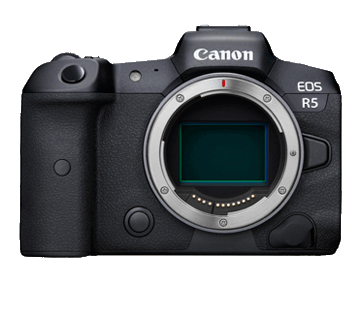
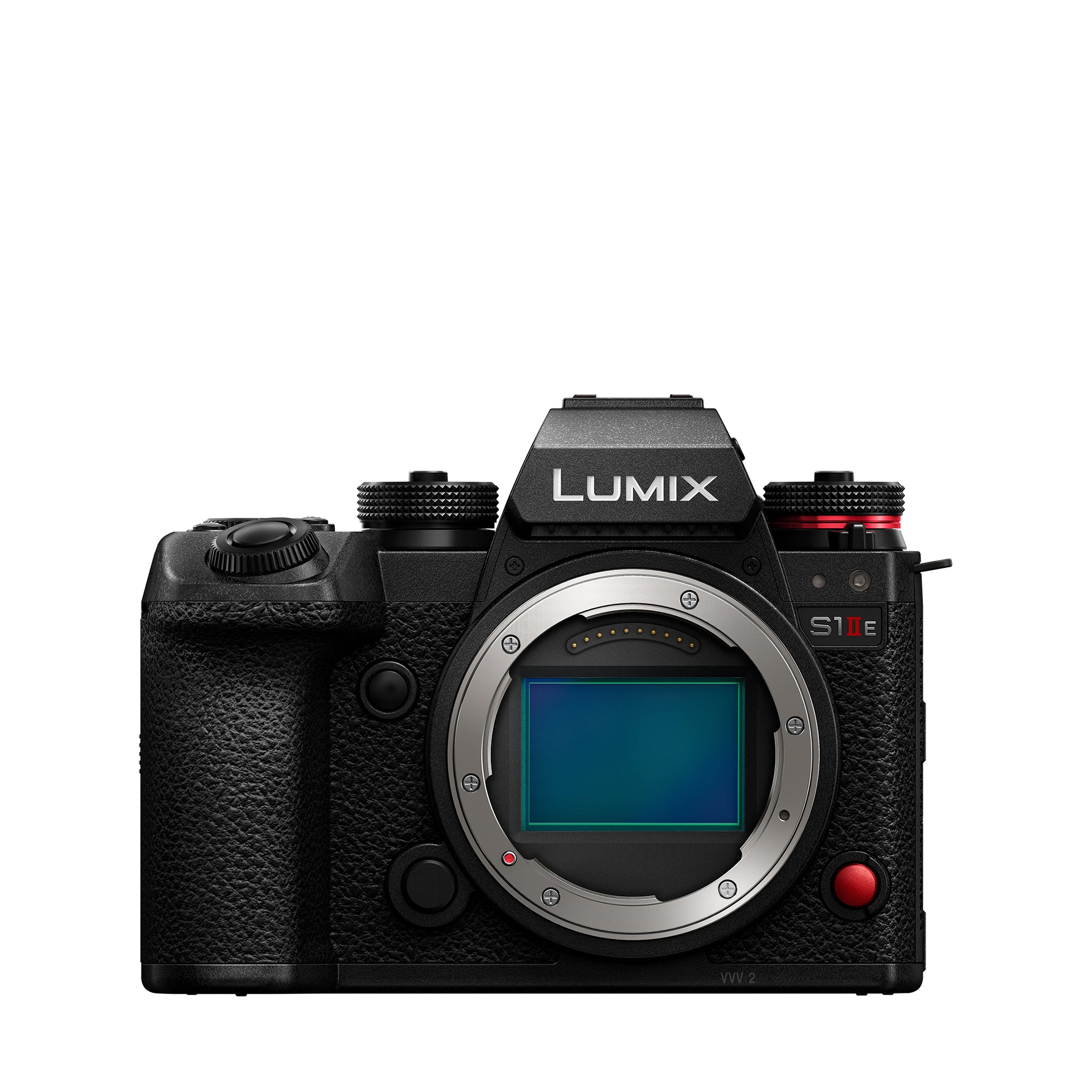
The Canon EOS R5 and the Panasonic S1 II E are two high-performance mirrorless cameras that cater to serious photographers and videographers. Commonly compared for their capabilities in professional and semi-professional environments, potential buyers often find themselves weighing the superior resolution and autofocus system of the R5 against the impressive video features and burst shooting capabilities of the S1 II E. Each camera brings distinct advantages and is designed to meet different types of users' needs, making it essential to understand these key differentiators before making a purchase decision.
Specifications Comparison
Detailed Comparison
Image Quality
The Canon EOS R5 boasts a full-frame sensor with 45 megapixels, delivering exceptional image quality and detail. This is particularly advantageous for landscape, portrait, and commercial photographers who require large prints or extensive cropping capabilities. The R5 also has a wide ISO range from 100-51200 (expandable to 102400) that provides flexibility in low-light situations, generating usable images with minimal noise. In contrast, the Panasonic S1 II E, while featuring a solid 24.1 megapixels, offers less detail in large prints and cropping scenarios but still performs well, especially for general photography and video applications.
Furthermore, both cameras are capable of capturing stunning images in various lighting conditions, but the R5's superior resolution and large sensor size generally provide an edge in overall image clarity and tonal range. However, the S1 II E performs admirably with its Dual Native ISO technology, which allows for excellent low-light performance, albeit at a lower megapixel count.
In summary, while both cameras produce high-quality images, the Canon EOS R5 is the clear winner for resolution-conscious photographers and those seeking the utmost image fidelity.
Autofocus System
The autofocus systems of both cameras are impressive, yet they each exhibit unique strengths. The Canon EOS R5 features an advanced Dual Pixel CMOS autofocus system with 1053 AF points, ensuring fast and accurate focus acquisition in various scenarios, even with moving subjects. This extensive coverage and impressive tracking performance make it an ideal choice for wildlife and sports photography.
On the other hand, the Panasonic S1 II E includes a competent autofocus system as well, with Depth from Defocus technology that allows for rapid focusing capabilities. However, it doesn't reach the same level of sophistication as the R5's Dual Pixel system, particularly under challenging lighting conditions or when tracking fast-moving subjects.
Overall, while both systems are effective, the Canon EOS R5's autofocus system is more reliable and versatile, making it the winner in this category.
Video Capabilities
Both the Canon EOS R5 and the Panasonic S1 II E excel in video recording features, but they cater to slightly different audiences. The R5 supports 4K video recording at up to 120 frames per second, which is suitable for high-speed footage. It also offers full-width recording with 10-bit 4:2:2 color depth, making it a fantastic option for filmmakers looking for uncompromised video quality.
The Panasonic S1 II E pushes this envelope further by offering a variety of video resolutions, including 5.9K at 60p, along with multiple frame rate options (up to 240fps in 1080p). This makes it a strong candidate for professionals focusing heavily on video and those requiring superior resolution and flexibility in their cinematic projects.
In this aspect, while both cameras are feature-rich for video production, the versatility and higher resolutions of the S1 II E crown it as the winner, especially for dedicated videographers who seek various resolutions for their projects.
Build & Ergonomics
The build quality of both cameras is robust, with weather sealing that makes them suitable for various environments. The Canon EOS R5 features a well-designed grip and a compact body, weighing 738 grams, which many users find comfortable for extended periods of use. The controls are intuitive, with a responsive touchscreen that complements its electronic viewfinder.
Conversely, the Panasonic S1 II E, though slightly heavier, is known for its substantial build and tactile control layout, which some photographers may prefer. The larger size may also enhance stability when using longer lenses. However, the ergonomics are quite similar, with both cameras offering good handling, especially for those familiar with mirrorless systems.
Because both cameras are well-constructed and ergonomically sound, this category results in a tie, as preference here largely depends on personal feel and handling.
Battery & Storage
The battery life of the Canon EOS R5 is rated for approximately 320 shots, which is decent but might require additional batteries for extended shoots. It uses the LP-E6NH battery and provides reliable performance under various conditions. However, in certain demanding situations, such as high-resolution video recording, the battery tends to drain faster.
In contrast, the Panasonic S1 II E has a larger battery capacity, allowing for longer shooting times without needing to swap batteries frequently. This could be particularly beneficial for event photographers or videographers who require extended use without interruption. Both cameras support CFexpress Type B and SD UHS-II card slots, enhancing storage flexibility during high-resolution video or burst shooting.
Given the longer battery life on the S1 II E, it is the winner in this category.
Value for Money
The Canon EOS R5 is priced at approximately $3899, positioning it as a premium option aimed at professionals who need top-tier specifications. While the price reflects its capabilities in image quality, autofocus efficiency, and build quality, buyers must consider if these premium features align with their requirements or budget constraints.
On the other hand, the Panasonic S1 II E is often considered more accessible in terms of pricing, particularly given the strong performance it offers in video. For those who prioritize video quality and recording flexibility at a lower cost, the S1 II E provides considerable value. While it lacks the sensor resolution of the R5, its feature set is impressive, making it a solid choice for those focused on video production.
When weighing the overall value, those needing a versatile camera with excellent video features may find better value in the S1 II E, while still acknowledging the superior capabilities of the R5.
Our Verdict
In this comparison, the Canon EOS R5 emerges as the overall winner, especially for photographers who prioritize high-resolution images, advanced autofocus, and superior image quality. It's an exceptional choice for landscape and portrait photographers looking to capture intricate details. Meanwhile, the Panasonic S1 II E excels in video capabilities and offers excellent value for those focused on video production at a more competitive price point. Ultimately, the decision will hinge on individual priorities-whether it's resolution and image quality with the R5 or video versatility and battery life with the S1 II E.
Canon EOS R5
Panasonic S1 II E
Also Compare
Frequently Asked Questions
Which camera is better for sports photography?
The Canon EOS R5, with its superior autofocus system and 20fps continuous shooting speed, is better suited for sports photography due to its fast focusing on moving subjects.
Is the Panasonic S1 II E worth considering for video work?
Yes, the Panasonic S1 II E is an excellent choice for video, offering multiple high-resolution recording options, including 5.9K at 60p, making it a strong competitor for filmmakers.
How does low-light performance compare?
The Canon EOS R5's wider ISO range gives it an advantage in very low-light situations, but the S1 II E's Dual Native ISO helps it perform respectably, making both viable options.
Which camera has better image quality?
The Canon EOS R5 offers better image quality with its 45-megapixel sensor, providing stunning detail and dynamic range compared to the S1 II E's 24.1-megapixel sensor.
What is the advantage of using CFexpress cards?
Both cameras support CFexpress cards, which enable high-speed data transfer necessary for 8K video recording and continuous burst shooting, reducing the risk of buffer delays.