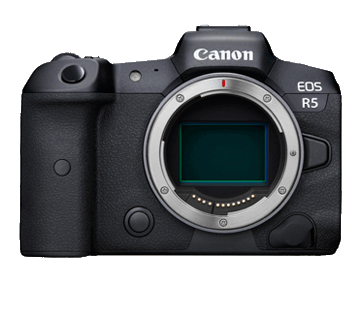
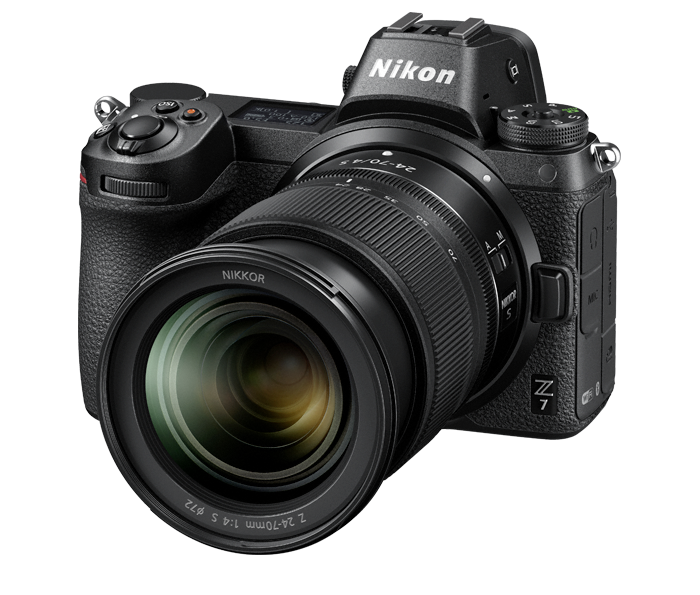
The Canon EOS R5 and Nikon Z7 are two of the most celebrated full-frame mirrorless cameras in the market, attracting serious enthusiasts and professionals alike. Potential buyers often find themselves drawn to either model due to their remarkable specifications and features that cater to a wide variety of photographic needs. Both cameras stand out for their image quality and advanced capabilities; however, they also possess unique strengths that set them apart in terms of functionality and user experience. This comparison will detail their respective advantages in key areas such as image quality, autofocus systems, video performance, and overall value for money.
Specifications Comparison
Detailed Comparison
Image Quality
In the realm of image quality, both the Canon EOS R5 and Nikon Z7 deliver stunning results thanks to their full-frame sensors. The R5 features a 45-megapixel sensor, which allows for exceptionally detailed images, while the Z7 offers a slightly higher resolution at 46 megapixels. This slight edge in resolution may appeal to landscape photographers looking for maximum detail, specifically in large prints.
Additionally, the ISO performance is remarkable in both models, with the EOS R5 offering a native ISO range of 100-51200 that expands to 102400, compared to the Z7's 64-25600, which also extends to 32-102400. The R5's higher ISO capability could provide better performance in low-light conditions.
While both cameras produce excellent high-resolution images, the extra detail provided by the Z7's 46-megapixel sensor and comparable low-light capabilities make it a strong contender. However, the slight differences in performance might not be as perceptible in practical settings. Overall, both cameras excel in image quality, catering well to professionals who prioritize detail.
Autofocus System
Autofocus is a critical aspect for both still photography and videography. The Canon EOS R5 boasts an impressive 1053 autofocus points, leveraging Dual Pixel CMOS AF technology that allows for rapid and accurate focusing across its autofocus area. This extensive system is particularly advantageous for action photography, ensuring that moving subjects are locked in focus quickly.
On the other hand, the Nikon Z7 features 493 autofocus points, which, while fewer than the R5, are still highly effective, relying on Nikon's advanced hybrid AF system. While the Z7's autofocus performance is quite good for most applications, particularly in still scenarios, it may not match the R5 when tracking fast-moving subjects.
The R5 also incorporates Eye AF capabilities that allow for precise focusing on subjects' eyes, which is especially beneficial for portrait photographers. Hence, when it comes to versatility and accuracy of the autofocus system, the Canon EOS R5 takes the lead.
Video Capabilities
In the realm of video capabilities, the Canon EOS R5 clearly outshines the Nikon Z7. The R5 supports high-resolution 4K video recording at an impressive 120p, enabling high-quality slow-motion footage that has become increasingly popular in videography. Additionally, with 10-bit 4:2:2 internal recording and various log formats available, the chances for professional-grade video editing are substantially enhanced.
Conversely, the Nikon Z7 offers 4K video at a maximum frame rate of 30p, which is adequate for many users, but it falls short for those seeking to achieve cinematic slow-motion effects or higher frame rates for dynamic footage. While the Z7 does provide 10-bit output via HDMI, its internal recording options do not match the R5's flexibility.
For videographers or content creators who prioritize video performance, the Canon EOS R5's advanced capabilities present a compelling argument for selection in this category, solidifying its position as the winner in video capabilities.
Build & Ergonomics
When assessing build quality and ergonomics, both cameras reflect a robust construction suitable for professional use, with both featuring weather-sealing to withstand challenging conditions. The Canon EOS R5 weighs slightly more at 738 grams compared to the Nikon Z7's 675 grams, making the latter marginally more convenient for extended shooting sessions.
In terms of dimensions, the R5 is slightly larger at 138 x 98 x 88 mm versus the Z7's 134 x 101 x 68 mm. This difference is subtle and may not be significant for many users, but it could impact handling, especially when paired with larger lenses.
The ergonomics of both cameras are generally praised. However, some users may prefer the layout and controls of either based on personal preferences. Overall, both models are designed for comfort and durability but with marginally different dimensions and weights.
Battery & Storage
Battery life is an important consideration for photographers who spend long hours shooting. The Nikon Z7 offers a slightly better battery life with approximately 330 shots per charge, compared to the Canon EOS R5, which has around 320 shots per charge. While this difference is minimal, it can add up during long shoots.
Both cameras utilize a lithium-ion battery type, but the Canon EOS R5 features dual card slots that support CFexpress Type B and SD UHS-II cards, providing flexibility for fast storage and backup options. The Nikon Z7, while also having dual card slots, uses XQD and SD UHS-II cards.
The dual card slots on the R5 could provide an added advantage for professionals who rely on immediate backup or high-speed recording capabilities. Thus, while both have similar battery performances, the R5's superior storage options give it an edge in this category.
Value for Money
Price is always a significant consideration when purchasing a high-end camera. As of now, the Canon EOS R5 retails for approximately $3899, whereas the Nikon Z7 is available for around $3399. This price difference places the Z7 at a more approachable tier for those on a budget or those who may not require the advanced features offered by the R5.
For buyers looking at these two options, the decision often hinges on whether the additional features of the EOS R5 justify the higher price. The R5's superior autofocus, video capabilities, and dual card slots may appeal to professionals who need the best tools available for their work, while the Z7 still offers remarkable performance that can satisfy amateur and professional photographers alike without breaking the bank.
In summary, while the EOS R5 provides amazing features at a higher price point, the Z7 presents exceptional value given its performance and capabilities at a lower cost.
Our Verdict
Overall, the Canon EOS R5 comes out as the winner in this comparison, primarily due to its superior autofocus performance and advanced video capabilities, which cater to both professional photographers and videographers. Its robust feature set may justify the higher price for those who require advanced tools. However, the Nikon Z7 is not to be underestimated; it offers fantastic image quality and retains excellent overall value, making it a great option for those who are looking for a capable full-frame mirrorless camera at a more accessible price point. Depending on specific needs and budget, buyers may find either camera to suit their purpose effectively.