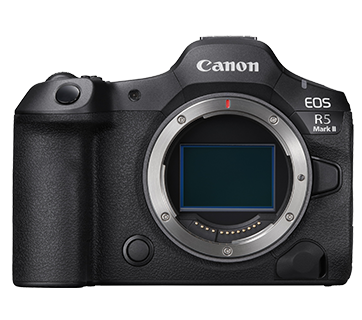

The Canon EOS R5 Mark II and Sony ZV-E1 are both full-frame mirrorless cameras that cater to different segments of the market, making them widely compared among photographers and videographers alike. The Canon EOS R5 Mark II is designed for high-end photography professionals who require robust image quality and versatility, while the Sony ZV-E1 targets content creators and vloggers, focusing on ease of use and portability. As a result, buyers often find themselves deciding between the two based on their specific use cases and requirements.
Specifications Comparison
Detailed Comparison
Image Quality
The Canon EOS R5 Mark II boasts a significant 45-megapixel sensor, which allows for incredibly detailed images and enhanced cropping capabilities. This is particularly beneficial for professional photographers who need to produce high-resolution prints or need to crop images tightly without losing significant detail. The ISO range of 100-51200 further enhances low-light performance, giving photographers the flexibility to shoot in various lighting conditions without sacrificing quality.
In contrast, the Sony ZV-E1 features a 12-megapixel sensor that is optimized for video rather than still photography. While the lower megapixel count may limit the detail resolution for still images, the ZV-E1 excels in low-light conditions with an expanded ISO range of 80-102400, which can even go up to 409600. This makes it a solid choice for shooting in challenging lighting, especially for video work where noise can often be a concern.
The R5 Mark II's superior resolution will cater to those who prioritize high-quality stills, while the ZV-E1's strengths lie in capturing high-quality video content. Overall, for photographers looking for the utmost detail, the clear winner is the Canon EOS R5 Mark II.
Autofocus System
Canon has equipped the EOS R5 Mark II with an impressive autofocus system featuring 5850 AF points, which translates to highly precise focusing capabilities perfect for fast-moving subjects and complex scenes. The ease of use in different lighting conditions ensures that photographers can achieve sharp images consistently. This system is complemented by Canon's Dual Pixel technology, which enhances subject tracking performance.
On the other hand, the Sony ZV-E1 has an advanced autofocus system with 759 points, which is also quite effective, especially in video scenarios where real-time subject tracking is essential. The inclusion of features like Eye Autofocus and Real-Time Tracking can be advantageous for creators who focus on dynamic subjects, allowing for smoother video production without worrying about focus issues.
Both systems are robust, but due to the higher number of focus points and refined autofocus algorithms, the Canon EOS R5 Mark II takes the edge, especially for still photography applications where precision is paramount.
Video Capabilities
The Canon EOS R5 Mark II excels in video capabilities, being capable of recording 8K video up to 30 fps and 4K at a 120 fps, making it a powerhouse for filmmakers. The superior image stabilization of 8.5 stops provides smooth footage even when moving, which is crucial for high-motion scenes. This camera is ideal for professionals who need high-resolution video and ample post-production flexibility.
The Sony ZV-E1, while primarily designed for vloggers and content creators, supports 4K at 60fps and includes fantastic features like integrated microphone enhancements and a fully articulating screen. Its lightweight form factor makes it easier to handle for extended shooting periods. Although it lacks the high-end 8K resolution found in the R5 Mark II, the ZV-E1 provides ample quality for social media and streaming applications.
In essence, while both cameras excel in video, the Canon EOS R5 Mark II provides more advanced options at a professional level, making it the winner in this category.
Build & Ergonomics
The Canon EOS R5 Mark II features a solid build with weather sealing that assures durability and reliability in various environmental conditions. The larger body dimension at 138 x 98 x 88 mm provides a comfortable grip for extended shooting sessions, which can be particularly helpful for photographers who use the camera for long periods.
In contrast, the Sony ZV-E1's smaller dimensions of 121 x 72 x 54 mm make it very portable and easy to handle, especially for content creators who are traveling or capturing vlogs in dynamic environments. However, it sacrifices some ergonomics for compactness, which may not be ideal for those accustomed to holding more substantial camera systems.
Both cameras feature weather sealing, ensuring they can withstand moderate weather conditions. However, the substantial grip and body of the R5 Mark II make it better suited for sustained use, giving it the edge in build quality and ergonomics.
Battery & Storage
Battery life is another crucial distinction between the two cameras. The Canon EOS R5 Mark II offers a battery life of approximately 540 shots, which is impressive for a high-performance camera demanding extensive usage. This makes it more suitable for long shoots where changing batteries frequently might be impractical.
The Sony ZV-E1, with a slightly better battery life at 570 shots, still offers similar performance but is somewhat less necessary in terms of battery capacity due to its more efficient low-resolution sensor. Furthermore, the ZV-E1 utilizes the Sony E mount, which offers numerous lens options but is typically favored for casual photography and videography.
When it comes to storage, both cameras support CFexpress Type B cards, but the higher data rates required for the R5 Mark II's high-resolution video recording would likely demand faster storage media. Therefore, while both can handle professional-grade applications, the R5 Mark II is better suited for extensive work that may involve heavy bursts and video capture.
Value for Money
With a price tag of $4299, the Canon EOS R5 Mark II certainly falls into the higher tier of mirrorless cameras, justified by its high-resolution sensor, exceptional video capabilities, and advanced autofocus system. For professionals who need a high-grade camera for both photography and videography, the investment can prove to be worthwhile in a professional setting.
Conversely, the Sony ZV-E1 is priced at $2200, which makes it an attractive entry point for budding creators or vloggers seeking powerful features without the need for extensive functionality that high-end users require. The affordability allows users to capture quality video without breaking the bank and provides excellent value for those focused primarily on content creation.
While the R5 Mark II offers significant features aimed at professionals, the ZV-E1 provides substantial capabilities suited for daily use at an accessible price. Hence, when considering pure value for traditional photography versus casual videography, the Sony ZV-E1 emerges as a favorable choice for budget-conscious buyers.
Our Verdict
In the overall comparison, the Canon EOS R5 Mark II wins for its superior image quality, autofocus capabilities, and video performance, appealing directly to professional photographers and high-end videographers. However, the Sony ZV-E1 stands out for content creators seeking a lightweight, user-friendly camera that performs well in video and casual photography. Ultimately, the choice between these two will depend on what the buyer prioritizes: high performance and image quality or portability and affordability.
Canon EOS R5 Mark II
Sony ZV-E1
Also Compare
Frequently Asked Questions
Which camera is better for professional photography?
The Canon EOS R5 Mark II is better for professional photography due to its 45 MP sensor, superior autofocus, and extensive features geared towards high-end image capturing.
Is the Sony ZV-E1 suitable for vlogging?
Yes, the Sony ZV-E1 is highly suitable for vlogging and content creation, offering excellent video capabilities, ease of use, and a lightweight design.
What are the main differences in video capabilities?
The Canon EOS R5 Mark II supports 8K video up to 30 fps and 4K at 120 fps, while the Sony ZV-E1 offers up to 4K 60 fps. The R5 Mark II is ideal for high-resolution video work.
Which camera is better for low-light photography?
While both cameras perform well in low light, the Canon's wider ISO range and higher resolution make it more favorable for detailed low-light photography.
How do they compare in terms of build quality?
The Canon EOS R5 Mark II has a more substantial build designed for extensive use, while the Sony ZV-E1 is more compact, appealing for portability but may not offer the same ergonomic comfort.