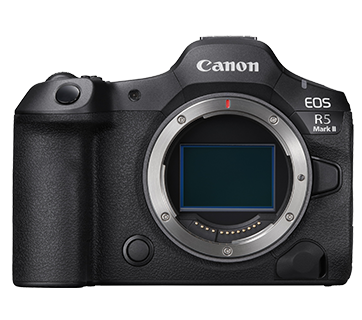
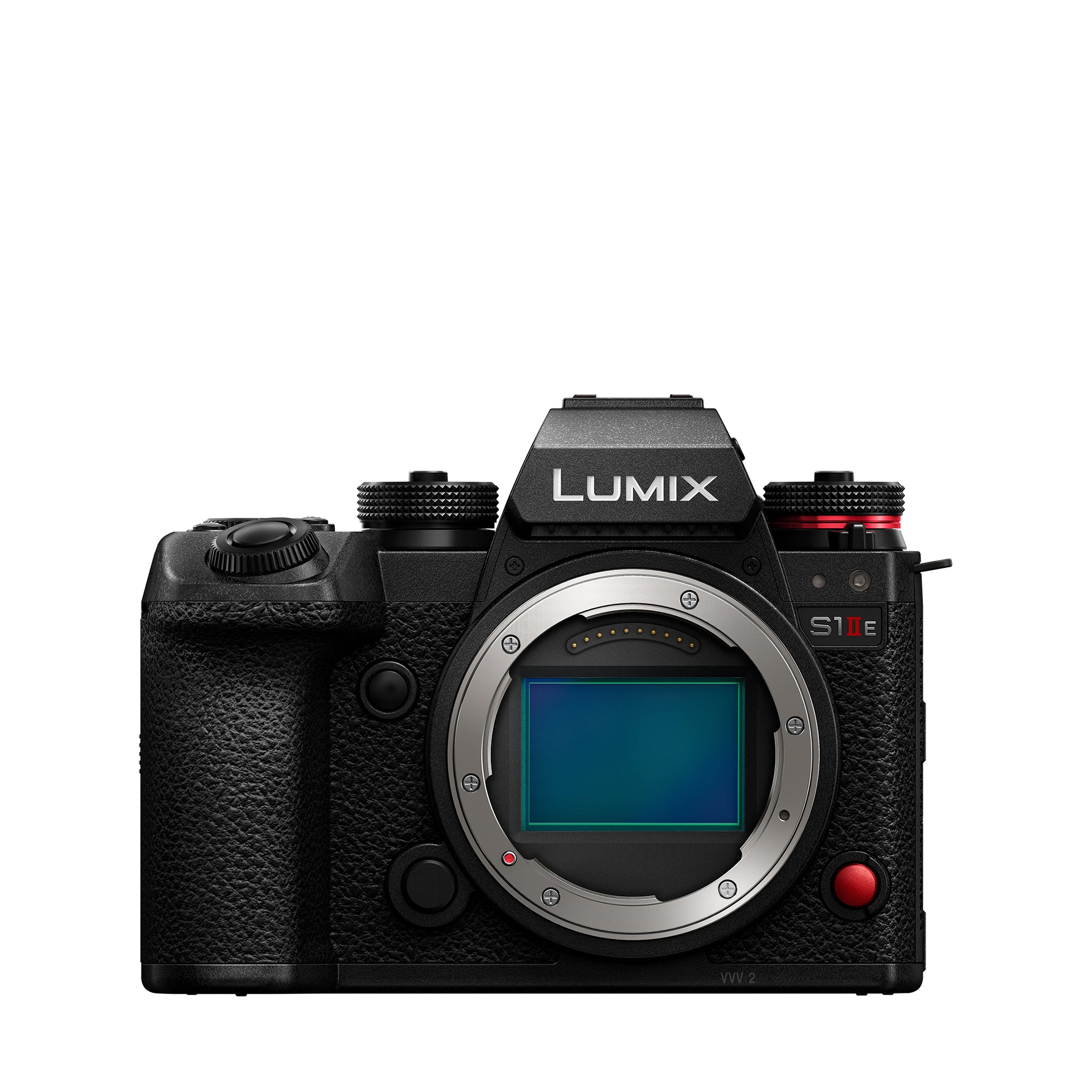
The Canon EOS R5 Mark II and Panasonic S1 II E are two prominent full-frame mirrorless cameras that attract serious photographers and videographers seeking high performance and advanced features. Given their impressive specs, many buyers may find themselves torn between these two models. They are particularly appealing to those who prioritize image quality, autofocus capabilities, and video performance while also exploring the potential for serious investment in a versatile camera system. Each has its unique strengths, with differences in resolution, autofocus technology, and video features serving as key differentiators.
Specifications Comparison
Detailed Comparison
Image Quality
The Canon EOS R5 Mark II boasts a high-resolution 45 megapixel sensor, which enables detailed images and superior cropping capabilities. This advantage helps professionals who need flexibility in post-processing or require large prints. Coupled with an impressive ISO range of 100-51200, the R5 Mark II performs well in various lighting conditions, presenting clear, noise-free images even at higher ISO settings.
In contrast, the Panasonic S1 II E offers a lower resolution at 24.1 megapixels, which, while sufficient for most applications, may fall short for those looking for the highest detail possible. Both cameras utilize full-frame sensors contributing to excellent dynamic range and color reproduction; however, the higher pixel count of the R5 Mark II does give it a distinct advantage in image quality.
Ultimately, while both cameras deliver excellent results, the differences in resolution and ISO performance set them apart, making a significant impact on image quality for varied use cases such as landscape photography, portraits, or commercial work.
Autofocus System
The autofocus capabilities of the Canon EOS R5 Mark II are notably advanced, featuring an astonishing 5850 autofocus points with sophisticated eye detection technology that can lock onto and track subjects with precision. This level of detail is highly beneficial for wildlife and sports photographers who require quick, accurate focus.
On the other hand, the Panasonic S1 II E delivers a respectable autofocus system but falls short of the Canon's extensive point count. While the S1 II E provides solid performance in most scenarios, it lacks some of the advanced tracking features found in the R5 Mark II. This could be a significant consideration for users working in fast-paced environments or those who frequently capture moving subjects.
The disparity in autofocus capability positions the Canon EOS R5 Mark II as a stronger choice for users who prioritize speed and accuracy in their photography or videography.
Video Capabilities
Video performance is a strong area for both cameras, but they cater to different user needs. The Canon EOS R5 Mark II offers versatile video options with up to 8K recording and various frame rates for high-resolution footage, ideal for professional filmmakers looking to capture high-quality video. Additionally, its advanced autofocus capabilities enhance the overall video shooting experience.
In contrast, the Panasonic S1 II E excels in video resolution and frame rates with multiple options including 5.9K/60p, 5.1K/60p,4.8K/60p, and 4K recording at 120fps, positioning it as the better choice for those prioritizing high-frame-rate video and slow-motion capabilities. The inclusion of advanced video features makes it attractive to videographers who focus on dynamic content creation.
Considering both systems have their strengths, the choice between them may boil down to whether resolution or frame rate is more important for the user's specific video requirements. Overall, while both cameras excel, their different strengths make them suitable for different types of content creation.
Build & Ergonomics
The Canon EOS R5 Mark II is well-regarded for its ergonomics, featuring a slightly heavier and sturdier build at 746 grams. Its weather-sealed design makes it suitable for outdoor shooting in various conditions. The camera has a high-resolution touchscreen that allows for intuitive controls and quick menu navigation, enhancing the user experience, especially for long shoots.
The Panasonic S1 II E is also built to last, with a robust body that offers good weight distribution and grip. Its construction quality has been praised, although it slightly lacks the refinement found in the R5 Mark II's design. The S1 II E also offers a weather-sealing feature, which ensures durability during challenging shooting scenarios. However, the touchscreen functionality, while effective, does not match the responsiveness or resolution of the R5 Mark II's interface.
Overall, while both cameras offer a solid build, Canon clinches this aspect with ergonomics and user interface that cater particularly well to professional workflows and long-duration use.
Battery & Storage
In terms of battery life, the Canon EOS R5 Mark II holds a remarkable advantage, offering approximately 540 shots per charge. This extended battery performance is essential for professionals who may not always have the opportunity to recharge during shoots, making it especially valuable for event photography or long outdoor expeditions. Furthermore, the R5 Mark II's dual card slots provide ample storage space and flexibility for photographers who require quick backup options or different file formats.
The Panasonic S1 II E offers a decent battery life but does not quite reach the capacity of the R5 Mark II, which may warrant carrying additional batteries for extensive shooting sessions. The S1 II E is also equipped with dual card slots, catering to the needs of serious video and photo users.
Thus, while both cameras provide reliable battery life and storage solutions, the enhanced endurance and flexibility found in the R5 Mark II offer a compelling advantage for those prioritizing long shooting sessions.
Value for Money
The pricing of the Canon EOS R5 Mark II, at $4299, positions it as a premium offering in the full-frame mirrorless camera segment. Considering its exceptional features-including high resolution, advanced autofocus, and robust video capabilities-it can be seen as an investment for serious professionals or enthusiasts who require top-level performance and are prepared to pay for it.
On the other hand, while the Panasonic S1 II E generally has a lower price point, it still delivers a comprehensive set of features that will satisfy a wide range of demands for both photo and video creators. While it does not outperform the R5 Mark II in certain areas, its cost-effectiveness makes it a great entry point for those needing solid performance without the premium price tag.
Therefore, while the Canon R5 Mark II offers superior performance at a higher price, the S1 II E shines as a more accessible option, providing a compelling value-for-money proposition for many users. This is particularly relevant for videographers who find the 5.9K capabilities and other video features appealing.
Our Verdict
Overall, the Canon EOS R5 Mark II emerges as the winner in this comparison, delivering superior image quality, autofocus performance, build quality, and battery life. It is particularly suited for professionals seeking cutting-edge capabilities for both high-end photography and videography. The Panasonic S1 II E, while slightly less capable in those areas, still holds value with its robust video options and overall system performance, making it an excellent choice for videographers and photographers on a budget who still seek quality results.