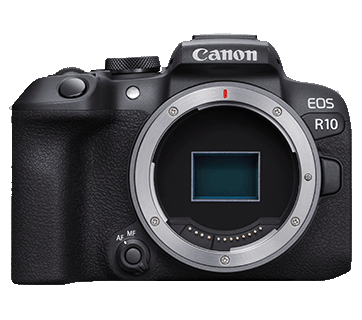
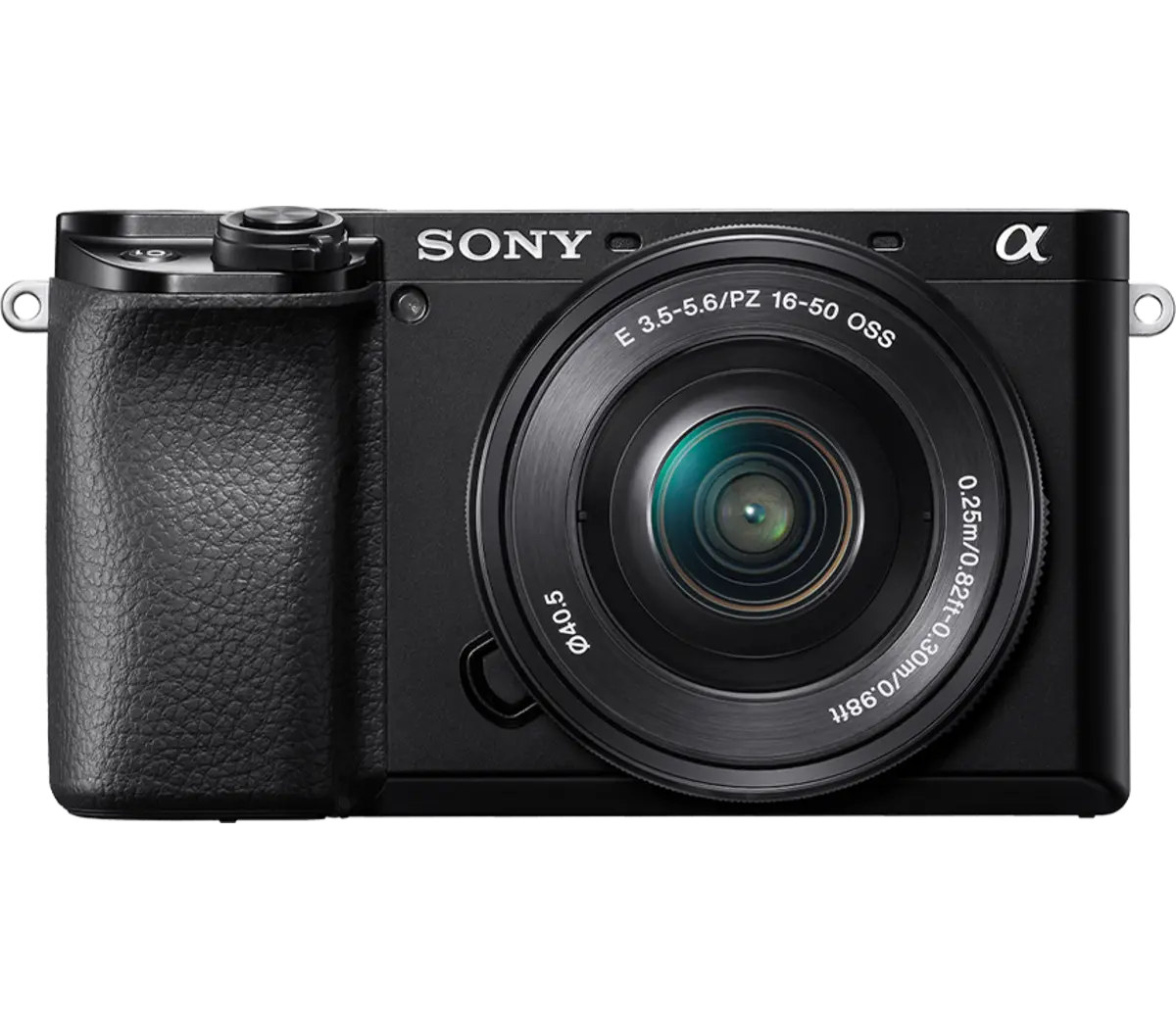
The Canon EOS R10 and Sony A6100 are two popular mirrorless cameras that often come up in conversations among enthusiasts and budding photographers. Both models offer the benefits of an APS-C sensor, excellent image quality, and robust autofocus systems. Those looking at these cameras might be new photographers wanting to invest in an entry-level interchangeable lens system or more advanced users searching for a lightweight travel camera. Crucial differentiators include their autofocus capabilities, build quality, and value for money, which can significantly influence a buyer's choice based on their specific needs and preferences.
Specifications Comparison
Detailed Comparison
Image Quality
Both the Canon EOS R10 and Sony A6100 boast 24-megapixel APS-C sensors, providing high-resolution images with impressive detail. The Canon's ISO range of 100-32000 allows for versatile performance in various lighting conditions, while the Sony pushes its maximum ISO up to 51200, which might be beneficial for low-light situations, albeit potentially at the cost of increased noise. Both cameras deliver excellent color reproduction, but some photographers prefer the distinctive color science of one brand over the other, which often comes down to personal preference.
In terms of dynamic range, the Canon R10 offers high fidelity in captured highlights and shadows, which can be advantageous in post-processing. Users have noted that both cameras perform well at lower ISOs, with the A6100 potentially having a slight edge in terms of high ISO performance. Ultimately, while both cameras produce comparable images in day-to-day photography, their different handling of light can appeal to distinct photographic styles and requirements.
Autofocus System
The autofocus systems of these two cameras present distinct characteristics. Canon's EOS R10 features a remarkable 651 autofocus points, benefiting from the Dual Pixel AF technology that provides superb subject tracking, especially for fast-moving subjects. This advantage makes the R10 particularly appealing for sports and wildlife photography, where accuracy and speed are paramount.
In contrast, the Sony A6100, while equipped with 425 autofocus points, also employs its Fast Hybrid AF system, which excels in hybrid focusing with both phase detection and contrast detection. This system is swift and efficient, particularly in good lighting conditions, but may lag slightly behind the R10 in complex scenarios. Users often cite the intuitive interface of Canon's AF points as a preference for more straightforward operation, while Sony users appreciate its reliable performance.
Video Capabilities
Both cameras offer 4K video recording at 30 frames per second, making them suitable for videographers on a budget. However, the Canon EOS R10 has a significant advantage with its higher maximum frame rate for continuous shooting at 15 frames per second, which can be beneficial for capturing fast action in video formats. Neither camera features in-body stabilization, which is something to consider for users shooting handheld video.
The A6100 shows strong performance in autofocus while shooting video, but some users feel that Canon's superior Dual Pixel AF often results in smoother focus transitions, especially during live-action where subjects may move in and out of the frame. While both cameras are capable of producing high-quality video, the Canon's advanced autofocus system makes it more appealing for serious videography.
Build & Ergonomics
In terms of build, both cameras are relatively compact and lightweight, making them great for travel. The Canon EOS R10 weighs 426 grams, slightly heavier than the Sony A6100 at 396 grams. The build quality on both cameras is robust for their class, but users may find Canon's ergonomic design slightly more comfortable for prolonged use due to better grip and button layout.
While Canon provides a slightly larger body, the thinner profile of the A6100 allows it to be a touch more portable. Both cameras feature electronic viewfinders and 3-inch screens, but the A6100's screen is higher in resolution (921,600 dots), which can make a difference in sharpness and clarity when composing shots. Ultimately, the choice may come down to personal comfort and preference in handling.
Battery & Storage
Canon's EOS R10 provides a notably higher battery life, rated at approximately 450 shots compared to the A6100's 420 shots. This may not seem like a large difference, but for users who shoot extensively, it could lead to fewer interruptions for charging or battery swaps during a shooting day. Additionally, both cameras use the same storage solution, SD cards, which allows users to easily interchangeably with commonly available media.
The slightly better battery performance of the R10 gives it a practical edge for photographers who may not want to carry multiple batteries while on shoots. For those seeking more extended shooting sessions, this could be an essential factor to consider when choosing between the two models.
Value for Money
The Canon EOS R10 is priced at $979, whereas the Sony A6100 is more accessible at $750. Despite this difference in price, the R10 offers advanced features such as a superior autofocus system and marginally better battery life. In contrast, the A6100 remains a strong contender with its responsive handling and solid performance, particularly for those on a tighter budget.
For those prioritizing cutting-edge autofocus technology and more recent features, the additional investment in the R10 can be justified. However, for casual photographers who may not require the latest specifications and who can appreciate the quality of the A6100, it presents a fantastic value proposition without breaking the bank.
Lens Ecosystem
Both Canon and Sony provide extensive lens selections for their respective systems. The Canon RF mount is relatively new, and while it has been expanding rapidly, it may not yet have the same breadth of options as the established E-mount lenses available to the A6100. Sony's lens ecosystem is known for its depth, covering a wide range of focal lengths and categories, including many third-party options.
That said, Canon's focus on developing RF lenses may lead to a more specialized range in the future. Photographers looking for versatility in lens options might initially lean towards the A6100 due to the availability and variety of lenses, while those investing in the Canon system may find their needs adequately met as the ecosystem matures.
Our Verdict
Overall, the Canon EOS R10 edges out largely due to its advanced autofocus system, slightly better battery life, and superior handling, which are crucial for both novice and experienced photographers. However, the Sony A6100 remains a strong alternative, especially for those seeking a more budget-friendly option with an impressive lens ecosystem. Buyers focused on video shooting may also prefer the R10 for its superior autofocus during video playback, making it better suited for content creation. Ultimately, both cameras are excellent choices depending on what aspects are prioritized.