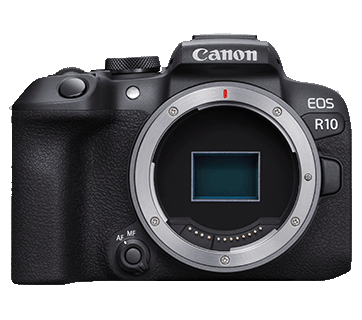

The Canon EOS R10 and the Fujifilm X-T5 are two popular cameras within the APS-C segment, attracting enthusiasts and semi-professionals alike. The EOS R10 is a more budget-friendly option, aiming to provide a solid introduction to mirrorless technology with a wide range of features. Meanwhile, the X-T5, positioned at a premium price point, offers advanced capabilities that appeal to serious photographers who demand exceptional performance and build quality. Buyers often find themselves comparing these two cameras given their shared sensor size yet differing approach to design, features, and intended use cases.
Specifications Comparison
Detailed Comparison
Image Quality
When it comes to image quality, the Fujifilm X-T5 takes the lead with a high-resolution 40-megapixel sensor compared to the Canon EOS R10's 24-megapixel sensor. This higher resolution allows for more detail capture, making it suitable for large prints and cropping flexibility. Furthermore, the X-T5 boasts an ISO range that extends down to 64 and up to 51,200, facilitating superior low-light performance. On the other hand, the R10, while it has a respectable ISO range from 100 to 32,000, cannot compete with such extreme low-light capabilities, which are particularly beneficial for nighttime or event photography.
However, the Canon R10 does provide good image quality for its price point. While the pixel count is lower, it benefits from Canon's renowned color science, resulting in pleasing skin tones and vibrant colors. In most situations, the image quality is excellent for casual photography and videography, making it a solid performer for those not requiring the utmost in detail or low-light versatility.
In summary, while both cameras produce high-quality images, the X-T5 is a clear winner thanks to its superior sensor resolution and extended ISO range, making it more versatile for various photography styles.
Autofocus System
The autofocus capabilities of the Canon EOS R10 are impressive, featuring a robust 651 autofocus points with Dual Pixel AF technology. This allows the camera to lock focus quickly and accurately, even in challenging conditions. The advanced tracking features are beneficial for capturing fast-moving subjects, making it suitable for sports and wildlife photography. However, the X-T5, with its 425 autofocus points, still provides reliable performance and features advanced tracking algorithms, which help maintain sharp focus throughout scenes.
That said, Canon's autofocus system generally performs exceptionally well in real-world scenarios, particularly with moving subjects. For users prioritizing speed and accuracy, the R10 delivers with great performance. The X-T5, while effective, may not surpass the R10 in fast-paced shooting situations but still manages to offer competitive focusing capabilities for most users.
Thus, for users who prioritize fast and reliable autofocus in dynamic environments, the R10 may have the edge. However, for more controlled environments, the X-T5 performs admirably, earning it strong reviews in its own right. Overall, while both systems excel, the slight edge leans toward the R10 for its greater point count and advanced capture capabilities in quick scenarios.
Video Capabilities
Video recording features are essential for many users today, and here, both models deliver impressively relative to their price points. The Canon EOS R10 supports 4K video at 30 frames per second (fps), which is adequate for casual videography and YouTube content creation. However, it lacks in-body stabilization, which may require additional stabilization equipment for smoother footage.
In contrast, the Fujifilm X-T5 shines in this aspect with 4K recording options supporting up to 60 fps, and it includes 7 stops of in-body image stabilization. This results in much smoother recordings, especially when shooting handheld or in dynamic situations. The X-T5 also offers 10-bit internal recording, providing videographers with greater flexibility in post-production color grading and editing.
Ultimately, for dedicated videographers or those eager to explore advanced video capabilities, the X-T5 offers superior features that make a significant difference in quality and flexibility while shooting video. The additional frame rates, resolution options, and stabilization features make it the preferable choice for those focused on video production.
Build & Ergonomics
When considering build quality and ergonomics, the Fujifilm X-T5 is built with a sturdy, weather-sealed body, making it more resilient to environmental challenges. This is a significant advantage for photographers who often shoot outdoors in various weather conditions. The size and weight of the X-T5, at 557 grams and 130 x 91 x 64 mm, could be less appealing to those prioritizing portability, but its robust design is oriented towards serious photographers who value durability.
Conversely, the Canon EOS R10 is lighter at 426 grams and more compact, which provides greater portability and ease of handling, especially for extended shooting sessions or travel. The controls and interface are designed for ease of use, which could be advantageous for novice users or those looking for a straightforward camera experience.
Ultimately, if ruggedness and traditional DSLR control layout are priorities, the X-T5 stands out. However, for those who prefer a lighter and more user-friendly design, the R10 excels in ergonomics, particularly for casual use.
Battery & Storage
The Canon EOS R10 has an impressive battery life, rated up to 450 shots per charge, which is adequate for day-long shoots. In comparison, the Fujifilm X-T5 offers slightly better battery performance, with a life rated up to 580 shots, making it more appealing for long sessions or travel without frequent recharging. This can be crucial for event photographers who may not have the opportunity to swap out batteries frequently throughout the day.
Both cameras utilize SD card storage, but the X-T5 supports UHS-II cards for faster write speeds, which is particularly beneficial when recording high-quality video or high burst images. The Canon, while it supports standard SD cards, may lack the fastest write speeds found with UHS-II compatibility.
Overall, for scenarios requiring minimal downtime and extended shooting sessions, the X-T5's superior battery life and compatible storage type provide a decisive edge over the R10.
Value for Money
From a value perspective, the Canon EOS R10 is arguably the more approachable option at $979. It offers a solid feature set that caters to beginner to intermediate photographers, providing a well-rounded experience without breaking the bank. Given its price, it delivers excellent image quality and performance suited for enthusiasts, making it a popular choice for those just entering the world of mirrorless photography.
On the other hand, the Fujifilm X-T5, priced at $1,699, brings forth a more premium build and advanced features that justify the higher price tag for serious photographers. It will increasingly appeal to individuals who value features like higher resolution, more extensive video functionality, and the durability that comes with weather sealing.
While the X-T5 offers exceptional performance, its higher price point may limit its market to those who can invest in advanced photography or videography. In contrast, the Canon R10 provides an excellent starting point for new photographers and is a more accessible choice overall. Thus, in terms of value, the EOS R10 presents a better value proposition, especially for casual users.
Our Verdict
In conclusion, while the Canon EOS R10 stands out as a fantastic entry-level camera with commendable autofocus performance and value for money, the Fujifilm X-T5 wins overall due to its superior image quality, enhanced video features, and robust build. The X-T5 is best suited for individuals who are serious about photography or videography and require advanced capabilities, especially in challenging conditions. Conversely, for budget-conscious buyers or beginners stepping into mirrorless photography, the R10 offers a compelling and capable alternative that delivers excellent performance for its price range.
Canon EOS R10
Fujifilm X-T5
Also Compare
Frequently Asked Questions
Which camera is better for beginners?
The Canon EOS R10 is generally considered better for beginners due to its lower price, user-friendly interface, and solid performance without overwhelming features.
Is the Fujifilm X-T5 suitable for video shooting?
Yes, the X-T5 excels in video capabilities with 4K recording up to 60 fps and in-body stabilization, making it ideal for serious video work.
What are the main differences in autofocus performance?
The Canon EOS R10 features a higher number of autofocus points (651), which is advantageous for tracking moving subjects, while the X-T5 provides reliable performance with 425 points but may not match the R10's speed in fast-paced situations.
How does battery life compare between the two?
The Fujifilm X-T5 offers slightly better battery life rated for up to 580 shots compared to the Canon EOS R10's 450 shots, making it more suitable for extensive shooting sessions.
Which camera is more durable for outdoor use?
The Fujifilm X-T5 is weather-sealed and built for rugged use, while the Canon EOS R10 does not have such sealing, so the X-T5 is better suited for outdoor photography in adverse conditions.