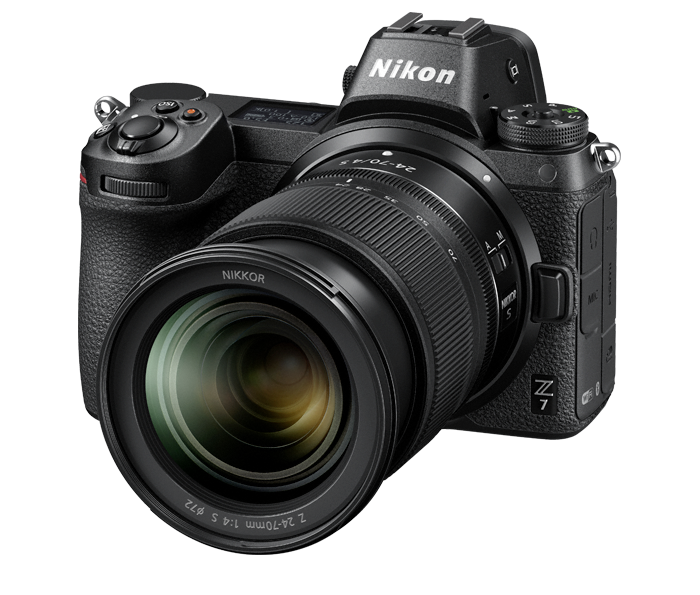
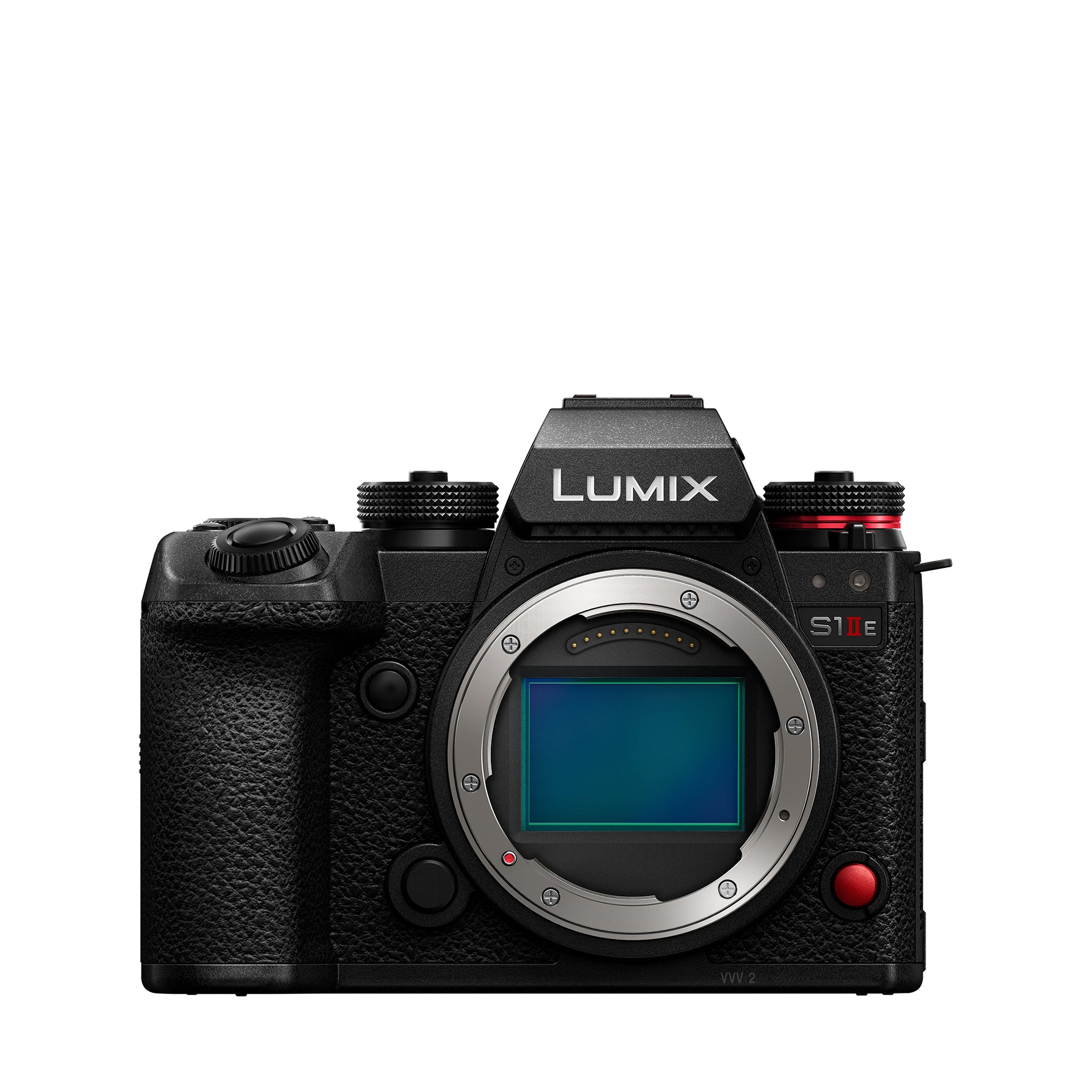
The Nikon Z7 and Panasonic S1 II E are two compelling full-frame mirrorless cameras that are often compared by photographers and videographers alike. Both cameras cater to professionals and enthusiasts seeking high-quality image capture, advanced features, and robust build quality, making them ideal for various photography genres and videography projects. Key differentiators between the two include sensor resolution, video capabilities, and overall ergonomics, which can significantly impact the user experience depending on the intended use.
Specifications Comparison
Detailed Comparison
Image Quality
The Nikon Z7 boasts an impressive 46-megapixel sensor that delivers exceptional resolution and detail, making it ideal for landscape, portrait, and studio photography. Photographers will appreciate the ability to produce large prints and crop into images without significant loss of quality. With an ISO range extending to 102400, the Z7 handles low-light situations well, providing versatility in different shooting environments.
In contrast, the Panasonic S1 II E features a 24.1-megapixel sensor, which, while lower in resolution, still provides excellent image quality for most applications. Its lower megapixel count can be more advantageous for speed and file management, as well as better noise performance at higher ISO settings. The S1 II E also supports dual native ISO, enhancing its capability in challenging lighting scenarios.
When it comes to dynamic range and color renderings, both cameras perform commendably under various lighting conditions. However, the Z7 slightly edges out with its higher resolution and more extensive ISO range, allowing for greater flexibility in post-processing.
Overall, in terms of image quality, the Nikon Z7 is the clear winner due to its superior resolution and broader ISO capabilities.
Autofocus System
The Nikon Z7 features a sophisticated autofocus system with 493 autofocus points, providing excellent coverage across the frame. Its hybrid autofocus system benefits from both phase and contrast-detection, making it effective in a variety of shooting scenarios. The Z7 also includes eye-detection autofocus, which is particularly useful for portrait photography.
On the other hand, the Panasonic S1 II E also offers an impressive autofocus system with fast and reliable performance, albeit with fewer autofocus points. Although specifics on the total number of focus points weren't outlined, its advanced DFD (Depth From Defocus) technology allows for quick focus acquisition and smooth tracking of moving subjects.
While both cameras excel in autofocus performance, the Z7's additional focus points and advanced tracking capabilities give it the edge in this category, particularly for action photography where precise focus is paramount. Additionally, the fast frame rates of the S1 II E can help compensate for its fewer points in some scenarios, but overall, the Nikon Z7 stands out as the better option for autofocus.
In conclusion, the Nikon Z7 wins this round with its superior autofocus system and versatility in different shooting contexts.
Video Capabilities
The Panasonic S1 II E is a powerhouse for video recording, offering multiple high-resolution options, including 5.9K at 60p, 4K up to 120p, and 1080p at a remarkable 240 fps. This makes it highly appealing for filmmakers and content creators seeking diverse recording formats and frame rates for creative video projects. The S1 II E is designed with videographers in mind, featuring comprehensive recording options and professional color profiles, including V-Log, which elevates its video production quality.
In contrast, the Nikon Z7 focuses on delivering solid video performance with 4K at 30p but lacks the higher resolutions and frame rates available in the S1 II E. While it still supports high-quality video recording that meets many needs, it's not as versatile as the S1 II E for high-end cinematic applications.
Given the distinct needs of videographers versus photographers, the S1 II E takes the lead in this category by providing a more extensive set of video features and capabilities. Its design caters to filmmakers and those who require more than just standard video functionality.
Overall, Panasonic S1 II E wins this category decisively due to its unmatched video capabilities.
Build & Ergonomics
Both the Nikon Z7 and Panasonic S1 II E are ruggedly built, designed to withstand the elements. The Z7 features a weather-sealed body, which provides added assurance when shooting in less-than-ideal conditions. Its ergonomic design and well-placed controls facilitate comfortable handling for prolonged periods of use.
Likewise, the Panasonic S1 II E is known for its robust build quality, with features like a solid metal chassis and weather sealing. However, it is worth noting that the S1 II E is slightly heavier than the Z7, which may affect portability, especially during extended shoots.
In terms of control layout, both cameras offer customizable buttons and intuitive settings, but the Z7's interface may be more user-friendly for photographers due to its larger touchscreen and clear menu design. On the flip side, some users may find the S1 II E's handling superior, especially when utilizing its extensive video features.
Overall, while both cameras are built for durability, the Nikon Z7 has a slight edge in ergonomics and weight for photography, making it easier to use for longer periods.
Battery & Storage
In terms of battery life, the Nikon Z7 is rated for approximately 330 shots per charge, which is fairly standard for mirrorless cameras. The battery life can be extended significantly when using power-saving features. The Z7 supports dual card slots, accommodating both XQD and SD cards, which enhances storage flexibility for photographers and videographers.
The Panasonic S1 II E, however, offers a more substantial battery life, especially in video shooting modes, allowing for longer recording times without the need to change batteries frequently. It also features dual card slots that accept both SD UHS-II cards, which are practical for high-speed data transfers necessary for extensive video recording sessions.
Despite the solid battery performance of both, the S1 II E's battery life and storage solution give it an advantage for users who prioritize longer recording times and broader compatibility for different functions, particularly in professional video settings.
Thus, while both cameras provide good battery and storage options, the Panasonic S1 II E takes the lead with better overall battery performance.
Value for Money
The Nikon Z7 is positioned at a price point of about $3399, reflecting its high-resolution sensor and advanced features tailored towards serious photographers. For those who prioritize image detail and overall image quality, the Z7 represents a strong investment. However, potential buyers should also consider the additional costs associated with lenses and accessories needed to fully utilize its capabilities.
On the other hand, the Panasonic S1 II E, while also a premium offering, typically comes in at a competitive price with its expansive video features and impressive performance, particularly for videographers. The S1 II E tends to offer better value in video-centric applications, making it an attractive option for users who combine photography and videography.
Ultimately, the value proposition will depend on individual needs. If high-resolution photography is the priority, the Z7 justifies its price. However, for those deeply involved in video production or demanding diverse recording options, the S1 II E can be seen as offering superior value.
In summary, choosing the overall best value depends on specific usage scenarios, hence leading to a tie in value for general versatility.
Lens Ecosystem
Nikon's Z mount system is growing, with a diverse range of native lenses available to users. The Z series lenses have excellent optical performance, particularly in terms of sharpness and bokeh, which is essential for portraiture and landscape photography. Nikon also has an array of F mount lenses available with an adapter, providing users with plenty of options, though it's advisable to check compatibility and performance with adapted lenses.
In contrast, the Panasonic Lumix S series benefits from the L-mount alliance with Sigma and Leica, offering a robust selection of lenses, including high-quality options for both photographic and videographic endeavors. This alliance means that users have access to a wider range of lenses tailored for various applications beyond what current native options provide.
For photographers specifically, both ecosystems are growing, but the adaptability of the L-mount alliance means users may benefit from a broader choice of lenses, especially for video shooters looking for specific focal lengths and characteristics.
In this case, while Nikon maintains a strong position, Panasonic's S1 II E edges ahead with its adaptable ecosystem benefitting users looking for versatility in multi-brand lens usage.
Our Verdict
Choosing between the Nikon Z7 and Panasonic S1 II E ultimately comes down to user needs and preferences. If high-resolution imaging and excellent autofocus for photography are foremost, the Z7 would be the best choice. However, if videography and overall video performance carry more weight, the S1 II E stands out as a superior option. Both cameras excel in their respective areas and offer solid performance, suggesting that potential buyers should evaluate their specific requirements to find the right fit for their creative endeavors.
Nikon Z7
Panasonic S1 II E
Also Compare
Frequently Asked Questions
Which camera is better for low-light photography?
The Nikon Z7 has a higher maximum ISO range and resolution, making it slightly better for low-light situations. However, the Panasonic S1 II E's dual native ISO also provides solid performance, so both options are capable.
Is the Z7 or S1 II E better for video?
The Panasonic S1 II E offers significantly higher video resolutions up to 5.9K and higher frame rates, making it the preferred choice for professional videography.
How do the lenses compare for each camera?
Nikon's Z mount system has a growing selection of native lenses, while Panasonic's L-mount offers a broader lens ecosystem through partnerships with Sigma and Leica, enhancing options for both video and photography.
What are the key differences in battery life?
The Panasonic S1 II E generally provides a longer battery life, especially during video recording, compared to the Nikon Z7's standard performance.
Which camera is more suitable for fast-action photography?
The Nikon Z7's superior autofocus system and resolution make it a better fit for fast-action photography, while the S1 II E's speed capabilities can cater well, especially for video.