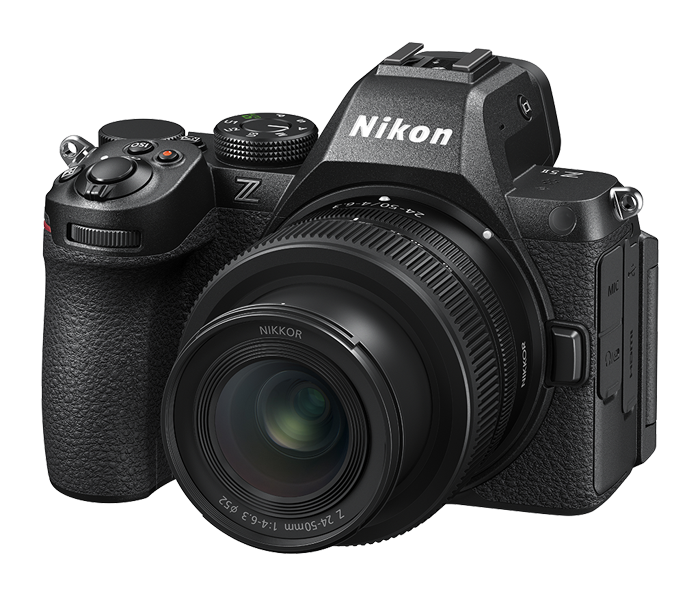
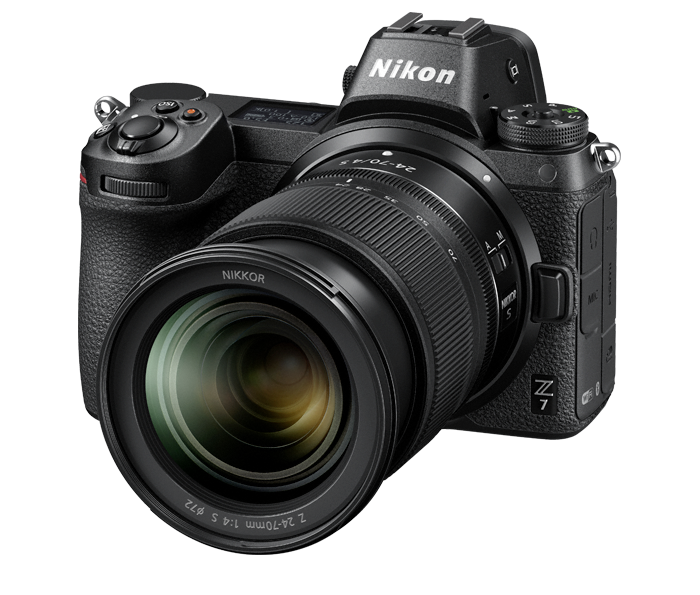
The Nikon Z5II and Nikon Z7 are two prominent full-frame mirrorless cameras offered by Nikon, appealing to both enthusiasts and professionals. Those in the market for a versatile full-frame camera often find themselves comparing these two models due to their shared Z mount, full-frame sensors, and electronic viewfinders. The Z5II, released in 2025, offers several modern features and a competitive price point, while the Z7, established in 2018, boasts exceptional resolution and a robust autofocus system, making it suitable for landscape and studio work. Key differentiators between these cameras include their resolution, autofocus capabilities, video specifications, and overall performance in various shooting conditions.
Specifications Comparison
Detailed Comparison
Image Quality
When it comes to image quality, the Nikon Z7 stands out with its impressive 46 megapixels, significantly higher than the Z5II's 24 megapixels. This higher resolution allows the Z7 to capture finer details, which is particularly advantageous for landscape photography, large prints, and cropping flexibility. On the other hand, the Z5II, while lower in resolution, still offers excellent image quality suitable for many applications, including portrait and general photography. Both models feature the same full-frame sensor size (35.9 x 23.9 mm), enabling them to produce images with good dynamic range and color depth.
However, the Z7's wider ISO range, extending up to 102,400, gives it an advantage in low-light situations, allowing photographers to shoot at higher sensitivities without too much noise. The Z5II's ISO range is more limited, with a maximum of 25,600, but it still performs admirably in low-light conditions. Ultimately, for those who prioritize image resolution and low-light capability, the Z7 is the better choice.
In summary, the Nikon Z7 excels in terms of image quality with its higher megapixel count and broader ISO range, making it more suitable for photographers focused on detailed and versatile shooting.
Autofocus System
The autofocus system is a critical aspect for many photographers, especially in fast-paced scenarios. The Nikon Z7 features a robust autofocus system with 493 focus points, compared to the Z5II's 299 focus points, providing greater coverage and precision in focusing. The Z7's autofocus system is particularly effective for tracking moving subjects, making it suitable for wildlife and sports photography.
While both systems utilize phase detection, the Z5II, despite having fewer autofocus points, incorporates advanced algorithms to deliver reliable performance for still photography and general use. However, it may exhibit limitations in extreme conditions or during fast action compared to the Z7's capabilities. The Z7 also benefits from the ability to focus effectively in low-light situations, further enhancing its utility for various photography styles.
Overall, while the Z5II provides a competent autofocus experience, the Z7's superior focus point count and overall performance in diverse conditions clearly give it the edge in autofocus functionality.
Video Capabilities
Video performance is increasingly important in modern cameras, and here the Nikon Z5II distinguishes itself with enhanced capabilities compared to the Z7. The Z5II offers 4K recording at 60 frames per second, providing smooth and high-quality video for filmmakers and content creators. This high frame rate can be particularly useful for action shots and cinematic projects. In contrast, the Z7 is limited to 4K at 30 frames per second.
Additionally, the Z5II's in-body image stabilization rated at 7.5 stops allows for more stable handheld shooting, especially beneficial for video work in dynamic environments. The Z7's stabilization, while solid at 5 stops, may result in shakier footage when used under similar conditions. This distinction is vital for videographers looking for the most versatility in their shooting capabilities.
Thus, for those focusing on videography, the Nikon Z5II offers notable advantages, making it the clear winner in this aspect.
Build & Ergonomics
Both the Nikon Z5II and Z7 feature robust build quality with weather sealing, giving them durability for outdoor use. The Z5II weighs slightly more at 700g compared to the Z7's 675g, but both are relatively light for full-frame mirrorless cameras. They share similar dimensions, with only minor differences in thickness that won't significantly impact handling. Both cameras feature a 3.2" LCD screen with 2,100,000 dots for display clarity, providing excellent visibility in various lighting conditions.
The ergonomic design of both bodies fits comfortably in the hand, with well-placed controls for ease of use. The Z7's build may be perceived as slightly more robust by some users due to its build history and intended professional use. Yet, the Z5II's newer design reflects modern user preferences, with thoughtful ergonomics that make it user-friendly.
In conclusion, while there are minor differences in weight and build perception, both provide excellent ergonomics and durability, resulting in a tie in this category.
Battery & Storage
Both the Nikon Z5II and Z7 are equipped with a similar battery life rating, providing approximately 330 shots per charge, which is adequate for a day's shooting under typical conditions. This parity may suggest they have comparable battery performance; however, their power management and processing efficiency may lead to real-world differences depending on usage. Both cameras utilize the same type of battery, allowing for interchangeability, which is a convenient feature for photographers using either model.
In terms of storage, both models support dual card slots, allowing users to take advantage of faster write speeds and redundancy, which are crucial for professional work. They are compatible with CFexpress and SD UHS-II memory cards, ensuring flexibility based on user preferences.
In summary, both cameras offer similar battery life and storage options, making it a tie in this category as users will find both suitable for various shooting needs without a significant advantage either way.
Value for Money
In evaluating the price-to-performance ratio, the Nikon Z5II, priced at $1,699, presents a more accessible option for enthusiasts and semi-professionals who seek advanced features without breaking the bank. With its improved video capabilities and solid overall performance, the Z5II provides excellent value for those new to full-frame photography or videography.
Conversely, the Nikon Z7 is priced at $3,399, targeting a more professional audience who require high resolution and superior autofocus capabilities. While the Z7 offers exceptional features, its higher price point may deter entry-level photographers or those who don't need the extensive resolution and performance benefits.
Thus, for buyers seeking the best value and adequate performance for a lower investment, the Nikon Z5II is the clear winner in this category, appealing to a broader audience.
Our Verdict
Overall, the Nikon Z5II emerges as the winner in this comparison primarily due to its exceptional value for money and advantages in video capabilities. While the Z7 offers superior image quality and autofocus performance, its higher price significantly impacts its accessibility for many photographers. The Z5II is highly suitable for enthusiasts needing a robust camera for various situations, while the Z7's strengths are more beneficial for professionals requiring high fidelity and tracking capabilities. Therefore, buyers should consider their specific needs and budget when making a decision, as both cameras excel in their respective niches.
Nikon Z5II
Nikon Z7
Also Compare
Frequently Asked Questions
Which camera is better for professional photography?
The Nikon Z7 is better suited for professional photography due to its higher resolution and superior autofocus system, delivering excellent image quality and performance in various conditions.
Can I use the same lenses on both cameras?
Yes, both the Nikon Z5II and Z7 use the Nikon Z mount, allowing you to use the same lenses across both models.
Is the Nikon Z5II better for video recording?
Yes, the Nikon Z5II has superior video capabilities, including 4K at 60 frames per second, which provides smoother and higher quality video compared to the Z7's 30 frames per second.
What is the main advantage of the Z7?
The main advantage of the Nikon Z7 is its high resolution (46 megapixels) and a more advanced autofocus system, making it ideal for detailed photography and complex focus tasks.
Which camera has better low-light performance?
While both perform well in low light, the Z7 benefits from a higher ISO range, making it more effective in low-light situations compared to the Z5II.