
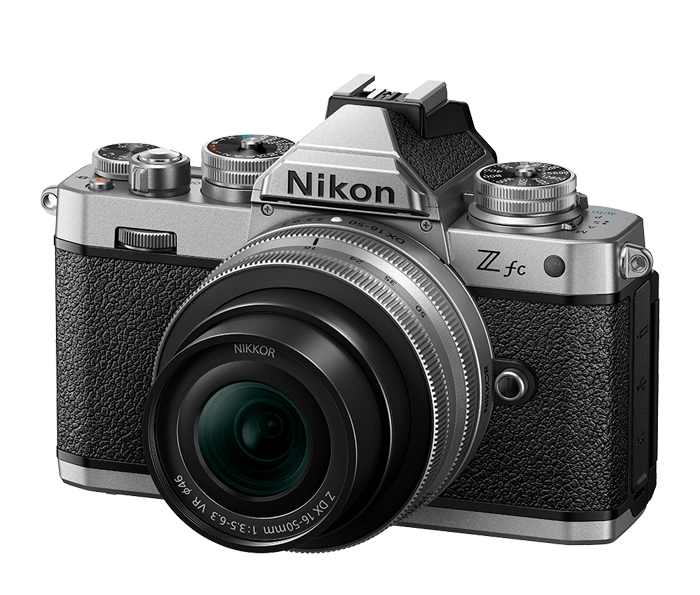
The Fujifilm X100VI and the Nikon Z fc are two highly regarded compact cameras that often come up in discussions among photography enthusiasts. Both are equipped with APS-C sensors, but they cater to different user preferences and shooting styles. The X100VI is celebrated for its high-resolution sensor and unique hybrid viewfinder, while the Z fc showcases a retro aesthetic combined with advanced features appealing to both novice and experienced photographers. Potential buyers are often torn between the X100VI's superb image quality and the Z fc's flexibility and modern design. Key differentiators include resolution, autofocus capabilities, video specifications, and overall ergonomics.
Specifications Comparison
Detailed Comparison
Image Quality
The Fujifilm X100VI boasts a 40-megapixel APS-C sensor, which provides highly detailed images and a better dynamic range compared to the 21-megapixel sensor of the Nikon Z fc. This increase in resolution allows for larger prints and more cropping flexibility in post-processing. Furthermore, Fujifilm is known for its outstanding film simulation modes, which enhance the color and tonal rendition, catering especially to those who enjoy a particular aesthetic with Fuji's unique palettes.
On the other hand, the Nikon Z fc's 21-megapixel sensor captures images that are still impressive in terms of color depth and low-light performance, but it does not match the sheer pixel count of the X100VI. The broader ISO range of the Z fc makes it versatile, allowing for low-light shooting up to 204800, although real-world usability may vary. Both cameras perform admirably in typical scenarios, but the X100VI's edge in megapixels and dynamic range gives it a notable advantage.
Overall, anyone who prioritizes image detail and quality for professional work or high-end prints might lean more towards the X100VI, whereas the Z fc will still meet the needs of casual photographers effectively.
Autofocus System
Fujifilm's X100VI features an advanced autofocus system with 425 points, allowing for highly precise and fast focusing across a wide area of the frame. This is particularly beneficial for capturing fast-moving subjects or achieving accurate focus in challenging lighting conditions. The X100VI also offers face and eye detection focus modes that make it ideal for portrait photography.
Conversely, the Nikon Z fc, while also capable, comes with 209 autofocus points. This is sufficient for most photography scenarios, but it does fall short of the extensive coverage and flexibility of the X100VI's system. The Z fc does incorporate some robust tracking features and performs competently in both photography and videography, making it versatile for various shooting styles, but for those who require cutting-edge autofocus performance, the X100VI leads the way.
In practical terms, users who often shoot fast action will find the X100VI's focusing capabilities advantageous, while casual shooters may appreciate the Z fc's simplicity without feeling disadvantaged.
Video Capabilities
When it comes to video capabilities, the Nikon Z fc has an upper hand, offering 4K video resolution up to 30 frames per second. This makes it a solid choice for videographers looking for a compact camera that can handle decent quality video recording. Although the X100VI is primarily designed as a photography-centric camera, it can record video in 4K, but it lacks the same level of features and output quality that the Z fc provides.
The X100VI integrates video capabilities that are well-designed but not as robust, appealing more to photographers who occasionally record videos rather than those who require advanced video functions. It offers fewer frame rate options and settings compared to the Z fc. Thus, for those seeking a dual-purpose device focused on both photography and video production, the Nikon Z fc is clearly more equipped.
To sum up, if you are primarily interested in high-quality video capture alongside still photography, the Z fc stands out as the better choice, while the X100VI may appeal primarily to still photographers who favor simplicity in their video shooting.
Build & Ergonomics
Both the X100VI and the Z fc offer distinct build qualities that cater to different preferences. The X100VI features a solid, retro-inspired design, weighing 521g, and compact dimensions that facilitate easy portability. Its electronic and optical hybrid viewfinder allows photographers to choose their preferred viewing style. The X100VI is built with high-quality materials that lend to a premium feel, setting it apart in durability.
On the other hand, the Nikon Z fc, though slightly lighter at 445g, carries a unique vintage look reminiscent of film cameras, making it aesthetically pleasing to many users. However, it lacks the hybrid viewfinder, instead offering purely electronic viewing. This might discourage some traditionalists who appreciate optical views. Ergonomics are subjective, but many users find the Z fc comfortable to handle, particularly for extended shooting sessions.
Ultimately, the choice between the two may come down to individual taste in design and handling preference. Those preferring a hybrid viewfinder and a more rugged build may lean toward the X100VI, while those seeking a stylish, lightweight option may gravitate toward the Z fc.
Battery & Storage
In terms of battery life, the Fujifilm X100VI outperforms the Nikon Z fc with 450 shots per charge compared to the Z fc's 300 shots. This extended battery life can be a significant advantage for photographers who are out in the field for longer periods without the opportunity to recharge. It allows for less concern about running out of power during critical shooting times, making the X100VI more reliable for extended use.
Both cameras utilize SD storage, but the X100VI's superior battery life means fewer interruptions during shoots for battery changes. This can be particularly important for event photography, where capturing moments spontaneously is essential. The Z fc's battery life could suffice for casual shooting or shorter sessions but may pose limitations for more serious enthusiasts.
In conclusion, if battery reliability is a significant factor in your decision-making, the Fujifilm X100VI clearly takes the lead.
Value for Money
The Nikon Z fc, priced at $959, is positioned as a more affordable option compared to the Fujifilm X100VI, which retails at $1599. For beginner photographers or those with a budget, the Z fc offers a compelling feature set that includes good image quality and decent video capabilities without financial strain. Its pricing strategy makes it accessible, particularly appealing to younger or entry-level videographers.
On the other hand, the X100VI may seem steep at first glance, but it offers high-end specifications, particularly in image resolution and AF performance. For professional photographers or serious enthusiasts looking for a reliable compact camera, the investment may be justified, considering the return in image quality and performance.
Ultimately, the value of each camera lies in its intended use. If overall specs and performance are the priority, the X100VI could be considered a worthy investment. However, for cost-conscious users looking for essential functionalities, the Z fc represents fantastic value.
Our Verdict
In the overall comparison, the Fujifilm X100VI edges out the Nikon Z fc mainly due to its superior image quality, autofocus system, and battery life. For photographers who value high resolution, exceptional performance in various conditions, and longer usability periods, the X100VI is the better choice. However, the Z fc still performs admirably, especially appealing to those focused on video capabilities and contemporary design without exceeding budgets. The preference ultimately depends on photography needs, with the X100VI for those seeking top-tier photography, while the Z fc is perfect for casual users and those venturing into videography.