
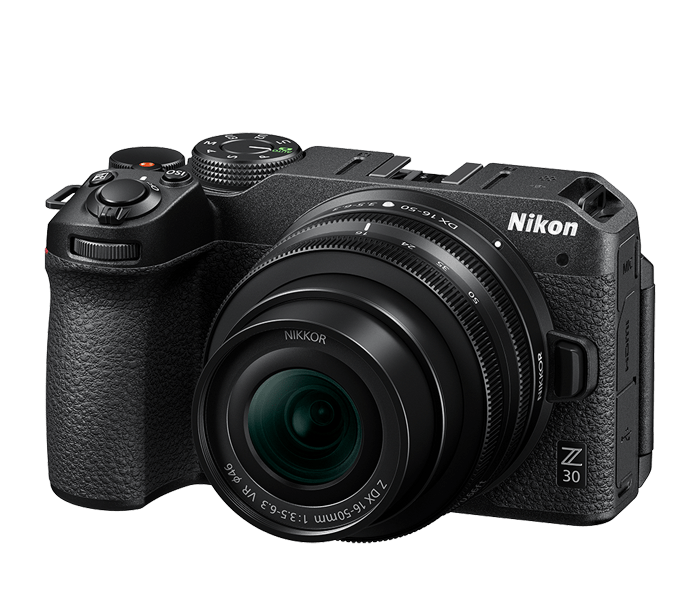
The Fujifilm X-T5 and Nikon Z30 are two popular mirrorless cameras that cater to different segments of the photography market. Both models were released in 2022, making them contemporary options for enthusiasts and beginners alike seeking high-quality imaging solutions. The X-T5 is aimed at advanced users and professionals with its substantial features, whereas the Z30 targets entry-level videographers and hobbyists looking for a solid all-rounder. Potential buyers are often left choosing between the detailed specs and unique capabilities of these two models, particularly in areas such as image quality, autofocus performance, and overall value for money.
Specifications Comparison
Detailed Comparison
Image Quality
The Fujifilm X-T5 showcases a 40-megapixel APS-C sensor which is capable of resolving fine details and handling a wide dynamic range, offering exceptional image quality in a variety of lighting conditions. With an ISO range expanding from 64 to 51,200, the X-T5 is well-suited for low-light scenarios, further enhanced by its 7-stop in-body stabilization system that minimizes blur during handheld shooting. On the other hand, the Nikon Z30 features a lower resolution 21-megapixel sensor, which, while still capable of producing high-quality images, does not match the level of detail the X-T5 can capture. The Z30's ISO range also starts lower at 100 but offers better high ISO expansion up to 204,800 if required, although real-world performance at these extremes may not hold up as favorably compared to the X-T5. While both cameras deliver solid images, the X-T5's top-tier sensor clearly gives it an edge, especially for those who need superior image quality and detail for large prints or cropping.
Autofocus System
The Fujifilm X-T5 impresses with its autofocus system, featuring a total of 425 phase-detection points that provide precise and swift focusing capabilities across a variety of shooting conditions. This comprehensive AF system allows photographers to track moving subjects with confidence, making it suitable for action shots and wildlife photography. In contrast, the Nikon Z30, with its 209 autofocus points, offers decent performance for entry-level shooters but may struggle in more demanding situations, especially in low light or fast-action photography. While both systems are generally reliable, the X-T5's sophisticated autofocus technology caters more aptly to advanced photography needs, allowing for better tracking and accuracy.
Video Capabilities
Fujifilm's X-T5 is a robust option for videographers, supporting up to 6.2K video recording and providing exceptional video quality and color science, particularly in 4K resolutions. It is also equipped with various video features such as F-Log and support for external microphones, making it suitable for professional video work. On the other hand, the Nikon Z30, while it shoots in 4K at 30 frames per second, lacks in-body stabilization and advanced video functionalities that the X-T5 provides, potentially limiting its utility for videographers who demand higher-level features. Therefore, for those focused on video production, the X-T5 stands out more than the Z30.
Build & Ergonomics
The Fujifilm X-T5 offers a robust and weather-sealed body, making it a prudent choice for outdoor photography and harsh conditions. Its old-school, analog-style controls appeal to users who appreciate tactile feedback, contributing to an engaging shooting experience. The camera is slightly heavier at 557 grams and larger than the Z30, which may be a consideration for portability. Meanwhile, the Nikon Z30 also boasts a weather-sealed design but is lighter at 405 grams and features an ergonomically designed grip, enhancing comfort for extended shoots. Additionally, the absence of a viewfinder is notable in the Z30, as it relies solely on the LCD screen, which may deter some users. While both cameras are designed with quality in mind, the X-T5's advanced ergonomic controls lend itself to a more traditional photographic experience.
Battery & Storage
In terms of battery life, the Fujifilm X-T5 excels, boasting a rated lifespan of approximately 580 shots per charge, which is notably better than the Nikon Z30's 330 shots. This extended battery life makes the X-T5 more suitable for long photo sessions or extended travel without the need for frequent recharging. Both cameras support SD card storage, but the Z30 lacks the high speed and large capacities that may be required for high-resolution video, which the X-T5 can handle with ease. Moreover, the Z30's limited battery life could become a constraint for users planning to capture a significant amount of footage or still images in prolonged settings. Thus, the energy efficiency and performance of the X-T5 give it the upper hand in this category.
Value for Money
The Fujifilm X-T5 comes at a premium price of $1,699, reflecting its advanced features and professional capabilities. However, for those who prioritize high image quality, extensive control over photography settings, and superior video performance, the price may be justified. In contrast, the Nikon Z30 is priced significantly lower at $710, making it a more accessible option for beginners or casual users who may not require high-end features but still want decent image and video quality. For new photographers looking for an introductory camera or those primarily focused on vlogging, the Z30 presents a strong value. However, given the overall performance and capabilities, the X-T5 provides more for those willing to invest in a more versatile tool.
Our Verdict
The Fujifilm X-T5 emerges as the overall winner in this comparison due to its superior image quality, robust autofocus system, advanced video features, and longer battery life. These attributes make it an ideal choice for serious photographers and videographers looking for a high-performance camera. On the other hand, the Nikon Z30 is a strong contender for beginners seeking a user-friendly option with good value for money, especially for those focused primarily on casual video content creation. Each model shines in its respective area, but when it comes to features and overall performance, the Fujifilm X-T5 stands out as the more comprehensive tool.