
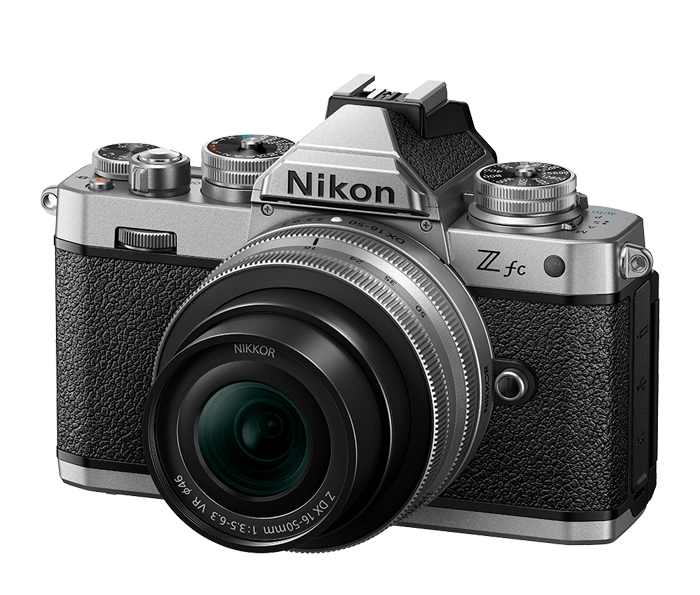
The Fujifilm X-T5 and Nikon Z fc are both popular choices among photography enthusiasts, particularly those looking for APS-C mirrorless cameras that balance advanced features and portability. The X-T5 has garnered attention for its high-resolution sensor and advanced autofocus capabilities, whereas the Z fc appeals to those who prioritize design aesthetics and affordability. Buyers may find themselves choosing between these two models based on their specific needs, whether that be for high-quality images, superior autofocus performance, or simply the visual charm of a retro-inspired camera.
Specifications Comparison
Detailed Comparison
Image Quality
The Fujifilm X-T5 stands out in terms of image quality, featuring a 40-megapixel sensor that delivers outstanding detail and resolution, making it an excellent choice for landscape and portrait photography. Its APS-C sensor size of 23.5 x 15.6 mm, combined with Fujifilm's renowned color science, results in vibrant and true-to-life images. Moreover, the X-T5's ISO range of 125 to 12,800 (expandable to 64-51,200) further enhances its performance in low-light situations, which is crucial for many photographers.
On the other hand, the Nikon Z fc, with its 21-megapixel sensor, offers good image quality but falls short when compared to the X-T5. The Z fc's ISO capability ranges from 100 to 51,200 (expandable to 100-204,800), which allows for decent low-light performance, but the lower megapixel count means less detail in larger prints or heavy cropping scenarios. For those who prioritize high-resolution images, the X-T5 is clearly the superior option.
In summary, while both cameras can produce high-quality photographs, the Fujifilm X-T5's higher resolution and overall better low-light performance make it the winner in this category.
Autofocus System
The autofocus system is a critical factor in achieving sharp images, and here, the Fujifilm X-T5 again leads the charge with its advanced 425-point autofocus system. This extensive point coverage allows for faster and more accurate focusing across a wide area of the frame. The X-T5 also benefits from advanced tracking algorithms, which improve its ability to lock onto moving subjects, making it suitable for sports and wildlife photography.
In contrast, the Nikon Z fc utilizes a 209-point autofocus system, which, while competent, doesn't match the extensive coverage offered by the X-T5. The Z fc's autofocus can still perform well in most situations, but it may struggle slightly in fast-paced scenarios compared to the X-T5. This difference is particularly noticeable when shooting action sequences or when subjects are quickly moving through the frame.
Overall, the contrast in autofocus capabilities suggests that those in need of rapid and precise focusing-such as sports photographers-will find the Fujifilm X-T5 to be a more viable option.
Video Capabilities
When it comes to video capabilities, the Fujifilm X-T5 offers impressive features, including the ability to shoot at 6.2K up to 30p and 4K at 60p, providing filmmakers with high-resolution options that capture incredible detail and smooth motion. Its in-body stabilization, rated at 7 stops, helps reduce camera shake, which is especially valuable for handheld shooting during video recording.
The Nikon Z fc, while capable of 4K video at 30p, does not offer the same resolution and frame rate options as the X-T5. Additionally, it lacks in-body stabilization, which can limit the smoothness of video capture, particularly for those who shoot freehand. Consequently, while the Z fc can handle general video tasks, it may not satisfy more demanding video projects, especially those that require high resolution or smooth motion.
Considering these factors, the Fujifilm X-T5 takes the lead for videographers looking for robust recording features.
Build & Ergonomics
When considering build and ergonomics, both cameras present themselves well, but they do have distinct characteristics. The Fujifilm X-T5 is weather-sealed, which lends itself to durability in various environmental conditions. This is particularly advantageous for outdoor photographers or those in unpredictable weather. Additionally, its classic design is familiar to users of previous X-T series cameras, enhancing ease of use for existing fans.
The Nikon Z fc, although not weather-sealed, offers a stylish retro design that many photographers find appealing. Its compact dimensions make it lightweight and easy to carry, particularly for daily shooting or travel. However, it lacks some of the robustness seen in the X-T5. Furthermore, while the Z fc has a slightly smaller grip, it may not provide the same level of comfort during extended shooting sessions as the X-T5.
In summary, while the Z fc offers a stylish design, the X-T5's weather-sealing and ergonomic advantages cater better to professional and serious enthusiasts.
Battery & Storage
Battery performance is crucial for any photographer, and the Fujifilm X-T5 excels with a rated battery life of approximately 580 shots, based on CIPA standards. This longevity makes it suitable for extensive shooting sessions without frequent recharging. In terms of storage, it supports dual SD card slots, allowing photographers to save their images in redundant ways or separate formats, which adds to its reliability in the field.
In contrast, the Nikon Z fc has a weaker battery life at around 300 shots, which may require more frequent battery swaps during long shoots. It also only includes a single SD card slot, limiting options for video recording or long photography sessions, where the need for backup storage may arise.
Given these considerations, the Fujifilm X-T5 emerges as the winner, offering a more robust battery life and enhanced storage capabilities.
Value for Money
In terms of pricing, the Nikon Z fc offers a more budget-conscious option at $959, making it attractive for beginner photographers or those seeking a capable camera without breaking the bank. Its retro design and decent performance in general photography make it a compelling choice for casual shooters or enthusiasts starting their journey.
Conversely, the Fujifilm X-T5 is priced at $1699, positioning it as a higher-end offering. The increased cost is justified through its superior image quality, advanced autofocus system, and enhanced video features, which cater to professionals or serious creators requiring those capabilities. For those who place high value on these aspects, the X-T5 may offer better long-term value despite the higher upfront cost.
Ultimately, while the Nikon Z fc provides considerable value as an entry-level camera, the Fujifilm X-T5's feature set and performance justify its premium pricing for serious photographers.
Our Verdict
Overall, the Fujifilm X-T5 emerges as the standout winner in this comparison, particularly for photographers who seek high-resolution images, advanced autofocus capabilities, and superior video features. Its robust build, weather-sealing, and longer battery life are significant advantages that cater to serious enthusiasts and professionals alike. Conversely, while the Nikon Z fc offers appeal through its stylish retro design and affordable price point, it may best serve casual photographers or those who prioritize aesthetics over advanced functionalities. Ultimately, each camera has its strengths, but the X-T5's comprehensive feature set ensures it is better suited for more demanding photographic scenarios.
Fujifilm X-T5
Nikon Z fc
Also Compare
Frequently Asked Questions
Which camera is better for low-light photography?
The Fujifilm X-T5 is superior for low-light photography due to its higher megapixel count and wider ISO range, making it better suited for capturing detail in challenging lighting conditions.
Is the Nikon Z fc a good choice for beginners?
Yes, the Nikon Z fc is an excellent choice for beginners due to its affordable price point, retro design, and user-friendly interface, allowing new photographers to easily navigate and learn.
How do the video capabilities compare?
The Fujifilm X-T5 offers more advanced video options, including 6.2K recording and superior in-body stabilization, while the Nikon Z fc is limited to 4K at 30p without stabilization.
What are the key differences in autofocus performance?
The Fujifilm X-T5 features a more advanced 425-point autofocus system, ideal for capturing fast-moving subjects, while the Nikon Z fc has a 209-point system, which may not perform as accurately in high-speed scenarios.
Which camera has better build quality?
The Fujifilm X-T5 has a weather-sealed body which offers greater durability compared to the Nikon Z fc, which lacks weather sealing and may not handle adverse conditions as well.