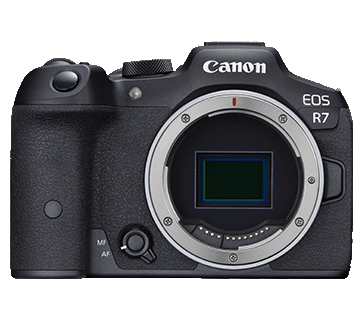

The Canon EOS R7 and Sony ZV-E10 II are two standout mirrorless cameras that cater to different segments of the videography and photography market. While both cameras feature an APS-C sensor size and are capable of delivering high-quality images, they are tailored to different users. The EOS R7 is designed with enthusiast photographers in mind, providing advanced features and superior durability, whereas the ZV-E10 II primarily targets vloggers and content creators looking for simplicity and video prowess. The key differentiators lie in their autofocus capabilities, video specifications, and overall user experience.
Specifications Comparison
Detailed Comparison
Image Quality
The Canon EOS R7 offers 33 megapixels, which allows for more detailed images and greater flexibility for cropping in post-production. Its APS-C sensor (22.2 x 14.8 mm) provides excellent dynamic range and low-light performance, with an ISO range of 100-32,000. This means that it can capture cleaner images in various lighting conditions, which is particularly beneficial for still photography enthusiasts.
On the other hand, the Sony ZV-E10 II features a slightly larger APS-C sensor size (23 x 15.5 mm) with 26 megapixels. While the megapixel count is lower, the camera offers an expandable ISO range up to 102,400, which may be advantageous for extreme low-light situations. The ZV-E10 II's imaging technology is also adept at reproducing colors, making it suitable for videos and vlogs.
In terms of image quality, the R7 has an edge due to its higher megapixel count, although the ZV-E10 II provides good performance particularly for its intended audience of mobile content creators who favor strong video quality. Thus, for still photography and higher resolution needs, the winner is the EOS R7.
Autofocus System
When comparing the autofocus capabilities, the Canon EOS R7 boasts an impressive 651 autofocus points, facilitating precise focusing even in challenging conditions. This extensive focus system is beneficial for both still photography and videography, ensuring sharp images regardless of the subject's motion.
In contrast, the Sony ZV-E10 II features 759 autofocus points, which not only outnumbers its competitor but also has advanced Real-Time Eye Auto Focus. This makes it excellent for tracking moving subjects, particularly useful for vloggers and action deliverables. However, it does lack the more advanced dual pixel autofocus of the R7.
While both autofocus systems are top-tier for their respective uses, the ZV-E10 II offers a slight advantage for video production and live-action shooting. Therefore, the winner in this category is the ZV-E10 II due to its advanced tracking and face detection features.
Video Capabilities
The video capabilities of each camera highlight their intended use cases. The Canon EOS R7 supports 4K recording at 30p, which is suitable for most videography needs but may be limiting for creators looking for higher frame rates or advanced video features.
In contrast, the Sony ZV-E10 II excels in 4K video recording at 60p, providing smoother footage perfect for high-action scenes and dynamic content creation. Additionally, the integration of features such as product showcase settings make it particularly attractive for vloggers. However, it should be noted that the ZV-E10 II does not include stabilization, which could be a drawback for handheld shooting.
Given this analysis, the ZV-E10 II wins the video category due to its higher frame rate and vlogging-oriented features, making it more appealing to content creators focusing on dynamic video work.
Build & Ergonomics
The Canon EOS R7 features a more robust build quality than the Sony ZV-E10 II, reflected in its weather-sealed construction. This makes the R7 a better choice for outdoor photography in varying weather conditions, providing added peace of mind for serious photographers.
On the contrary, the ZV-E10 II is significantly lighter at 377g compared to the R7's 612g, making it more portable and easier to handle for extended periods, particularly for vloggers who often carry their camera around. It also features a fully articulating touchscreen, making it ideal for self-recording situations.
While both cameras are user-friendly, the R7 excels in durability while the ZV-E10 II offers flexibility and portability. Therefore, the winner here is a tie as both have strengths depending on the user's priorities.
Battery & Storage
The Canon EOS R7 is equipped with a battery capable of shooting approximately 660 images on a full charge. This is a strong point for photographers who need extended shooting sessions without interruption. It uses dual card slots that support UHS-II SD cards, providing flexibility in storage options and backup during critical shoots.
In contrast, the Sony ZV-E10 II's battery life is less impressive, typical of mirrorless cameras at around 440 images, making it necessary for users to carry extra batteries for prolonged use. However, it does offer a single card slot that supports fast UHS-I cards, which is advantageous but less robust than dual slots.
Considering the battery performance and dual card storage, the EOS R7 has the edge in this comparison. Thus, the winner is the Canon EOS R7 as it caters better to users who prioritize battery life and storage options.
Value for Money
The Canon EOS R7 is priced at $1499, embodying a range of high-end features suitable for serious photographers and advanced hobbyists. This price may be justified given its construction quality, feature set, and image quality. However, this higher price point may not appeal to casual users primarily focused on video.
The Sony ZV-E10 II, priced at $1000, represents a more accessible option specifically tailored toward content creators. It sacrifices some higher-end photography features for the ability to deliver excellent video performance, making it a more budget-friendly choice for vloggers and those who prioritize video over photography.
While the R7 offers more in terms of photography features, the ZV-E10 II provides great value for creators focusing on affordable video production. Therefore, for overall value for money, the winner is the Sony ZV-E10 II for its specific advantages tailored toward its target audience.
Our Verdict
Overall, the Canon EOS R7 emerges as the frontrunner for photography-focused users, delivering superior image quality, robust build, and solid battery performance. Conversely, the Sony ZV-E10 II shines in video capabilities, autofocus performance tailored for vlogging, and affordability, making it an excellent choice for content creators. Buyers should consider their primary use case: choose the R7 for photography and durability or the ZV-E10 II for video-centric needs and cost efficiency.
Canon EOS R7
Sony ZV-E10 II
Also Compare
Frequently Asked Questions
Which camera is better for photography?
The Canon EOS R7 is better for photography due to its higher megapixel count, superior image quality, and robust autofocus system. It is specifically designed to meet the needs of serious photographers.
Is the Sony ZV-E10 II suitable for beginners?
Yes, the Sony ZV-E10 II is an excellent choice for beginners, especially for those focused on vlogging and video creation. Its lightweight design and user-friendly features facilitate ease of use.
How important is weather sealing in a camera?
Weather sealing is important for users who shoot in varied or harsh weather conditions. It enhances durability and allows for more versatility in environmental challenges, making the Canon EOS R7 a better choice for such scenarios.
Can I use the same lenses on both cameras?
No, the Canon EOS R7 uses RF mount lenses, while the Sony ZV-E10 II uses E mount lenses. You will need to invest in a lens system compatible with the respective camera.
What camera is better for video shooting?
The Sony ZV-E10 II stands out for video shooting due to its higher frame rate of 4K 60p and advanced autofocus features, making it a strong choice for vloggers and content creators.
Do both cameras support 4K video?
Yes, both cameras support 4K video, but the Canon EOS R7 is limited to 30p, whereas the Sony ZV-E10 II can record at 60p, providing smoother video options for its users.