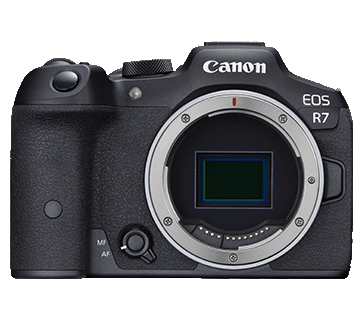
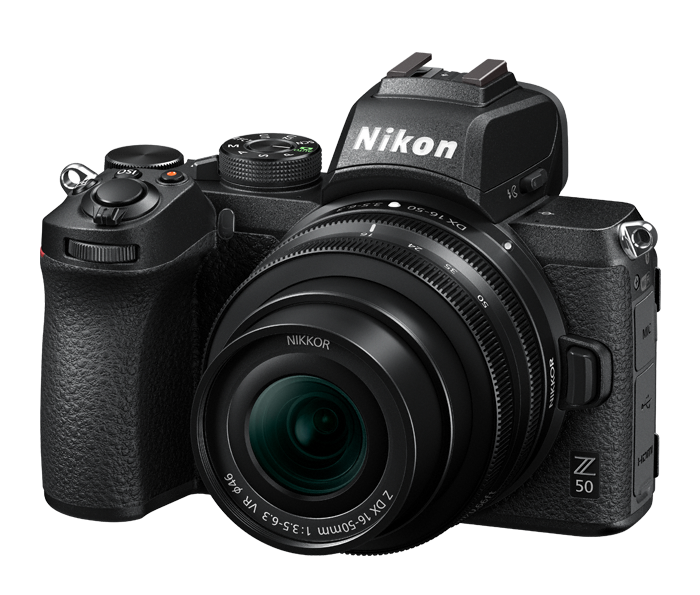
The Canon EOS R7 and Nikon Z50 are two popular mirrorless cameras that cater to enthusiasts and semi-professional photographers looking for capable APS-C formats. Instances where buyers consider these models often arise due to their appealing feature sets, competitive prices, and brand loyalty. Each camera offers unique advantages tailored to different styles of photography, making a comparison both interesting and relevant in the current market.
Specifications Comparison
Detailed Comparison
Image Quality
When it comes to image quality, the Canon EOS R7, with its 33 megapixels, provides a higher resolution compared to the Nikon Z50's 21 megapixels. This factor is especially significant for photographers who require larger print sizes or extensive cropping capabilities. Additionally, the Canon camera boasts an ISO range of 100-32000, which, while not as expansive as the Nikon's native range (100-51200 expandable to 204800), offers excellent performance within its specified range with minimal noise. Users seeking detail-oriented images or low-light performance might find the R7's higher megapixel count beneficial, despite Nikon's impressive low-light capabilities with its expanded ISO range. Both cameras produce high-quality images with vibrant colors and sharp details, but the Canon's higher resolution gives it an edge in critical image quality situations.
Autofocus System
The Canon EOS R7 features a robust autofocus system with an impressive 651 autofocus points, giving it superior coverage and precision for tracking subjects across the frame. In contrast, the Nikon Z50 has 209 autofocus points, which, while efficient, pales compared to the R7 in terms of versatility. The R7's advanced Dual Pixel CMOS AF technology allows for fast and accurate focusing, particularly in dynamic shooting environments, making it better suited for capturing fast-moving subjects. Nikon's Z50 performs well for its target users but may struggle in more challenging focusing scenarios, particularly with fast action or erratic movement. Therefore, for users prioritizing fast and reliable autofocus, especially in sports or wildlife photography, the Canon EOS R7 is the clear winner.
Video Capabilities
Both the Canon EOS R7 and Nikon Z50 are equipped to shoot 4K video at 30 frames per second, offering appealing options for videographers. However, the Canon R7 includes advanced video features such as in-body image stabilization (IBIS) rated at 6 stops, which significantly enhances handheld video stability. The Nikon Z50 lacks in-body stabilization, relying instead on lens-based stabilization, which may not be as effective for handheld shooting. This lack of stabilization could be a drawback for creators expecting to shoot dynamic or moving footage without a tripod. While both cameras offer solid video capabilities for casual videographers, the added stabilization and higher megapixel count in the R7 make it the better choice for video work.
Build & Ergonomics
In terms of build quality, both the Canon EOS R7 and Nikon Z50 offer weather-sealed bodies, allowing for use in challenging environments. The Canon R7, however, is slightly larger and heavier at 612g compared to the Z50's 450g, which may influence portability for some users. The R7's dimensions (132 x 90 x 92 mm) offer a more robust grip, beneficial for prolonged use. Meanwhile, the Z50's smaller form factor (127 x 94 x 60 mm) is more compact and travel-friendly, making it suitable for street photography and travel use. Both cameras are designed with user-friendly controls, but preferences may depend on whether a buyer prefers a bulkier, more solid feel or a lightweight and portable option. Ultimately, whether one favors the build of the R7 or Z50 will depend on personal preferences regarding weight and handling.
Battery & Storage
Battery life is a critical factor for many photographers, especially those shooting extensively throughout the day. The Canon EOS R7 provides a considerably higher battery life, offering approximately 660 shots per charge, which is substantially better than the Nikon Z50's 320 shots. This provides the R7 with an advantage for those who need to shoot for longer without constantly recharging. In terms of storage, both cameras use SD cards, with the Canon R7 supporting UHS-II cards, allowing for faster data transfers, which can be beneficial during continuous shooting sessions. While the Nikon Z50 also handles UHS-I cards, its slower card speeds could be a limiting factor for high-burst scenarios. Thus, for users demanding extensive operating time and faster storage capabilities, the Canon EOS R7 clearly stands out.
Value for Money
In terms of value, the Nikon Z50, priced at $859, represents a more budget-friendly option, making it an excellent choice for entry-level photographers or those who might be more price-sensitive. Despite its lower price, it delivers solid performance and features suitable for general photography needs. On the other hand, the Canon EOS R7, priced at $1499, targets a more advanced audience with its premium features and specs, justifying the higher price with enhancements in image quality, autofocus, and stabilization. Potential buyers need to consider their budget and intended use cases. Those seeking high-end performance may see value in the R7, while users who prioritize affordability without sacrificing too much quality may find the Z50 to be an exceptional deal.
Our Verdict
Overall, the Canon EOS R7 emerges as the top choice for both enthusiasts and professional photographers, boasting superior image quality, autofocus capabilities, and video features that appeal to demanding users. While the Nikon Z50 offers excellent value for its price point and is suitable for travel and casual photography, its limitations in autofocus and battery life make it less ideal for critical photography work. Buyers who prioritize performance and advanced features will be more satisfied with the R7, whereas those on a budget or those who primarily engage in casual photography might find the Z50 to be perfectly adequate for their needs.
Canon EOS R7
Nikon Z50
Also Compare
Frequently Asked Questions
Which camera has better low-light performance?
The Canon EOS R7 has a native ISO range of 100-32000, while the Nikon Z50 has a broader native ISO range of 100-51200 (expanding further). In practical terms, both cameras perform well at lower ISO settings, but the Nikon Z50 might yield better results in very low-light conditions due to its higher expandable range.
Is the Canon EOS R7 worth the extra cost?
If you require higher resolution, superior autofocus, and better battery life, the Canon EOS R7 justifies its higher price. It is ideal for serious photographers who demand performance and versatility. However, if you're just starting out or have a limited budget, the Nikon Z50 offers commendable features that will serve you well.
What about the lens options for each system?
Both Canon and Nikon have a growing selection of lenses for their respective mirrorless systems. Canon's RF lens line is more extensive at this point, especially for high-performance options, whereas Nikon is building its NIKKOR Z lenses. Consider your needs and find out which system's offerings align with your photography style.
Which camera is better for video creators?
The Canon EOS R7 is better suited for video creators due to its in-body stabilization and overall higher resolution and autofocus performance. While the Nikon Z50 also supports 4K video, it lacks the stabilization feature that gives the R7 an edge in maintaining smooth footage.
How does the size difference affect usability?
The smaller and lighter Nikon Z50 is more comfortable for travel and street photography where portability is key. However, the Canon EOS R7's slightly larger grip may provide better ergonomics for prolonged use, especially when using heavier lenses.