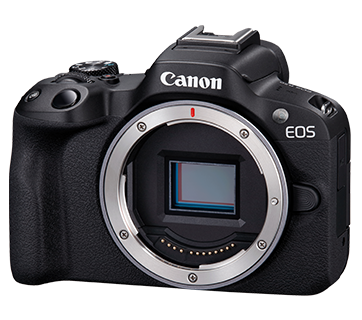

The Canon EOS R50 and Fujifilm X-H2 are both compelling options for photographers and videographers, catering primarily to those looking for high-quality imaging capabilities in an APS-C format. Commonly compared due to their similar target audience-enthusiasts and semi-professionals-these cameras present contrasting features that appeal to diverse needs. The Canon EOS R50 is designed for those seeking an affordable entry into the Canon RF ecosystem, whereas the Fujifilm X-H2 appeals to users who prioritize advanced specifications and build quality, but at a higher price point.
Specifications Comparison
Detailed Comparison
Image Quality
In terms of image quality, the Fujifilm X-H2 holds a significant advantage with its 40-megapixel sensor, compared to the Canon EOS R50's 24-megapixel sensor. This higher resolution allows for more detail in images, making the X-H2 an excellent choice for large prints or extensive cropping. Additionally, the Fujifilm's proprietary color science is well-regarded for producing vibrant and faithful color reproduction, especially in skin tones. While the Canon images are also high in quality and can produce excellent results for most standard usage, they may lack the fine detail and dynamic range available in the significant megapixel bump offered by Fujifilm.
In low-light situations, the Canon EOS R50 has an ISO range capable of reaching 32,000; however, the Fujifilm X-H2 extends its capabilities with an expanded ISO range of 51200, delivering clean images even at higher sensitivities. Additionally, the overall image processing in the Fujifilm system can handle sharpness and noise better at higher ISO levels. Consequently, for those heavily invested in image quality, especially in professional contexts, the X-H2 emerges as the winner.
Autofocus System
The autofocus systems of both cameras are efficient but tailored for different use cases. The Canon EOS R50 boasts an impressive 651 autofocus points, providing comprehensive coverage and accuracy for both stills and videos. This extensive focus point array allows for reliable tracking of moving subjects, essential for wildlife or sports photography. Moreover, Canon's Dual Pixel autofocus technology ensures quick and smooth focusing transitions, which is particularly beneficial for vloggers and those shooting video content.
On the other hand, the Fujifilm X-H2 features 425 autofocus points, which may seem fewer compared to the Canon, but it utilizes advanced phase-detection methods that can perform exceptionally well in challenging lighting. Moreover, the eye-detection AF in the X-H2 is also highly rated, allowing for sharp focus on subjects' eyes, which is crucial for portrait photography. While both systems function well, Canon's broader coverage edges out in versatility and responsiveness, making it more user-friendly across various scenarios.
Video Capabilities
Both cameras offer robust video features, but they cater to different needs and budgets. The Canon EOS R50 allows for 4K video recording at 30 frames per second, which is sufficient for casual videographers and content creators. However, it lacks advanced features such as stabilization, which can detract from the overall video quality, especially in dynamic shooting situations.
In contrast, the Fujifilm X-H2 also records 4K video but at higher frame rates and offers 7 stops of in-body image stabilization, giving it a significant edge for videographers looking for smooth footage. Additionally, the X-H2 supports internal Apple ProRes recording, which is particularly advantageous for professional users seeking high-quality video output without necessitating external recording gear. Given these advantages, the Fujifilm X-H2 is far superior for video recording, making it the preferred choice for serious filmmakers.
Build & Ergonomics
When it comes to build quality, the Fujifilm X-H2 is designed to withstand harsher conditions, featuring weather sealing that protects it against moisture and dust. This robust construction is advantageous for outdoor photographers who may face inclement weather during their shoots. In contrast, the Canon EOS R50, while compact and lightweight at 375 grams, lacks such protective features, limiting its usability in challenging environments.
Ergonomically, both cameras have a comfortable grip and similar touchscreen sizes (both 3 inches with 1,620,000 dots), but the heftier build of the X-H2 allows for improved stability during handheld shooting. This makes it a better fit for extended sessions, particularly with heavier lenses. Overall, while the Canon EOS R50 is more portable, the Fujifilm X-H2's durability and handling qualities provide a decisive preference for those who frequently shoot in varying conditions.
Battery & Storage
Battery life is another critical aspect where the Fujifilm X-H2 outshines the Canon EOS R50. The X-H2 can capture up to 680 shots per charge, providing enough power for extended shoots without the need for frequent battery changes. In contrast, the Canon EOS R50's battery performance is not specified in shot count, but typically, lower-end models may have less endurance during intensive usage.
Storage options are also worth noting; both cameras likely use SD cards, but the X-H2 supports faster UHS-II cards, which is beneficial for high-bitrate video recording and burst shooting. This allows for more efficient workflow in professional setups. Therefore, for users who prioritize battery life and storage efficiency, the Fujifilm X-H2 clearly excels in these areas.
Value for Money
The Canon EOS R50 is attractively priced at $679, making it an accessible option for those looking to enter the mirrorless camera market without breaking the bank. This lower price point makes it especially appealing for beginner photographers who may not want to invest heavily before confirming their passion for the hobby. Considering it comes with sufficient features to cater to a broad audience, from casual shooters to budding creators, it offers solid value for entry-level users.
In contrast, the Fujifilm X-H2, priced at $1999, is aimed at serious enthusiasts and professionals willing to invest more for advanced features and superior image quality. The price is reflective of its capabilities, and while it captures a different market segment, it may seem prohibitive for budget-conscious buyers. In terms of value for money, the Canon EOS R50 certainly holds its ground with affordability, while the X-H2 justifies its higher price through its extensive features and build quality.
Our Verdict
Overall, the Fujifilm X-H2 emerges as the winner in this comparison despite its higher price point. It excels in image quality, video capabilities, build quality, and ergonomics, making it a preferred option for serious photographers and videographers who require professional features. The Canon EOS R50, on the other hand, offers excellent value for money, particularly for entry-level users. Individuals prioritizing budget and a lightweight camera body may find the R50 perfectly fitting for their needs, while those seeking advanced performance and features should lean towards the X-H2.
Canon EOS R50
Fujifilm X-H2
Also Compare
Frequently Asked Questions
Which camera is better for beginners?
The Canon EOS R50 offers a more user-friendly experience and is competitively priced for beginners entering the mirrorless world.
Is the Fujifilm X-H2 worth the extra money?
Yes, if you need advanced features like superior image quality, extensive video capabilities, and robust build quality, the Fujifilm X-H2 justifies its higher cost.
Can I use Canon lenses on the Fujifilm X-H2?
No, Canon RF lenses are not compatible with Fujifilm X mounts without an adapter, which may alter performance. It's best to stick with lenses designed for each camera's mount.
How do the autofocus systems compare in real-world use?
The Canon EOS R50's autofocus system is more versatile with greater focus points, which is beneficial for fast action, while the Fujifilm X-H2 has excellent eye tracking for portraits.
Is in-body stabilization important for video?
Yes, in-body stabilization, like that in the Fujifilm X-H2, significantly enhances video quality by reducing shake, especially in handheld shooting scenarios.