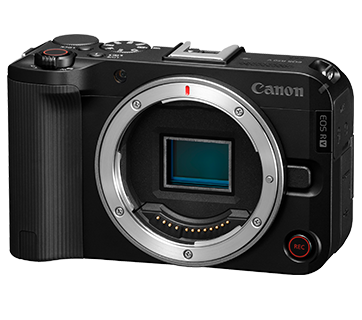

The Canon EOS R50 V and the Fujifilm X-H2 are two APS-C mirrorless cameras often compared by photographers and videographers who want high performance in a relatively portable form factor. While the Canon R50 V caters to enthusiasts and content creators seeking a lightweight, affordable solution, the Fujifilm X-H2 targets advanced amateurs and professionals who require top-tier image quality, robust stabilization, and a more extensive feature set.
People choosing between these cameras typically weigh the price and portability of the Canon against the impressive specs and build quality of the Fujifilm. Key differentiators include resolution, in-body stabilization, video features, and overall system cost-a vital consideration for users expanding their kit over time. Ultimately, the choice reflects your priorities: affordability and ease of use, or uncompromising performance and resilience.
Specifications Comparison
Detailed Comparison
Image Quality
The Fujifilm X-H2 sets a new bar in APS-C resolution, boasting a 40-megapixel sensor versus the Canon EOS R50 V's 24 megapixels. This dramatic difference is significant for photographers who crop their images or require large prints, as the X-H2's files retain more detail and allow for greater flexibility in post-processing. Additionally, the X-H2's slightly larger sensor (23.5 x 15.6mm vs 22.3 x 14.9mm) and wider native ISO range can capture scenes with improved dynamic range and lower noise at high ISOs, which is crucial for demanding shoots such as landscapes and studio work.
Canon's 24MP sensor is no slouch, delivering pleasing color and detail that meets the needs of most hobbyists and content creators, especially for social media or online display. However, the X-H2's sensor, coupled with Fujifilm's famous color science, gives it a measurable advantage, especially for discerning photographers.
In summary, while both deliver excellent quality by APS-C standards, the X-H2 is the standout for maximum resolution and flexibility.
Autofocus System
The autofocus system in the Fujifilm X-H2 is advanced, offering 425 autofocus points with high coverage and robust subject tracking, suitable for fast-moving subjects and professional use. Its technology provides reliable performance in diverse lighting conditions and challenging scenes, aided by the processing power of its sensor and processor.
Canon's EOS R50 V uses Canon's Dual Pixel autofocus system, which is well known for swift and accurate focusing, particularly for video and casual stills. However, it does not match the sheer number of focus points or the level of customization found in the X-H2, and is thus less suited for action, wildlife, or sports photography where coverage and flexibility are crucial.
For average users, Canon's AF is fast and intuitive, especially for vlogging and day-to-day use. Yet, for advanced photographers seeking precision and versatility, the Fujifilm X-H2 takes the lead.
Video Capabilities
Canon has equipped the EOS R50 V with strong consumer-oriented video features: it can record 4K up to 60 fps, which is excellent for slow motion and dynamic content, especially at this price point. The simple interface and digital stabilization are tailored for creators and vloggers, though the lack of in-body stabilization means users must rely on digital compensation or stabilized lenses.
The Fujifilm X-H2, while limited to 4K (not 8K like some of its siblings), offers extremely high-quality 4K video, robust file formats, and professional-level controls. Critically, it incorporates 7-stop in-body image stabilization (IBIS), which opens up new shooting possibilities-especially handheld. This makes it superior for professional video work, documentary, and handheld shooting where stability is paramount.
Both cameras offer compelling features, but the X-H2's IBIS and flexibility make it a better tool for serious videographers, despite the R50 V's higher frame rate at 4K.
Build & Ergonomics
The Canon EOS R50 V is lightweight (370g) and extremely compact, designed for portability and user-friendliness. Its plastic construction is suitable for everyday use but offers no weather sealing, making it less ideal for harsh conditions. The camera's controls are streamlined, prioritizing simplicity and ease for beginners and content creators.
In contrast, the Fujifilm X-H2 is much heavier (660g) and physically larger, but for good reason: it is built for durability and professional use, featuring weather sealing and a sturdy chassis. With a larger hand grip, more physical controls, and an electronic viewfinder, the X-H2 is tailored for extensive shooting sessions and adverse environments.
If portability is your priority, Canon wins; if you need toughness, tactile controls, and weather resistance, Fuji is the clear choice. Given the broader scope of user needs, the Fujifilm X-H2 claims this category for advanced users.
Battery & Storage
The Fujifilm X-H2 boasts a substantial battery life, rated at 680 shots per charge-well above typical mirrorless standards and easily outlasting the Canon EOS R50 V, whose battery performance is more modest (exact CIPA rating not specified, but typically around 300 shots for this segment). For travel, events, or long shoots, the X-H2 lets you work longer without swapping batteries.
The X-H2 also supports more advanced storage options and dual card slots, providing redundancy and faster workflow, while the R50 V makes do with a single card slot and more basic storage features. Advanced users benefit from this redundancy, particularly in professional environments where card failure is a risk.
Therefore, for those prioritizing longevity and data security, the Fujifilm X-H2 is the stronger performer in this aspect.
Value for Money
Canon's EOS R50 V is aggressively priced at $649, making it extremely accessible for beginners, hobbyists, and creators on a budget. For less than a third of the price of the X-H2, you receive a competent APS-C camera capable of solid stills and 4K 60p video. This lower cost frees up budget for lenses and accessories, making it a sensible entry point into mirrorless systems.
Fujifilm's X-H2, at $1999, is a premium offering. Its higher price is matched by truly professional features: high resolution, advanced autofocus, robust body, and in-body stabilization. However, its cost may be prohibitive for many users or those who do not need its full set of capabilities. If you require these features, the value is justifiable; if not, the R50 V is the far better deal.
Ultimately, Canon's R50 V wins this category by offering massive bang for the buck at its price point.
Lens Ecosystem
Canon's RF-S mount is relatively new, with a growing but still limited selection of native APS-C lenses, though users can adapt full-frame RF lenses. For beginner or intermediate users, the selection is sufficient, and third-party support is starting to increase. For full native coverage, however, users may face higher lens costs or limited choices for specialized optics.
Fujifilm's X-mount ecosystem is one of the most mature in the APS-C realm, with a wide selection of high-quality native lenses across focal lengths, excellent third-party support, and a community of dedicated users. Whether you need specialty primes, fast zooms, or compact optics, Fuji likely offers a native lens tailored for the X-H2.
For those prioritizing lens selection, especially at the high end or for professional uses, Fujifilm holds a clear advantage.
Our Verdict
Overall, the Fujifilm X-H2 emerges as the winner for serious enthusiasts and professionals seeking exceptional image quality, class-leading resolution, robust build, advanced autofocus, and superb in-body stabilization. Its mature lens ecosystem and pro-grade features make it a versatile workhorse for demanding stills and video production. However, the Canon EOS R50 V is a compelling option for budget-conscious buyers, travel photographers, or content creators who value portability and ease of use over top-end specs. Its low price and solid core performance make it a smart entry into the mirrorless world. Choose the X-H2 if you need the best and are prepared to pay for it, but the R50 V delivers remarkable value for everyday creators and hobbyists.
Canon EOS R50 V
Fujifilm X-H2
Also Compare
Frequently Asked Questions
Which camera is better for beginners?
The Canon EOS R50 V is better suited for beginners due to its lightweight design, intuitive controls, and much lower cost. It's easier to carry, learn, and grow with for new photographers or vloggers.
Does the Canon EOS R50 V have real (mechanical) stabilization?
No, the Canon EOS R50 V only offers digital image stabilization for video. For true in-camera stabilization, the Fujifilm X-H2's 7-stop IBIS is far superior, especially for handheld shooting and low-light situations.
Which camera is better for professional photography work?
The Fujifilm X-H2 is the better choice for professionals due to its higher resolution, robust weather-sealed build, advanced autofocus, and much broader lens selection suited to demanding genres like portrait, landscape, and studio photography.
How do the video capabilities compare for content creators?
The Canon EOS R50 V's 4K 60p video is attractive for vlogging and social media, but it lacks in-body stabilization. The X-H2's in-body stabilization and pro features make it stronger for more serious handheld work, interviews, or cinematic projects.
Is Fujifilm's higher price worth it?
If you need the excellent image quality, high resolution, and build quality the X-H2 offers, then yes, it's worth the investment. However, for casual shooters, the Canon R50 V delivers most features needed at a much lower cost.
What about lens selection for each camera?
Fujifilm's X-mount has a significantly broader and more mature selection of native APS-C lenses, catering to both beginners and professionals. Canon's RF-S system is growing, but is presently more limited, especially for advanced needs.