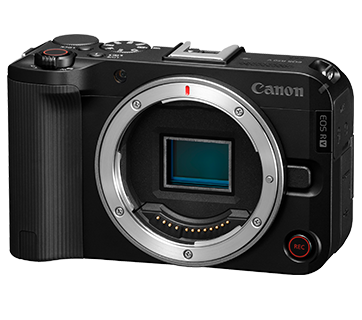
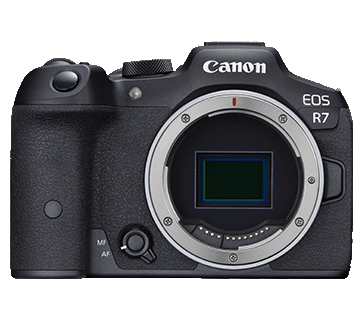
The Canon EOS R50 V and the Canon EOS R7 are two APS-C mirrorless cameras in Canon's RF mount ecosystem, frequently compared by enthusiasts, content creators, and hobbyists looking to step up from entry-level models or seeking compact alternatives to full-frame bodies. Both cameras are targeted towards users who want advanced features in a more portable form factor, but they diverge significantly in pricing, specifications, and target users.
The R50 V is an affordable, lightweight camera designed with vloggers and casual shooters in mind, prioritizing ease of use and video features at a budget-friendly price point. The EOS R7, meanwhile, is a higher-end APS-C offering aimed at advanced amateurs or semi-professionals looking for greater photographic control, image quality, and robust build. Key differentiators include sensor resolution, burst speed, in-body image stabilization, and build quality-all important considerations for prospective buyers deciding between these two models.
Specifications Comparison
Detailed Comparison
Image Quality
The Canon EOS R7 offers a 33-megapixel APS-C sensor, compared to the R50 V's 24 megapixels. This notable resolution advantage translates into more detail, higher cropping flexibility, and larger print potential for the R7. Both sensors are very similar in physical size (22.2 x 14.8 mm vs. 22.3 x 14.9 mm), which means pixel density is higher on the R7-great for well-lit scenarios, but potentially leading to more noise at high ISOs.
The R7 features a wider ISO range (100-32000, expandable) and an advanced image processing pipeline, lending it better performance in both bright and low-light environments. The R50 V, however, does well for its class and provides enough resolution for everyday photography, social media, and small prints. Practical differences in dynamic range and noise will be mostly noticeable to pixel-peepers or those working in difficult lighting.
For users prioritizing sheer resolution and post-processing flexibility, the R7 clearly outshines the R50 V. However, for most casual users, the R50 V's 24MP sensor remains perfectly adequate.
Autofocus System
Autofocus is a standout feature in both cameras thanks to Canon's implementation of Dual Pixel CMOS AF. The EOS R7 has a significant edge, with 651 autofocus points and advanced subject tracking capabilities tailored for sports, wildlife, and fast-action photography. This wider, denser AF coverage provides more precise tracking and compositional flexibility.
The R50 V, although equipped with capable Dual Pixel CMOS AF, has fewer AF zones and less advanced tracking algorithms compared to its pricier sibling. It's fast and reliable for everyday shooting and casual video, but might struggle to match the R7 in demanding scenarios or with erratic moving subjects.
Enthusiasts who plan to capture sports, pets, or action will appreciate the R7's superior focusing system. The R50 V, while no slouch for static subjects and everyday scenes, is a step below for critical AF performance.
Video Capabilities
Both cameras cater to video creators, but with slightly different strengths. The Canon EOS R50 V features 4K 60p video-a specification attractive to vloggers and content creators who value smooth slow-motion footage. However, its stabilization is digital-only, relying on electronic correction which can cause minor crop and may not be as effective as in-body stabilization for handheld shooting.
The EOS R7, in contrast, offers 4K video up to 30p but compensates with a robust 6-stop in-body image stabilization system. This makes it much more forgiving for handheld work, producing steadier footage in a wider array of shooting scenarios. Serious videographers who demand the best stabilization for run-and-gun work will immediately note the advantage.
For creators who prioritize high frame rate 4K and portability for casual vlogs, the R50 V's 4K 60p is a clear win. Users prioritizing ultimate stability in their footage, perhaps for documentary, interviews, or b-roll, may prefer the R7. Ultimately, the higher frame rate of the R50 V secures it the win for most vloggers.
Build & Ergonomics
The Canon EOS R7 is built with durability and pro-style ergonomics in mind. Its weather-sealed body, larger grip, and inclusion of an electronic viewfinder ensure comfortable, all-weather operation, appealing to photographers frequently working in varying field conditions. Its larger size (132 x 90 x 92 mm) and weight (612g) reflect its sturdy construction.
The R50 V, on the other hand, emphasizes compactness and lightness at only 370g and 119 x 74 x 45 mm dimensions. This makes it a superior choice for travel or street shooters who prioritize portability over ruggedness. However, it lacks weather sealing and a built-in viewfinder, which might limit its versatility in certain environments.
While the R50 V's small size is ideal for day-to-day carry and casual outings, the R7's premium construction and superior ergonomics are clearly designed for more advanced users who value handling and shooting confidence in challenging conditions.
Battery & Storage
The Canon EOS R7 boasts a substantial battery life, rated at 660 shots per charge-nearly double that of most entry-level mirrorless cameras. Its larger body accommodates higher capacity batteries, meaning all-day shooting is less of a concern.
The EOS R50 V, as a lighter and more compact camera, makes some sacrifices here. While official battery life specs weren't provided, real-world use and class segment suggest it falls short of the R7, translating to more frequent recharges or the necessity to carry spares for longer outings.
For users who shoot extensively, in events, or on travel, the R7's superior battery longevity translates to fewer interruptions and improved usability. The R50 V is sufficient for casual days, but will require more careful battery management.
Value for Money
Price is a major division between these models. The EOS R50 V, with a retail price of $649, delivers tremendous value for entry-level users and content creators seeking 4K 60p video and a lightweight package. Its capabilities far exceed typical smartphone or compact camera options in the same price bracket.
The EOS R7, at $1,499, is more than twice the price. While it backs up this premium with more megapixels, better autofocus, in-body stabilization, weather sealing, and longer battery life, it clearly targets serious enthusiasts who will make use of this expanded performance envelope.
For buyers on a budget, or those whose needs do not extend to the advanced features of the R7, the R50 V offers a compelling value proposition. The R7 justifies its higher cost for those demanding the best APS-C has to offer, but the average hobbyist or vlogger may find their needs met for much less with the R50 V.
Lens Ecosystem
Both cameras utilize Canon's RF mount, but the R50 V is marketed with the RF-S lens range (optimized for APS-C sensors), while the R7 can use both RF and RF-S lenses with no limitations. The broader compatibility with full-frame RF lenses gives R7 owners an edge in terms of expanding into higher-end glass and future system growth.
In practice, both cameras support the same core RF Mount platform, but buyers of the R7 are more likely to invest in higher-end, sometimes heavier lenses-something that matches the R7's build and handling more naturally. The R50 V, paired with compact RF-S glass, is especially sweet for those who prioritize system portability.
The situation is relatively even for most users, with Canon actively expanding both RF and RF-S lineups. However, the R7's flexibility gives it a slight edge for photographers with plans to grow into more demanding work or eventual full-frame upgrades.
Our Verdict
Overall, the Canon EOS R7 emerges as the winner in this comparison, dominating in image quality, autofocus sophistication, build, battery life, and system flexibility. It is clearly designed for photographers and hybrid shooters seeking advanced performance, ruggedness, and long-term growth potential. The price premium is justified for enthusiasts and semi-professionals who will benefit from its expanded feature set and robust ergonomics. However, the Canon EOS R50 V should not be overlooked. It stands out as an exceptional value, especially for those prioritizing video frame rates, portability, and budget-friendly entry to the RF system. Casual shooters, vloggers, and travelers may find the R50 V's lightweight design, ease of use, and powerful 4K 60p video to be exactly what they need without overburdening their wallet or camera bag. Either model will serve its target audience well; the choice depends on your demands and budget.
Canon EOS R50 V
Canon EOS R7
Also Compare
Frequently Asked Questions
Which camera is better for travel and vlogging?
The Canon EOS R50 V is better suited for travel and vlogging due to its significantly lighter, more compact design and the inclusion of 4K 60p video. Its portability makes it ideal for on-the-go shooting, though stabilization is digital only.
Does the Canon EOS R50 V have in-body image stabilization like the R7?
No, the EOS R50 V features only digital (electronic) stabilization for video. The EOS R7 offers 6 stops of true in-body image stabilization, which is more effective for handheld shooting of both stills and video.
Is the extra resolution of the Canon EOS R7 worth it for everyday photography?
Unless you need the ability to crop heavily, make large prints, or capture fine commercial work, the R50 V's 24MP is more than sufficient for everyday use. The R7's 33MP sensor truly shines in professional or highly detailed work.
Which model is better for fast action, sports, or wildlife photography?
The Canon EOS R7 is much better suited for these genres thanks to its faster and more sophisticated autofocus system, higher resolution, greater shooting speed (up to 15 fps), and in-body stabilization. These features combine for a superior action-shooting experience.
Are lenses interchangeable between the R50 V and R7?
Yes, both cameras use Canon's RF mount, supporting both RF and RF-S lenses. The R7, with its larger body and weather sealing, may handle heftier lenses more comfortably, but technically both models offer full lens compatibility.
Is the R7's higher price justified for a beginner?
Generally, the R7's price is better justified for users who need its advanced features or plan to grow into more demanding photography. Beginners or content creators with simpler needs may find the R50 V's balance of features, price, and ease of use more attractive.