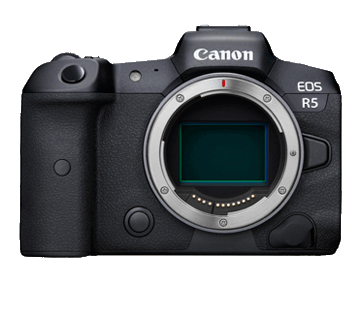

The Canon EOS R5 and the Sony ZV-E1 are two standout full-frame mirrorless cameras that cater to different segments of photography and videography enthusiasts. The R5 is often favored by professional photographers and videographers seeking high resolution and unparalleled image quality, while the ZV-E1 is designed with content creators and vloggers in mind, emphasizing portability and versatility. Both cameras share common ground in being weather-sealed and featuring advanced autofocus systems, but the differences in sensor performance, video capabilities, and usability are points of contention for buyers deciding between these two models.
Specifications Comparison
Detailed Comparison
Image Quality
The Canon EOS R5 boasts a formidable 45 megapixels, which allows for incredibly detailed images suitable for large prints and cropping flexibility. This higher pixel count makes it an excellent choice for landscape, portrait, and commercial photographers who demand the highest quality. The R5's full-frame sensor size (36 x 24 mm) also enhances performance in low-light situations, thanks to its ability to maintain image quality at higher ISO settings, which ranges from 100 to 51,200 and expands to 102,400. This capability ensures that capturing detail in shadows is less of a challenge.
Conversely, the Sony ZV-E1 features a 12-megapixel sensor (35.6 x 23.8 mm), which emphasizes speed and versatility over resolution. While the lower megapixel count might not appeal to photographers seeking high fidelity, it can be advantageous for videographers, as it offers faster readout speeds and less rolling shutter effect when shooting video. The ISO range on the ZV-E1 is impressive, ranging from Auto 80 to 102,400, and it can expand to a staggering 40-409,600, which better serves low-light environments when video is the priority. The trade-off is a performance dip in still photography compared to the R5.
In conclusion, if image quality is a priority, especially for stills, the Canon EOS R5 takes the lead. However, for those prioritizing video and who do not require extremely high resolution, the ZV-E1 holds its own with practical usability.
Autofocus System
The Canon EOS R5 features an advanced autofocus system with 1,053 autofocus points, which provides exceptional coverage and accuracy, especially during still photography. Dual Pixel CMOS AF technology allows for speedy and precise focusing, making it an ideal choice for fast-moving subjects in sports or wildlife photography. With its ability to track faces and eyes with remarkable precision, the R5 ensures that fleeting moments are captured sharply.
On the other hand, the Sony ZV-E1 employs 759 autofocus points with Fast Hybrid AF, which is well renowned for real-time tracking and excellent face detection. This system plays well with video capture, providing smooth autofocus transitions - a necessity for vloggers and content creators who often film themselves. While the ZV-E1's autofocus is impressive, particularly for video, it does not quite match the immense number of autofocus points seen in the R5.
Ultimately, both cameras excel in different areas of autofocus. The R5 is optimized for stills with its higher number of points, while the ZV-E1 is focused on seamless video performance. Therefore, the winner here is based on the intended use - but for overall versatility, the R5 claims the title.
Video Capabilities
The Canon EOS R5 shines brightly when it comes to video capabilities, with the ability to shoot in 4K at 120fps, providing ample options for high-quality slow-motion footage. This feature, combined with its exceptional image stabilization rated at 8 stops, makes it an excellent choice for professional filmmakers and serious content creators who require high-resolution video with fluid motion.
The Sony ZV-E1, while it can shoot 4K, is limited to 60fps, which may not satisfy those looking for high frame-rate capabilities. Additionally, it offers 5 stops of image stabilization, which, while helpful, does not quite match the robustness offered by the R5. The ZV-E1 is tailor-made for content creators, with settings programmed for ease-of-use, but it does not cater to the specifications required for high-end videography when compared directly to the R5.
In conclusion, for those focused on high-quality video production and flexibility, the R5's capabilities solidly put it ahead in this category.
Build & Ergonomics
The Canon EOS R5 features a robust build with a weather-sealed body, making it resistant to dust and moisture. Its dimensions (138 x 98 x 88 mm) and weight (738g) provide a solid heft that many professional photographers find reassuring. The camera also incorporates an electronic viewfinder, which allows for comprehensive framing and previewing of exposure settings - an essential tool in photography.
On the contrary, the Sony ZV-E1 is designed for content creators who prioritize portability. Weighing only 483g and measuring 121 x 72 x 54 mm, it is significantly lighter and more compact, making it easier to carry during long shooting sessions or while traveling. However, it lacks an electronic viewfinder, which some photographers may find limiting. The screen is a 3″ touchscreen that articulates, allowing for easy framing at different angles, particularly useful in vlogging situations.
Both cameras offer weather sealing, yet cater to different ergonomic needs. The R5 is built for sturdiness in demanding environments, while the ZV-E1 excels in its convenience and portability, particularly for video-centric use cases. Overall, the flexibility of both designs can be appreciated depending on user preference.
Battery & Storage
Canon's EOS R5 employs a battery life of approximately 320 shots, which may feel limiting for intensive shooting days. It uses the Canon LP-E6NH battery, which provides good longevity but may require extra batteries for long sessions, especially given its robust video capabilities that could drain batteries faster. Storage-wise, it has dual card slots enabling simultaneous recording to two different memory cards, enhancing workflow reliability, especially for professionals.
The Sony ZV-E1, on the other hand, offers a more impressive battery life of 570 shots, making it a better option for content creators and vloggers who need longevity while shooting with minimal interruptions. The ZV-E1 uses CFexpress Type A cards or SD UHS-II cards for storage, offering versatility and fast write speeds for video files.
For users concerned with energy efficiency and storage options, the Sony ZV-E1 takes the lead here, with its longer battery life making it a wise choice for extended use, especially during long content creation sessions.
Value for Money
The Canon EOS R5 is priced at around $3,899, which positions it firmly in the high-end market segment. Nonetheless, for photographers and videographers seeking top-tier image quality, capabilities, and overall performance, this price can be justified by its extensive features - especially for professionals who depend on the best quality for their work. The two-card slot system adds reliability for storage, a feature not always available at this price point.
In comparison, the Sony ZV-E1 retails for about $2,200, making it considerably more affordable, especially for creators and vloggers looking for a lightweight camera that can deliver good performance in various shooting situations. While it may not offer the same level of image quality or video specs as the R5, it provides outstanding value with its user-friendly design, longer battery life, and robust features tailored for content creation.
When considering value for money, the Sony ZV-E1 offers significant savings while still providing excellent functionality suitable for everyday users. The choice here ultimately comes down to budget and primary needs - professionals may find the R5 to be worth every dollar, whereas content creators may prefer the practicality of the ZV-E1.
Our Verdict
Ultimately, the Canon EOS R5 takes the overall title due to its superior image quality, autofocus performance, and video capabilities. It is an ideal choice for professionals engaged in high-resolution photography and advanced videography needing reliability and image integrity. In contrast, the Sony ZV-E1 is an excellent alternative for casual content creators who prioritize portability, ease-of-use, and affordability. Both cameras excel in their respective niches, and potential buyers should consider their specific needs and workflows when making a decision.
Canon EOS R5
Sony ZV-E1
Also Compare
Frequently Asked Questions
Which camera is better for professional photography?
The Canon EOS R5 is better for professional photography due to its higher resolution, advanced autofocus system, and superior image quality.
Is the Sony ZV-E1 suitable for vlogging?
Yes, the Sony ZV-E1 is designed specifically for vloggers and content creators, offering a lightweight body, good autofocus, and features tailored for video.
How do the video capabilities compare?
The Canon EOS R5 offers 4K at 120fps, while the Sony ZV-E1 is limited to 4K at 60fps. The R5 is the better choice for high-end video production.
Which camera has better battery life?
The Sony ZV-E1 has better battery life, providing approximately 570 shots compared to the Canon EOS R5's 320 shots.
What are the price differences between the two models?
The Canon EOS R5 is priced at around $3,899, while the Sony ZV-E1 is more affordable at approximately $2,200, making it a better choice for budget-conscious buyers.