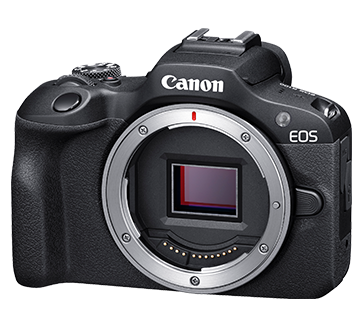

The Canon EOS R100 and Fujifilm X-H2 are two prominent mirrorless cameras that attract photographers and videographers alike. Often compared by those seeking a balance between performance, portability, and value, these models serve different segments of the market. The EOS R100 targets entry-level users with its affordability and user-friendly features, while the X-H2 appeals to enthusiasts and professionals looking for advanced capabilities in a slightly more robust package. The differences in image quality, autofocus performance, video capabilities, and build quality highlight what each camera uniquely offers, helping buyers make informed decisions based on their specific needs.
Specifications Comparison
Detailed Comparison
Image Quality
The image quality of the Fujifilm X-H2 is superior due to its higher resolution 40-megapixel sensor compared to the Canon EOS R100's 24-megapixel APS-C sensor. The increased pixel count of the X-H2 allows for more detailed images and greater cropping flexibility without a significant loss in quality. Additionally, the ISO range of the X-H2 extends to 51200, making it better suited for low-light photography than the Canon's maximum range of 12800. The dynamic range and color rendition of Fujifilm cameras are also well-regarded, allowing photographers to produce vivid images straight out of the camera. However, the EOS R100's image quality is still impressive for its price point and serves well for casual photographers and those starting in photography. In general, if high resolution and detailed imaging are priorities, the X-H2 has the edge.
Autofocus System
In terms of autofocus, the Fujifilm X-H2 again takes the lead with its 425 autofocus points compared to Canon's 143 points. The X-H2's advanced autofocus technology provides quicker and more accurate focusing, especially in challenging conditions like low light or fast-moving subjects, which can be crucial for sports and wildlife photography. Canon's Dual Pixel autofocus is known for its reliability in still photography, but it does not quite match the versatility and performance of Fujifilm's system. The X-H2 also benefits from advanced tracking features and faster focusing speeds, making it a better choice for individuals focused on capturing action or unpredictable scenes. Therefore, for those prioritizing autofocus capabilities, the X-H2 stands out.
Video Capabilities
The video capabilities of the Fujifilm X-H2 significantly outshine those of the Canon EOS R100. The X-H2 supports 4K video recording with various frame rates, making it appealing for videographers who require versatility. In contrast, the Canon EOS R100 lacks explicit video specifications, making it less desirable for serious video work. Furthermore, the X-H2 features in-body stabilization up to 7 stops, which greatly benefits handheld shooting during video recording, while the R100 does not offer any stabilization, compromising its performance in dynamic situations. Therefore, videographers dedicated to high-quality, stabilized video content will find the Fujifilm X-H2 to be the clear winner here.
Build & Ergonomics
When it comes to build quality and ergonomics, the Fujifilm X-H2 is constructed with a robust body, featuring weather sealing that makes it more resilient in various shooting conditions. It is heavier, weighing 660g compared to the lighter EOS R100 at 356g, which might be a consideration for those prioritizing portability. However, the heft comes with the benefit of a more substantial grip and better handling, especially with larger lenses. The X-H2 also has a higher resolution screen (1,620,000 dots) compared to the EOS R100's (1,040,000 dots), providing better image clarity while composing shots. Ultimately, while the Canon is easier to carry and handle for extended periods, the better build quality and features of the X-H2 position it ahead for serious photographers.
Battery & Storage
In terms of battery life, the Fujifilm X-H2 offers a significantly longer performance, capable of around 680 shots per charge, compared to Canon's more modest performance, though exact figures may vary depending on usage. This longevity is critical for photographers who might be out shooting for extended periods without access to a power source. As for storage, both cameras utilize SD cards, but the X-H2 is more adaptable with faster write speeds, especially in high-resolution and burst shooting settings. Thus, photographers requiring reliable battery life and efficient storage performance will likely favor the Fujifilm X-H2.
Value for Money
Value for money is an important aspect to consider given the price disparity; the Canon EOS R100 is priced at $480, making it exceptionally appealing for entry-level users, hobbyists, and casual photographers who may not require advanced features. On the other hand, the Fujifilm X-H2, priced at $1999, reflects its premium build quality, superior specifications, and advanced features suitable for professional applications. While Canon provides a great budget option, the value offered by the X-H2 becomes justifiable for serious photographers and videographers who prioritize quality, performance, and capability. This section ultimately reflects differing target audiences rather than a straightforward winner.
Our Verdict
Overall, the Fujifilm X-H2 emerges as the winner in this comparison due to its superior image quality, advanced autofocus system, exceptional video capabilities, and sturdy build. While the Canon EOS R100 offers excellent value for those on a budget, especially beginners looking to get into photography, it lacks many advanced features that the X-H2 provides. Serious photographers and videographers who require high resolution, enhanced autofocus, and robust video performance should favor the Fujifilm X-H2, making it the better option for long-term investment. However, casual users will find the R100 to be a capable and cost-effective introduction to mirrorless photography.