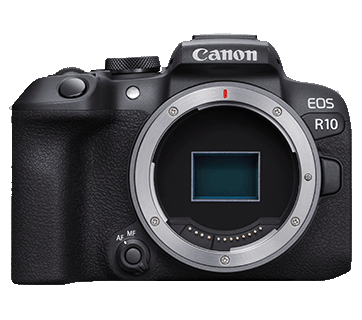

The Canon EOS R10 and Fujifilm X-H2S are two prominent mirrorless cameras that have captured the attention of photography enthusiasts and video creators alike. Both models were released in 2022 and cater to a similar audience, typically including amateur photographers transitioning to advanced photography or videographers seeking impressive performance in a compact body. While both cameras feature APS-C sensors, their specifications and functionalities differ significantly, making them suitable for varied use cases.
Specifications Comparison
Detailed Comparison
Image Quality
In terms of image quality, both the Canon EOS R10 and Fujifilm X-H2S have their unique strengths. The Canon EOS R10 features a 24MP APS-C sensor, which delivers high-quality images with good detail retention. On the other hand, the Fujifilm X-H2S offers a slightly higher 26MP resolution that enables it to capture a bit more detail, particularly beneficial in large print formats. Additionally, the X-H2S benefits from Fujifilm's renowned color science, producing vibrant colors and appealing skin tones straight out of the camera, a feature that can be appealing for portrait photographers and videographers.
Autofocus System
Autofocus is critical for both still photography and videography, and here, the Canon EOS R10 again stands out with its impressive 651 autofocus points. This comprehensive coverage enables fast and accurate focusing on subjects, making it easier to capture dynamic action shots. In contrast, the Fujifilm X-H2S has 425 autofocus points, which, while effective, is fewer than the R10. However, the X-H2S's autofocus performance is enhanced overall by its superior tracking capabilities, particularly in fast-moving situations, which can compensate for the lower point count. Evaluating the autofocus system may depend on user preference and usage scenarios.
Video Capabilities
For creators focused on video recording, the Fujifilm X-H2S has significant advantages. It supports 4K video recording at up to 60 fps, offering more frame rates and higher quality footage compared to the Canon EOS R10's 4K 30p. Additionally, the X-H2S features in-body stabilization (IBIS), providing up to 7 stops of stabilization, making it easier to shoot handheld in challenging conditions. In contrast, the R10 lacks stabilization, which could result in shakier footage in similar situations. Thus, for videographers, the X-H2S is undoubtedly the superior option.
Build & Ergonomics
The build quality and ergonomics of these cameras also differ notably. The Fujifilm X-H2S is weather-sealed, providing enhanced durability, especially for outdoor shooting in various weather conditions, which is an important feature for many professional users. It's also bulkier and heavier, weighing 660g versus the R10's 426g, which can impact portability. However, the EOS R10's more compact form factor makes it easier to carry for long periods, appealing to casual users and those fond of travel photography. Both cameras are equipped with electronic viewfinders, although the size and overall usability may differ according to personal preference.
Battery & Storage
Battery life is another significant consideration when choosing between these two models. The Canon EOS R10 boasts a battery life of approximately 450 shots, while the Fujifilm X-H2S can achieve around 580 shots, giving it an edge in endurance. For storage options, both cameras utilize compatible SD cards, but the X-H2S supports UHS-II cards, allowing for significantly faster write speeds that benefit continuous shooting and video recording. Given these factors, for users who prioritize longer shooting sessions without changing batteries frequently, the X-H2S has a distinct advantage.
Value for Money
When considering the price, the Canon EOS R10 is priced at $979, making it a very affordable option for beginner to intermediate users looking for a capable camera. In contrast, the Fujifilm X-H2S, at $2499, is positioned as a premium offering with features that cater to more serious photographers and videographers. While the X-H2S comes with advanced capabilities, the significant price difference makes the R10 a compelling choice for those on a budget or those who may not require the higher-end features offered by Fujifilm. The value is relative to the user's specific needs and intended usage.
Lens Ecosystem
Both Canon and Fujifilm have established lens ecosystems that support their respective mounts. Canon's RF mount for the R10 has a growing range of high-quality lenses, making it versatile for various shooting scenarios. Fujifilm boasts an extensive selection of lenses designed specifically for APS-C sensors, and many models are known for their exceptional optical performance. However, if a beginner is deciding, Canon's ecosystem might be easier to navigate due to the number of available entry-level lenses. Both systems have their strengths, catering to different user styles and preferences.
Our Verdict
While each camera has its strengths and appeals to different segments of the photography and videography market, the Fujifilm X-H2S ultimately wins this comparison due to its superior video capabilities, better image quality, and enhanced stabilization features. However, for those constrained by budget or seeking a lightweight option for casual photography, the Canon EOS R10 delivers excellent performance at a much more affordable price point. Users should carefully assess their requirements, especially in features like video recording and portability, to determine which camera best suits their specific needs.
Canon EOS R10
Fujifilm X-H2S
Also Compare
Frequently Asked Questions
What are the main differences between Canon R10 and Fujifilm X-H2S?
The main differences include sensor resolution, video capabilities, autofocus performance, stabilization features, build quality, and price. The Fuji X-H2S offers better video options and stabilization, while the Canon R10 provides greater autofocus coverage and is more budget-friendly.
Which camera is better for beginners?
The Canon EOS R10 is generally more suited for beginners due to its lower price point, lighter weight, and user-friendly interface. It provides enough features for casual users without overwhelming them with complexity.
Is the Fujifilm X-H2S worth the extra cost?
For professionals or serious enthusiasts who require advanced video capabilities, better image quality, and robust build, the X-H2S is worth the extra cost. However, if you are an entry-level user, the R10 might be a more economical choice.
How do the lens options compare for both cameras?
Both systems offer a robust selection of lenses. Canon has a growing range of RF lenses, while Fujifilm has a well-established collection of high-quality lenses for APS-C. The choice will depend on your shooting style and the availability of specific lenses you may need.
Which camera performs better in low light?
The Fujifilm X-H2S provides an expanded ISO range, allowing better performance in low-light conditions compared to the Canon EOS R10. This feature, combined with its superior image quality, makes it preferable for low-light photography.