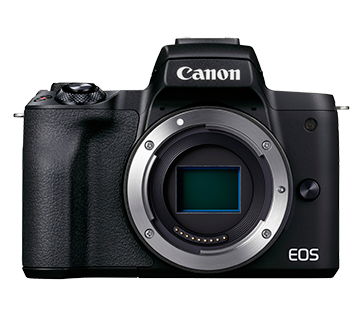

The Canon EOS M50 Mark II and Fujifilm X-H2 represent two appealing but fundamentally different options in the APS-C mirrorless camera market. Both are aimed at enthusiasts, vloggers, and even some entry-level professionals looking for versatile, portable systems. Buyers often compare the M50 Mark II for its affordability and user-friendly design with the X-H2's cutting-edge technology and robust performance.
Those weighing these cameras typically want to know which provides better image quality, faster autofocus, improved video features, and greater long-term potential. The key differentiators include the sensor resolution, video capabilities, build quality, and the lens systems associated with each mount. Deciding between them rests largely on budget, intended use case, and what aspects-image performance, video, durability, or value-matter most.
Specifications Comparison
Detailed Comparison
Image Quality
The Fujifilm X-H2 clearly pulls ahead in terms of sensor technology and image resolution. With a 40MP APS-C (23.5 x 15.6 mm) sensor, the X-H2 offers significantly more detail than the Canon M50 Mark II's 24.1MP sensor (22.3 x 14.9 mm). This extra resolution gives X-H2 users much more flexibility for large prints, cropping, and commercial work.
In addition to sheer megapixels, the X-H2 benefits from Fujifilm's renowned color science and film simulations, which have made it a favorite for photographers who prioritize vibrant, customizable JPEGs straight out of camera.
The M50 Mark II still produces excellent images in good light, with pleasing color and good low light performance for its class, but it can't deliver the detail, dynamic range, or high-ISO performance of the X-H2, especially if pushing files in post-processing.
Autofocus System
Autofocus is a critical consideration for both stills and video shooters. The Fujifilm X-H2 features a highly advanced AF system with 425 phase-detection points spread widely across the frame, offering fast, accurate tracking for moving subjects, advanced face/eye detection, and options tailored for challenging shooting scenarios. It is well-suited for sports, wildlife, and event photography.
Conversely, the Canon EOS M50 Mark II uses Canon's Dual Pixel CMOS AF, which is excellent for its class-being exceptionally smooth and reliable for photo and video use, especially with face and eye-detection for vlogging or portraits. However, the AF area coverage, speed, and customization options are not as advanced or comprehensive as the Fujifilm X-H2's, particularly for complex subject tracking.
For fast-moving subjects and demanding autofocus scenarios, the Fujifilm X-H2 is more capable, while the M50 Mark II still offers solid, user-friendly performance for casual users.
Video Capabilities
The Fujifilm X-H2 is designed with advanced video users in mind. It shoots high-quality 4K video that leverages its high-resolution sensor, offers 7 stops of in-body image stabilization, and gives users access to higher bit rates and advanced formats. These features make it suitable for professional or enthusiast videographers seeking maximum detail and smooth footage in challenging situations.
By contrast, the Canon EOS M50 Mark II includes 4K video but with significant limitations: there is a 1.6x additional crop and no Dual Pixel AF in 4K mode, making tracking and vlogging more difficult. Its fully articulated touchscreen and autofocus in Full HD are beneficial for beginners and vloggers, but it can't match the X-H2's video quality or flexibility.
Build & Ergonomics
The Fujifilm X-H2 is a larger, heavier camera (660g vs substantially less for the M50 Mark II), but with the benefit of a magnesium alloy, weather-sealed body designed for intensive field use. Its larger grip, high-resolution electronic viewfinder, and many tactile controls appeal to users who want a robust, professional handling experience, or plan to shoot in challenging conditions.
The Canon EOS M50 Mark II, on the other hand, is much lighter and more compact, making it a superb choice for travel, casual, or everyday use-especially if portability and discreteness are priorities. However, it lacks weather sealing and feels less rugged in hand.
Both feature articulating screens, but the X-H2's display is sharper (1,620,000 dots) and its superior EVF is suited for serious photography, especially in bright outdoor scenarios.
Battery & Storage
The Fujifilm X-H2 is rated for about 680 shots per charge, a solid figure for a mirrorless camera-appealing for long shoots or travel where battery swaps can be disruptive. It also offers advanced storage options with dual card slots (notably, one is CFexpress for fast video and burst photography).
The Canon EOS M50 Mark II's battery life is shorter (typically around 305-350 shots per charge in CIPA tests), which can be limiting for all-day shooting or video recording. It is also limited to a single SD card slot, and storage speed is not on par with the X-H2's advanced options.
These differences make the X-H2 better suited to professional uses where battery endurance and secure backup (dual cards) are necessary.
Value for Money
The Canon EOS M50 Mark II shines in value, offering a capable APS-C sensor, articulated touchscreen, and solid autofocus at a much lower price (often below $700 with a kit lens) compared to the Fujifilm X-H2's $1999 body-only cost. For beginners, hobbyists, or those with smaller budgets, it represents an excellent entry point with little compromise for everyday photography and vlogging.
While the X-H2 is feature-rich and justifies its price with pro-level specs, its higher cost means its value is best realized by users who will take advantage of its advanced imaging, video, and durability features. For budget-conscious buyers who don't need the high resolution, 4K pro video, or ruggedness, the M50 Mark II is hard to beat for sheer affordability.
Lens Ecosystem
Fujifilm's X-mount ecosystem is one of the most robust in the APS-C world, with an extensive lineup of highly-regarded primes and zooms, covering everything from ultra-wide to telephoto, plus third-party support. Fujifilm's focus on APS-C has led to consistently excellent lens options tailored for this sensor size.
Canon's EF-M mount, by contrast, has a more limited native lens selection, with fewer options for specialty or high-end lenses. Adapted EF lenses can be used, but with variable autofocus performance, making native lens choices more critical. Third-party support is also limited compared to Fuji's.
Overall, those seeking system growth and lens versatility will find the Fujifilm X ecosystem more supportive.
Our Verdict
In this comparison, the Fujifilm X-H2 takes the lead in nearly every technical category: resolution, autofocus, video capabilities, build quality, battery life, and lens ecosystem. It is engineered for enthusiasts, hybrid creators, and professionals who demand top-tier performance from an APS-C system-with a price tag that reflects this positioning. That said, the Canon EOS M50 Mark II remains a smart pick for those new to interchangeable lens cameras, casual content creators, and budget-conscious buyers. Its compact size, approachable controls, and excellent image quality make it a particularly attractive option for travel photography, vlogging, or everyday use when cost and portability trump advanced features. Ultimately, buyers should consider whether they need the X-H2's pro features, or if the M50 Mark II's simplicity and affordability better fit their needs.
Canon EOS M50 Mark II
Fujifilm X-H2
Also Compare
Frequently Asked Questions
Which camera is better for beginners: the Canon EOS M50 Mark II or Fujifilm X-H2?
The Canon EOS M50 Mark II is generally better for beginners due to its intuitive menus, lightweight design, lower price, and fully articulated touchscreen. It has fewer features to overwhelm a novice, while still offering high-quality images and easy sharing options.
Is the Fujifilm X-H2 worth the extra cost over the M50 Mark II?
For photographers or videographers who need high-resolution images, advanced video, fast and customizable autofocus, weather sealing, and access to a larger lens ecosystem, the X-H2 justifies its higher price. If these advanced features aren't essential for your shooting style, the M50 Mark II offers better value for money.
Which is better for video and vlogging?
The Fujifilm X-H2 offers superior video quality with uncropped 4K, professional bit rates, and advanced stabilization. However, the M50 Mark II remains popular with solo vloggers who want quick setup, face tracking in Full HD, and a lighter kit. For serious or professional video work, the X-H2 is the better choice.
How do the lens selections compare for each system?
Fujifilm's X-mount system offers a much wider and higher-quality native lens selection, with numerous primes and zooms specifically designed for APS-C. Canon's EF-M mount has a relatively small lens selection, although EF DSLR lenses can be adapted with varied performance.
Which camera has better battery life?
The Fujifilm X-H2 delivers much better battery life (up to 680 shots per charge), comfortable for long shoots or travel. The M50 Mark II's battery is smaller and typically averages half the endurance, requiring spares for extended outings.
Are both cameras weather-sealed?
Only the Fujifilm X-H2 features weather-sealing, making it suitable for use in challenging outdoor conditions. The Canon EOS M50 Mark II does not offer weather protection, so it should be kept away from dust and moisture.