
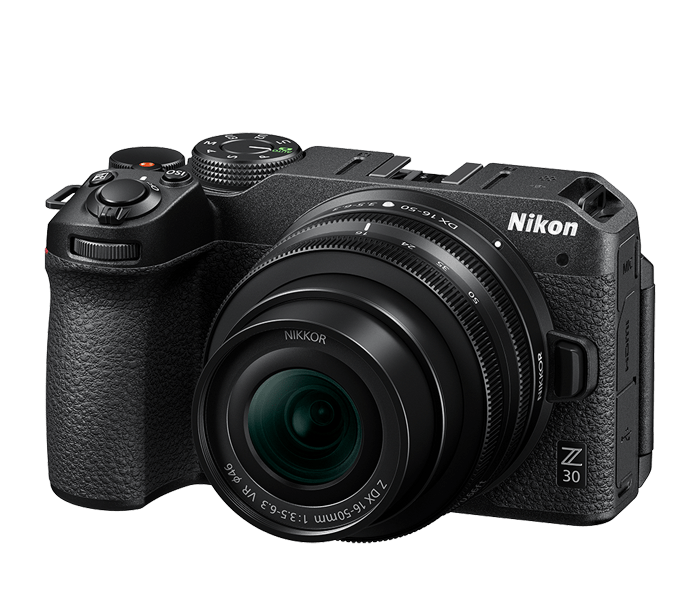
The Fujifilm X-H2 and Nikon Z30 are two compelling options targeted at different segments of the photography market. Both cameras boast APS-C sensors and cater to photographers who prioritize a balance between quality and usability. Those commonly comparing these models may include hobbyists, content creators, and semi-professional photographers who are looking for a versatile camera that performs well in various settings. The X-H2 appeals to users seeking high resolution and advanced features, while the Z30 is aimed at those wanting a lightweight, budget-friendly option without sacrificing essential performance.
Specifications Comparison
Detailed Comparison
Image Quality
When it comes to image quality, the Fujifilm X-H2 clearly stands out with its impressive 40-megapixel APS-C sensor, providing an incredible level of detail for both still photography and cropping needs. This higher resolution allows for more flexibility in post-processing, including large prints or substantial cropping, without sacrificing sharpness. In contrast, while the Nikon Z30 features a solid 21-megapixel sensor, it can deliver quality images suitable for most casual photographers, but it lacks the high-resolution advantage of its competitor. Additionally, the X-H2 offers a wider ISO range (125-12800, expandable to 80-51200) compared to the Z30, allowing photographers to handle challenging lighting conditions more effectively. Thus, for photographers who demand peak image quality, the X-H2 is unequivocally superior, particularly for fine detail and low-light performance.
Autofocus System
The autofocus system is crucial for capturing sharp images, especially in dynamic situations. The Fujifilm X-H2 boasts a robust 425 autofocus points, which cover a substantial portion of the frame for quick and accurate focus acquisition. This comprehensive coverage not only improves subject tracking but also enhances shooting speed, enabling a maximum fps of 15. On the other hand, the Nikon Z30, with its 209 autofocus points and a max fps of 11, still delivers adequate performance, particularly for casual shooting such as vlogging or portraits. While its autofocus may suffice for basic needs, it reveals a clear limitation for fast-paced photography, where the X-H2's superior autofocus capabilities excel. In dynamic scenarios, the Fujifilm X-H2's advanced autofocus technology is a significant advantage.
Video Capabilities
Both cameras excel in video recording, offering 4K capabilities; however, the depth of features varies significantly. The Fujifilm X-H2 supports up to 4K 60p recording, appealing to videographers who demand high-resolution footage and frame rate options. Additionally, Fujifilm's color science and film simulation modes provide users with excellent options in post-production. In contrast, the Nikon Z30 offers 4K 30p video recording, which is limited compared to the X-H2 but is still satisfactory for typical video content creation, including vlogging and home movies. However, for serious videographers and creators who want advanced video features and higher frame rates, the X-H2 is clearly the superior choice in this category.
Build & Ergonomics
The Fujifilm X-H2 has a slightly larger and heavier build, weighing 660g compared to 405g for the Nikon Z30. This weight difference may lead to the Z30 being more comfortable for extended use, especially for vlogging or travel. Both cameras feature weather sealing, which makes them durable against various environmental conditions. In terms of ergonomics, the X-H2 offers a more substantial grip and a fully electronic viewfinder, providing a more immersive shooting experience, particularly in bright daylight. Conversely, the Z30 lacks a viewfinder, which some users may find limiting in terms of composition and viewing angles. Thus, while the Z30 is more portable, the build and functional prowess of the X-H2 may be more appealing for serious photographers who value handling and robust features.
Battery & Storage
The battery life of the Fujifilm X-H2 is rated at about 680 shots, offering significantly more endurance compared to the Nikon Z30's 330 shots per charge. This extended battery capacity is particularly valuable for event shoots or long days of shooting without access to charging. Additionally, the X-H2 supports dual memory slots, allowing for greater flexibility in storage and backup options, which are essential for professional workflows. The Z30, while capable with single card storage, doesn't offer the same reliability for critical shots, especially in high-volume situations. For photographers who prioritize extended shooting sessions and reliability, the X-H2 takes the lead.
Value for Money
When comparing value for money, the Nikon Z30 stands out with its affordable price of $710, providing an accessible entry point into mirrorless cameras, particularly for beginners. The X-H2, while more expensive at $1999, offers features and quality that cater to a more experienced audience, justifying the higher cost. For casual shooters or vloggers who may not require the advanced capabilities of the X-H2, the Z30 provides excellent value in its category, while offering solid image and video quality. However, for those who wish to invest in high-quality imaging, superior autofocus, and advanced video capabilities, the X-H2 is worth the investment for its competitive advantages in performance and features.
Our Verdict
Overall, the Fujifilm X-H2 emerges as the winner in this comparison due to its superior image quality, advanced autofocus system, and extensive video capabilities, making it ideal for serious photographers and video creators. While the Nikon Z30 is a budget-friendly option with decent performance, particularly for beginners and casual videographers, it falls short in areas such as resolution, autofocus, and battery life. Users must consider their specific needs: those prioritizing professional-grade capabilities and quality will find the X-H2 more suitable, while beginners or those on a budget may lean towards the Z30 for its value and usability.
Fujifilm X-H2
Nikon Z30
Also Compare
Frequently Asked Questions
Which camera is better for vlogging?
The Nikon Z30 is specifically designed with vloggers in mind, featuring a compact design and a fully articulating screen. However, the Fujifilm X-H2 provides superior video features, making it better suited for high-quality video production.
Is the Fujifilm X-H2 worth the price difference?
If you require higher resolution, advanced autofocus, and better video capabilities, the Fujifilm X-H2 justifies its price difference. For casual shooters, the Z30 may be sufficient.
How do the lenses compare for each system?
Fujifilm has a rich lens ecosystem for its X series, especially great for professional use. Nikon's Z lens lineup is growing but may not be as extensive as Fujifilm's at this stage.
What is the best camera for low light performance?
The Fujifilm X-H2 has a lower base ISO and better overall performance in low-light conditions due to its higher megapixel count and expanded ISO range.
Can I use my old Nikon lenses on the Z30?
You can use older Nikon DSLR lenses on the Z30 with the appropriate adapters, but functionality may vary, especially regarding autofocus.