
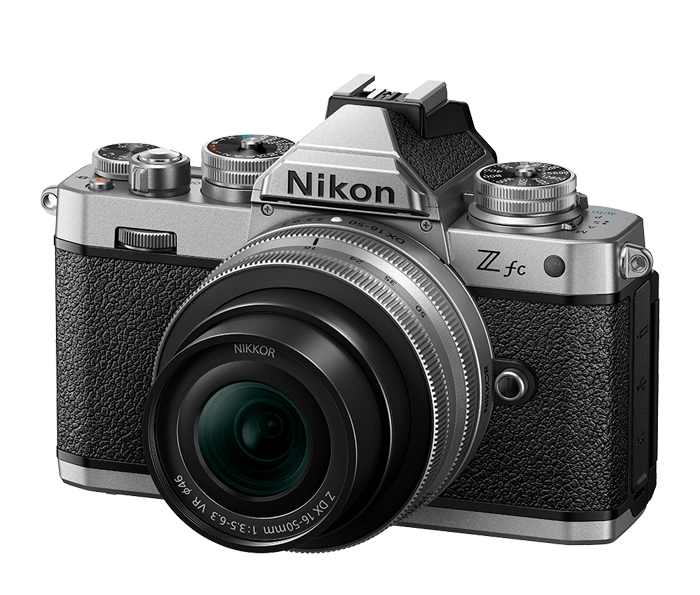
The Fujifilm X-H2 and Nikon Z fc are two popular mirrorless cameras that appeal to both enthusiasts and professional photographers exploring the APS-C format. The X-H2 is often favored for its higher resolution and advanced features, making it a strong contender in the premium mirrorless market. On the other hand, the Z fc's retro design and competitive price point attract those who appreciate style and value without sacrificing performance. Buyers may find themselves choosing between these two models based on their specific needs, such as resolution, video capabilities, and ergonomic preferences.
Specifications Comparison
Detailed Comparison
Image Quality
The Fujifilm X-H2 boasts a remarkable 40-megapixel sensor that provides exceptional detail and dynamic range, making it ideal for landscape and studio photography where every pixel matters. With its ISO range expandable from 80 to 51200, it also performs admirably in low-light conditions. In comparison, the Nikon Z fc has a more modest 21-megapixel resolution, which, while still offering good quality, may not satisfy users looking for ultra-high-resolution images. Additionally, the Z fc's ISO range expands up to 204800, but the lower pixel count can lead to less detail in large prints or heavy cropping scenarios.
Overall, Fujifilm's image processing and color science are well-regarded, offering vibrant colors and pleasing skin tones, which can make a significant difference in portraiture. The X-H2 also benefits from the extensive film simulation modes Fujifilm is known for. By contrast, while the Z fc also delivers good image quality, particularly for general use, it lacks the same level of detail and versatility that comes with the X-H2's sensor.
Autofocus System
Fujifilm's X-H2 incorporates an impressive 425 autofocus points, which cover a wide area of the frame and allow for quick and accurate focusing in various shooting situations. This extensive focus system also includes advanced features such as subject tracking and face/eye detection, making it especially suitable for fast-moving subjects and dynamic shooting environments. In contrast, the Nikon Z fc, with its 209 autofocus points, may struggle during complex scenarios, particularly when trying to lock onto moving subjects.
Moreover, the X-H2's autofocus performance is enhanced by its faster burst rate of 15 fps, allowing it to capture decisive moments without missing details. The Z fc, with a maximum of 11 fps, while sufficient for many usages, may not match the performance of the X-H2 for action photography. Consequently, for photographers who frequently shoot in challenging conditions or require impeccable focus tracking, the Fujifilm X-H2 is the superior option.
Video Capabilities
Both cameras support 4K video recording, but the Fujifilm X-H2 outperforms the Nikon Z fc in several critical areas. The X-H2 can shoot 4K at up to 60p, offering more flexibility for high-frame-rate projects and smoother footage for cinematic purposes. Additionally, the X-H2's in-body stabilization system, providing up to 7 stops, helps ensure steadiness in handheld shooting, which is crucial for dynamic video work. In contrast, the Z fc's 4K video capability is limited to 30p, which may be a constraint for filmmakers seeking high-speed options.
Furthermore, the X-H2 offers various advanced video features, such as F-Log shooting for better post-production flexibility, which can be essential for serious videographers. While the Z fc delivers reasonable video quality, it lacks these more sophisticated options, making it less appealing for users prioritizing video capabilities.
Build & Ergonomics
In terms of build quality, the Fujifilm X-H2 is designed for durability with weather sealing, which allows it to withstand harsh conditions. The camera feels robust and offers a professional-grade feel that is suitable for serious photographers. The X-H2's dimensions and weight (660g) reflect its feature-rich design, which may feel substantial but can offer stability when shooting.
Conversely, the Nikon Z fc provides a lightweight and compact design (445g), emphasizing portability without compromising essential features. It also boasts a retro aesthetic that appeals to those who appreciate classic camera designs. However, it lacks weather seals, which may deter photographers working in more challenging environments. Ultimately, the choice between these two will depend on the individual's need for ruggedness versus lightweight portability.
Battery & Storage
The battery life of the Fujifilm X-H2 is rated for approximately 680 shots, making it suitable for extended shooting sessions without frequent recharging. This is particularly advantageous for event photographers and travelers who need reliable performance over long periods. In contrast, the Nikon Z fc's battery life, rated for only 300 shots, may require more frequent charging or spare batteries, which could be a downside for users who shoot extensively throughout the day.
In terms of storage, both cameras utilize SD cards, but the X-H2 also supports the faster UHS-II cards, which benefit high-speed continuous shooting and video recording. The Z fc, while compatible with SD cards, does not explicitly mention support for UHS-II, which could result in slower write times. Considering these factors, the Fujifilm X-H2 takes the lead in battery life and storage capabilities.
Value for Money
The Fujifilm X-H2 is priced at $1999, reflecting its advanced feature set and high-resolution sensor. While its cost may be justified for serious photographers who demand top-notch image and video quality, casual users or hobbyists might find it a steep investment. The added benefits of better autofocus performance, video capabilities, and overall versatility may warrant the price for a dedicated user but could be considered overkill for beginners.
On the other hand, the Nikon Z fc is priced at a much more accessible $959. This makes it an attractive option for enthusiasts looking for a vintage look combined with solid performance. While it may not match the X-H2 in terms of technical specifications, its blend of style and functionality provides a great value for entry-level photographers or those on a budget. For users who appreciate aesthetics and basic performance, the Z fc represents excellent bang for the buck.
Our Verdict
Overall, the Fujifilm X-H2 emerges as the winner in this comparison, excelling in image quality, autofocus systems, video capabilities, and battery life, making it ideal for serious photographers and videographers seeking high performance. In contrast, the Nikon Z fc offers substantial value for those who prioritize style, compactness, and price without needing cutting-edge features. The choice ultimately boils down to the user's needs; the X-H2 is excellent for users demanding top-tier specs and reliability, while the Z fc serves well for more casual photography and those who appreciate its nostalgic design.
Fujifilm X-H2
Nikon Z fc
Also Compare
Frequently Asked Questions
Which camera is better for low-light photography?
The Fujifilm X-H2 is superior for low-light photography as it offers a wider ISO range and higher resolution, which helps in capturing more detail in challenging lighting conditions.
How do the video capabilities compare between the two cameras?
The X-H2 provides better video features, including higher frame rates and in-body stabilization, making it more suitable for serious videographers, while the Z fc is limited to 30p.
Is the Fujifilm X-H2 worth the extra cost?
If you require advanced features, higher resolution, and better performance in demanding environments, the added investment in the X-H2 can be justified. However, for casual users, the Z fc is a great value.
Which camera is lighter and more portable?
The Nikon Z fc is lighter at 445g and more compact than the X-H2, which makes it more portable and easier to carry for casual photographers.
Do both cameras have good autofocus capabilities?
While both systems are effective, the Fujifilm X-H2 offers a significantly more advanced autofocus system with 425 points, making it better for fast-moving subjects compared to the Z fc's 209 points.