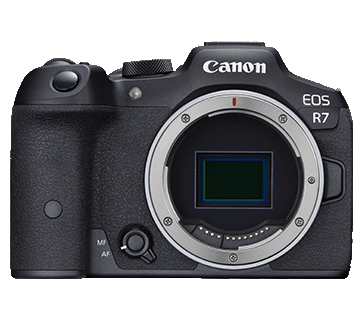

The Canon EOS R7 and the Sony A6700 are two popular mirrorless cameras that attract photographers and videographers alike, offering advanced features in compact bodies with APS-C sensors. Enthusiasts and professionals often find themselves choosing between these two models due to their impressive specifications, capabilities, and pricing, aiming to find a camera that meets their creative needs, whether that's for photography, video, or both. Key differentiators include sensor resolution, autofocus performance, video specifications, and overall ergonomics, which play a significant role in how each camera performs in varied shooting conditions.
Specifications Comparison
Detailed Comparison
Image Quality
The Canon EOS R7 features a 33-megapixel APS-C sensor, offering higher resolution compared to the Sony A6700's 26-megapixel sensor. This allows the R7 to capture more details, which can be particularly beneficial for landscape, wildlife photography, and large prints. Both cameras share a native ISO range of 100-32000, granting them excellent low-light performance. However, the A6700 extends its ISO capabilities up to 102400, which theoretically provides additional low-light shooting range, albeit potentially with more noise at those higher settings. Color science is subjective, but many users prefer the warmer tones Canon is known for, while Sony's sensors provide a more neutral representation.
Autofocus System
The Sony A6700 boasts an impressive autofocus system with 759 phase-detection points, compared to 651 points in the Canon EOS R7. This makes for faster and more accurate focusing in dynamic situations, especially beneficial for wildlife and sports photography where subjects are in motion. Both systems have real-time tracking capabilities, but the Sony is often regarded as slightly superior in tracking performance, particularly in conditions with challenging lighting. Nonetheless, the R7's autofocus system is not far behind and effectively serves the needs of most photographers, especially in standard conditions.
Video Capabilities
For video enthusiasts, the Sony A6700 offers a significant advantage with its capability to shoot 4K video at 120 frames per second, providing greater options for high-speed footage and slow-motion recordings. The Canon EOS R7, while still good, is limited to 4K 30p. Furthermore, Sony's extensive video features, such as S-Log profiles and advanced recording options, make it a favorite among videographers. Canon includes in-body stabilization rated at 6 stops, compared to Sony's 5 stops, which can result in steadier handheld shooting but is less impactful when considering overall video specs.
Build & Ergonomics
Both cameras are well-built and feature weather-sealing, making them suitable for outdoor photography. The Canon EOS R7 is slightly heavier at 612 grams compared to the lighter Sony A6700 at 493 grams, which may be a factor for those who prioritize a lighter setup. Ergonomically, both models offer comfortable grips, but this can be subjective as it depends on individual hand sizes and preferences. The R7's larger body may provide a more confident grip, especially with larger lenses, while the A6700's compact design enhances portability, making it easier to carry around for extended periods.
Battery & Storage
The Canon EOS R7 excels in battery life with approximately 660 shots on a single charge, which is notably higher than the Sony A6700's 570 shots. This additional battery capacity can be extremely beneficial for events or long shooting days where access to charging may be limited. Both cameras use standard SD cards, but video recording formats and bit rates may influence storage needs; the A6700's 4K 120p recording will consume storage space more quickly than the R7's options, so users would need to consider this based on their shooting style.
Value for Money
In terms of price, the Canon EOS R7 is slightly more expensive at $1499 compared to the Sony A6700's $1400. However, the higher resolution of the R7 could justify the price for photographers needing extra detail in their images. Additionally, considering the different strengths-such as video capabilities on the A6700 and superior autofocus performance-prospective buyers should consider which features matter most to their specific needs. Both cameras deliver solid value, but the choice largely comes down to whether one prioritizes video capabilities and autofocus speed over higher resolution and battery life.
Our Verdict
When assessing both options, the Canon EOS R7 edges out in image quality and battery life, while the Sony A6700 excels in autofocus performance and video capabilities. Each camera holds its unique advantages depending on the user's primary use case. For photographers needing higher resolutions and longer shooting times, the R7 is a compelling choice. Conversely, for those focused on video production and faster autofocus for fast-moving subjects, the A6700 is the more suitable option. Ultimately, both cameras cater to different preferences and needs, making them strong competitors in the APS-C mirrorless camera market.
Canon EOS R7
Sony A6700
Also Compare
Frequently Asked Questions
Which camera is better for wildlife photography?
The Canon EOS R7's higher resolution and strong battery life make it better suited for wildlife photography, though the Sony A6700's superior autofocus may be beneficial for tracking moving subjects.
Can I shoot 4K video on both cameras?
Yes, both the Canon EOS R7 and Sony A6700 can shoot 4K video, but the A6700 offers up to 120 frames per second, making it significantly more versatile for high-speed video work.
Which camera has better low-light performance?
Both cameras have the same native ISO range, but the Sony A6700 can expand to ISO 102400, giving it an edge for extreme low-light conditions, albeit with potential trade-offs in noise.
Is one camera better for travel photography?
The lighter and more compact size of the Sony A6700 can be more appealing for travel, but if you prioritize battery life and image quality, the Canon R7 might serve you better.
How do the lens ecosystems compare?
Both Canon and Sony offer a wide range of lenses, but the choice depends on the user's existing investment. Canon RF lenses are designed for a range of applications, while Sony E mount lenses are extensive and often regarded for their quality.