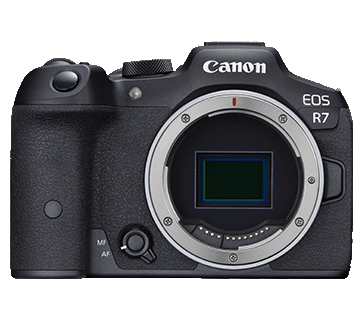

The Canon EOS R7 and Fujifilm X100VI are two exceptional cameras that cater to a variety of photography needs, making them popular contenders among both budding enthusiasts and seasoned professionals. The R7 is a versatile mirrorless camera designed for a wide range of shooting scenarios, including wildlife and sports photography, thanks to its high burst rate and extensive autofocus points. On the other hand, the X100VI is a compact camera that appeals to street photographers and those looking for a high-quality fixed-lens solution, with an emphasis on portability and imaging quality. The key differentiators between these two models lie in their feature sets, usability, and intended applications, which makes choosing between them critical for potential buyers based on their specific needs.
Both cameras sport an APS-C sensor, but the specifications differ significantly in terms of megapixels and design. The R7 boasts an impressive 33MP sensor, while the X100VI features a 40MP sensor, providing slightly more detail, especially for larger prints or cropping. In addition to image resolution, the users must consider factors such as autofocus performance, video capabilities, and overall build quality, as these play vital roles in photography experience and outcomes. Ultimately, understanding how each camera fits into the user's workflow will be crucial for making an informed decision.
Specifications Comparison
Detailed Comparison
Image Quality
Image quality is often the deciding factor for photographers when choosing a camera, and both the Canon EOS R7 and Fujifilm X100VI deliver excellent results. The R7, with its 33MP APS-C sensor, captures detailed images and handles noise well up to its maximum ISO rating of 32,000. Additionally, the R7's RAW capabilities yield a significant amount of information for post-processing, making it suitable for versatile photography applications.
On the other hand, the Fujifilm X100VI, with its 40MP sensor, excels in detail resolution and offers an impressive ISO range that expands to a low 64 and up to 51,200, making it highly adaptable to various lighting conditions. Fujifilm's renowned color science also enhances gallery-ready images, particularly in JPEG formats, providing beautiful, true-to-life colors straight out of the camera.
While both cameras capture stunning images, the X100VI generally edges out in terms of detail resolution and color reproduction due to its higher megapixel count and extensive ISO capabilities. However, both models will satisfy most photographers, and users should weigh their specific needs and preferences.
Autofocus System
The autofocus systems of the Canon EOS R7 and Fujifilm X100VI play crucial roles in capturing sharp images, especially in dynamic situations. The R7 features an advanced autofocus system with 651 focus points, providing wide coverage and enhanced tracking capabilities. With a maximum burst rate of 15 frames per second, it is well-suited for action photography, such as sports or wildlife.
Conversely, the X100VI offers a respectable autofocus system with 425 points, but it falls short of the R7 in terms of performance under fast-paced conditions. While the X100VI can achieve reliable focus in various scenarios, it is optimized more for street and portrait photography rather than rapid movement.
Considering the extensive autofocus points and superior tracking performance, the Canon EOS R7 clearly demonstrates an advantage in autofocus capabilities, making it ideal for photographers who prioritize fast action and precise focusing in their work.
Video Capabilities
In terms of video capabilities, the Canon EOS R7 outshines the Fujifilm X100VI. The R7 supports 4K video recording at 30 frames per second, providing ample options for videographers looking to capture high-resolution content. Additionally, the camera's 6 stops of in-body stabilization enhance video quality by minimizing shake, resulting in smoother footage.
The X100VI, while capable of recording in video as well, is limited compared to the R7, not specialized for 4K video in the same way. The X100VI's video capabilities might appeal to users who prioritize simplicity and casual shooting, but professional videographers or those looking for cinematic quality will find the R7 more compelling.
Overall, Canon's focus on video features and stabilization in the R7 highlights its superiority in this section, making it the better choice for those who plan to shoot video content regularly.
Build & Ergonomics
Build quality and ergonomics are crucial for a camera's usability, especially during extended shooting sessions. The Canon EOS R7 is constructed with weather sealing, adding durability in inclement conditions, making it a great choice for outdoor photography. Its larger dimensions and weight (612g) provide a sturdy feel that some users may prefer for handling larger lenses.
In contrast, the Fujifilm X100VI is intentionally designed to be compact and lightweight (521g), making it an excellent option for street photographers and travelers who prioritize portability. Although the X100VI does have an electronic viewfinder and an optical viewfinder, it lacks weather sealing, making it less suitable for challenging environments.
The choice between the two will largely depend on the intended use case; the R7 is recommended for robust, versatile use, while the X100VI appeals to those who value compactness without sacrificing image quality.
Battery & Storage
Battery life and storage capacity can significantly impact a photographer's workflow. The Canon EOS R7 has an impressive battery life, capturing approximately 660 shots on a single charge, making it well-suited for longer shooting sessions without the immediate need for a recharge.
The Fujifilm X100VI, in comparison, offers a shorter battery life of around 450 shots, which may necessitate carrying additional batteries for extended use. Furthermore, the R7 offers dual card slots, allowing for greater flexibility in storage management and backup options, a feature that benefits professional photographers who often shoot in RAW and require significant storage.
The R7 takes the lead in this section due to its superior battery performance and dual card slots, offering more reliability for photographers during prolonged shooting sessions and ensuring no critical moments are missed.
Value for Money
Price is an essential consideration when evaluating the Canon EOS R7 and Fujifilm X100VI. The R7 is priced at $1499, providing a balanced editing package for those seeking a dual-purpose camera with robust features for both photography and videography. The value is apparent with the extensive autofocus points, high burst rate, and in-body stabilization, making it a worthwhile investment for versatile users.
The X100VI, on the other hand, retails at a higher price of $1599. While it offers premium build quality and high-resolution images, the lack of interchangeable lenses and fewer features compared to the R7 may leave some buyers feeling they're paying a premium for compactness and usability in a limited scope of photography.
Considering the feature set and overall capabilities, the Canon EOS R7 provides better value for the price point, positioning itself as the more practical choice for a broader range of photographic needs.
Our Verdict
While both cameras offer outstanding features and cater to different niches within the photography community, the Canon EOS R7 emerges as the overall winner based on its extensive autofocus capabilities, superior video performance, and greater value for money. It is especially advantageous for photographers who need a versatile system that can adapt to various shooting environments. Conversely, the Fujifilm X100VI is an excellent option for those who prioritize a compact design and exceptional image quality, making it ideal for street and casual photography. Ultimately, the choice between these two lies heavily in the specific needs and preferred style of the user.
Canon EOS R7
Fujifilm X100VI
Also Compare
Frequently Asked Questions
Which camera is better for low-light photography?
The Fujifilm X100VI has a slightly broader ISO range and may perform better in low-light conditions due to its higher megapixel count, making it preferable for those focusing on low-light scenarios.
Can I use different lenses with the Fujifilm X100VI?
No, the Fujifilm X100VI has a fixed lens, but the Canon EOS R7 offers an interchangeable lens system, providing more flexibility for various photography styles.
What is the better camera for video production?
The Canon EOS R7 is the better choice for video production due to its 4K recording capabilities and in-body stabilization, making it more suitable for dynamic and high-quality video work.
How do these cameras perform for travel photography?
The Fujifilm X100VI is better for travel due to its compact size and lightweight design, making it easy to carry around. The Canon EOS R7 may be bulkier but offers greater versatility for different shooting conditions.
Which camera has better autofocus for action shots?
The Canon EOS R7 excels in autofocus performance with 651 focus points, making it the superior choice for capturing fast-moving subjects, unlike the X100VI, which has fewer autofocus points.