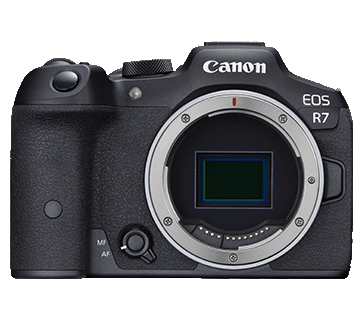
The Canon EOS R7 and Fujifilm X-H2S are two formidable contenders in the mirrorless camera market that cater to both enthusiasts and professionals alike. Both cameras utilize APS-C sensors, making them attractive choices for photographers and videographers seeking a lightweight and compact system without sacrificing performance. While the R7 is favored for its higher megapixel count and extensive autofocus points, the X-H2S stands out with superior video capabilities and a slightly better stabilization system. This comparison aims to examine the strengths and weaknesses of each model in various critical aspects to help potential buyers make an informed choice.
Specifications Comparison
Detailed Comparison
Image Quality
The Canon EOS R7 features a 33-megapixel APS-C sensor, offering an advantage in resolution that helps produce detailed images and allows for cropping without losing essential detail. With an ISO range of 100-32000, it excels in low-light environments, capturing clean images at higher sensitivities. On the other hand, the Fujifilm X-H2S, with its 26-megapixel APS-C sensor, might not offer the same level of detail, but its ISO capabilities extend from Auto, 160-12800, and can even reach as low as 80 and as high as 51200, allowing for remarkable low-light performance and adaptability in various shooting conditions. While the difference in megapixels is notable, the X-H2S's image processing is known for its pleasing color output and Fujifilm's unique film simulation modes, which many photographers find appealing.
Due to the higher resolution, the Canon EOS R7 tends to render more detail in a variety of scenarios, particularly for landscape and commercial photography where large prints or heavy cropping may be required. However, the Fujifilm X-H2S also holds its ground well, and its color science and dynamic range give it an edge in capturing vibrant and visually striking images straight out of the camera. Both cameras also produce excellent images in similar lighting conditions, further complicating the decision.
In direct comparison, while the Canon has a slight edge in raw megapixel count, the Fujifilm's prowess in color fidelity and low-light performance can make it a preferred option for certain photographers. Therefore, while both systems offer outstanding image quality, the choice here may depend more on personal preference than outright technical specifications.
Autofocus System
The Canon EOS R7 boasts an impressive autofocus system with 651 AF points, ensuring that almost any subject can be tracked with precision. This extensive AF coverage provides enhanced confidence for fast-moving subjects in sports or wildlife photography. Canon's Dual Pixel AF technology is well-regarded for its fast and reliable performance, aiding in both still photography and video.
In contrast, the Fujifilm X-H2S uses a simpler 425-point AF system, which does not match the Canon in sheer quantity. However, Fujifilm's phase detection technology and autofocus algorithms are highly effective, particularly in terms of face and eye detection, which are elemental in portrait work. The X-H2S's autofocus system performs exceptionally well in video consistently, with remarkable tracking capabilities even during rapid scene changes or subject movements. For many users, the autofocus reliability in challenging scenes of the Fujifilm might offset the numerical advantage of the Canon.
Thus, while both systems are robust, the Canon EOS R7's more extensive AF point coverage generally gives it an edge in versatility. However, for users focused on portrait work or video content, the Fujifilm X-H2S might prove more reliable in dynamic situations due to its advanced tracking capabilities. Hence, evaluating the specific needs of the user is essential.
Video Capabilities
When it comes to video capabilities, the Fujifilm X-H2S takes a commanding lead over the Canon EOS R7. The X-H2S can record 4K video at up to 60 frames per second, providing an excellent choice for videographers who require high frame rates for smooth slow-motion footage. Additionally, it supports a wide array of recording formats, including 10-bit 4:2:2 internal recording, which allows for greater flexibility during post-processing.
In comparison, the Canon EOS R7 offers 4K recording up to 30 frames per second and lacks the advanced recording options and framerates that the X-H2S provides. While the R7 delivers solid video quality and can cater to most casual video shooters, it ostensibly falls short for demanding projects that require higher frame rate capabilities and advanced color grading options. Both cameras feature essential video tools like in-body stabilization, but the Fujifilm's 7-stop stabilization offers more effective compensation, particularly beneficial for handheld shooting.
The competitive edge in video capabilities ultimately lands with the Fujifilm X-H2S, making it the more suitable option for filmmakers and serious content creators who prioritize advanced features and flexibility in their video work. The Canon EOS R7 may suffice for casual video use but does not compete in high-demand situations.
Build & Ergonomics
Both the Canon EOS R7 and Fujifilm X-H2S are built with durability and ergonomics in mind. They both boast weather sealing, which is essential for outdoor photographers facing various elements. The R7 weighs 612 grams, making it slightly lighter than the X-H2S, which weighs in at 660 grams. This may make a difference during extended shooting periods, though both are relatively compact for APS-C systems.
In terms of dimensions, the Canon EOS R7 measures 132 x 90 x 92 mm, while the Fujifilm X-H2S is slightly bulkier at 136 x 93 x 95 mm. The differences are minimal in everyday use, and both cameras offer comfortable grips. The button layout and menu systems vary between the two; Canon users might appreciate the intuitive touchscreen interface, while Fujifilm's retro aesthetic along with analog dials offers a charming and tactile shooting experience that many photographers enjoy.
While both models have strong ergonomic features, the choice comes down to personal preference in terms of handling. Users familiar with Canon's ecosystem may favor the R7 for its lightweight construction and user-friendly interface. In contrast, Fujifilm enthusiasts may prefer the X-H2S for its robust feel and aesthetic appeal. Therefore, deciding which is more comfortable will depend on individual user preference, but both provide solid build quality and ergonomics suited for professional use.
Battery & Storage
In terms of battery life, the Canon EOS R7 slightly outperforms the Fujifilm X-H2S with a rated 660 shots per charge compared to Fujifilm's 580 shots. This could be a critical factor for photographers needing to shoot for extended periods without access to charging outlets. Both cameras utilize similar LP-E6 and NP-W235 battery types respectively, which represent industry standards but differ in actual performance.
Regarding storage, both cameras offer dual-card slots, enhancing shot reliability by allowing users to back up images as they shoot or separate file types, a feature many professionals appreciate. However, the Canon EOS R7 utilizes UHS-II compliant SD slots, which can provide faster data transfer speeds during continuous shooting, especially in high-resolution bursts. The Fujifilm X-H2S, while also using fast UHS-II slots, may experience slower write times primarily depending on the chosen settings and film simulations.
Consequently, while the better battery life of the EOS R7 provides a slight edge for users shooting long events, both systems offer ample storage flexibility. Each system has well-implemented features, making them functional for serious photography endeavors, so this aspect mainly balances out between them.
Value for Money
The Canon EOS R7 presents an appealing value proposition at a price of $1499, particularly when considering its higher resolution and robust autofocus capabilities. It provides a solid all-around performance that can suit various types of photographers and is priced significantly lower than the Fujifilm X-H2S, which comes with a price tag of $2499. The lower price point of the Canon makes it a more accessible option for enthusiasts and those entering the mirrorless realm.
On the other hand, the Fujifilm X-H2S, while more expensive, offers extensive features that justify its price for serious videographers, including advanced video recording capabilities, superior burst shooting speeds, and exceptional low-light performance. Its image quality and performance are aimed more at professionals who may justify the investment for their production needs.
In summary, the Canon EOS R7 is likely the better value for most casual users who do not need high-end video specs, while the Fujifilm X-H2S offers premium features that can be a worthwhile investment for dedicated content creators and professionals requiring more advanced capabilities. Thus, the winner in this category directly correlates to the user's specific needs and budget.
Our Verdict
Overall, while the Canon EOS R7 performs admirably across the board with a focus on versatility, it is the Fujifilm X-H2S that excels in video performance and dynamic autofocus, making it the preferred choice for serious videographers and content creators. The higher initial investment reflects the value offered in its range of features, making it an ideal fit for professionals who require enhanced video capabilities and tracking features. However, for photographers focused on stills or entry-level enthusiasts who appreciate a solid balance of features, the Canon EOS R7 provides an appealing option at a more approachable price point. In conclusion, the Fujifilm X-H2S comes out on top if video capabilities are prioritized, whereas the EOS R7 remains a solid choice for a wider audience.
Canon EOS R7
Fujifilm X-H2S
Also Compare
Frequently Asked Questions
Which camera is better for beginner photographers?
The Canon EOS R7 might be a better choice for beginner photographers due to its intuitive interface, higher megapixels, and lower price point, making it an accessible option for those just starting in photography.
Is the Fujifilm X-H2S worth the extra money?
If you prioritize advanced video features, exceptional autofocus tracking, and overall versatility, the Fujifilm X-H2S justifies its higher price for serious content creators and professionals.
How do the autofocus systems compare?
The Canon EOS R7 has more autofocus points (651) than the Fujifilm X-H2S (425), which can provide greater versatility. However, the Fujifilm's autofocus is known for its reliability in fast-moving scenarios, particularly in video.
Which camera performs better in low light?
While both cameras perform well in low-light situations, the Fujifilm X-H2S has a greater ISO range (80-51200), enhancing its adaptability in challenging lighting conditions.
What about lens options for each camera?
Both Canon RF and Fujifilm X lens systems offer a wide range of high-quality lenses. However, Canon's RF might have a broader selection with some fast prime options, while Fujifilm lenses are known for their exemplary optical quality.