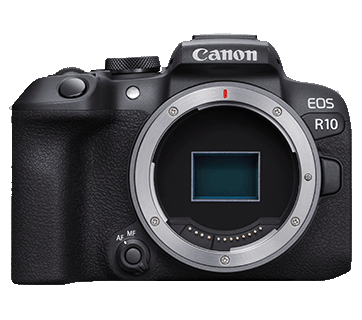
The Canon EOS R10 and Fujifilm X-H2 are two popular choices for photographers and videographers, particularly in the APS-C category. Both models were released in 2022 and appeal to a diverse audience ranging from enthusiasts to professionals looking for portable yet powerful options. When comparing these two cameras, key differentiators include sensor resolution, autofocus performance, video capabilities, and overall build quality, which can heavily influence a buyer's decision based on their specific needs and preferences.
Specifications Comparison
Detailed Comparison
Image Quality
In terms of image resolution, the Fujifilm X-H2 takes the lead with its impressive 40 megapixels compared to the Canon EOS R10's 24 megapixels. This significant difference means that the X-H2 can capture much more detail, making it ideal for landscape photography and large prints. Furthermore, while both cameras have similar APS-C sensor sizes, the X-H2's broader ISO range - bettering both its native and extended ranges - allows for improved low-light performance and noise control during high ISO shooting.
On the other hand, the Canon EOS R10, while having lower resolution, utilizes Canon's robust color science resulting in vibrant and pleasing colors that are particularly appealing for portrait photography. Users often favor Canon cameras for their skin tones and overall color reproduction, which can be a decisive factor for many photographers working with human subjects.
Ultimately, the choice for image quality will depend on the user's intended application; if detail and resolution are paramount, the X-H2 stands out, whereas if color fidelity and profile are more important, the R10 is a strong contender.
Autofocus System
The Canon EOS R10 boasts a formidable autofocus system with 651 points, offering high precision and a quick response, particularly useful in dynamic shooting scenarios. This extensive range of autofocus points can be advantageous for tracking moving subjects, such as in sports or wildlife photography. The eye detection feature further enhances its capabilities, ensuring sharp focus on subjects regardless of movement.
Conversely, the Fujifilm X-H2 has fewer autofocus points at 425, but it does not compromise in performance. Fujifilm has a reputation for effective phase-detect autofocus, which works exceptionally well in various lighting conditions and while tracking subjects. Despite having fewer points, many users have reported that the X-H2 offers reliable and consistent autofocus performance in real-world scenarios.
While both systems perform well, the R10 edges slightly ahead due to its larger number of autofocus points, making it better suited for busy environments where precision tracking is essential. Therefore, the winner for autofocus is clear.
Video Capabilities
Both the Canon EOS R10 and Fujifilm X-H2 offer solid video features, including 4K recording. However, the X-H2 significantly enhances versatility with its in-body image stabilization (IBIS) that provides 7 stops of shake correction, making it highly attractive for handheld video shooting. This stabilization can be a game-changer for videographers looking to achieve smooth footage without the need for additional gear.
The Canon EOS R10 is limited to 4K 30p without any advanced stabilization features, which can lead to more noticeable shake in handheld videos. However, it does provide impressive frame rates for photography efficiency and sudden shooting bursts, which can be beneficial in certain scenarios.
The overall video capabilities are more robust with Fujifilm in terms of stabilization and higher resolution potential, thus making it a better choice for videographers and content creators. Canon's offering may suffice for casual video use but lacks the same competitive edge, leading to a clear advantage for the Fujifilm X-H2.
Build & Ergonomics
The Fujifilm X-H2 presents a more professional design with weather sealing, allowing it to endure harsher shooting environments, making it more appropriate for outdoor photography in varied conditions. This robust build enhances the camera's durability and usability, particularly for fieldwork.
In contrast, the Canon EOS R10 is lighter and more compact, making it very user-friendly for those new to photography or for video users who prioritize portability. While it might not have the weather sealing, it's ergonomically designed to be comfortable in hand for extended shooting sessions. The controls are straightforward and accessible, which many users find beneficial.
Both cameras have electronic viewfinders, giving them an edge over optical systems, but the handling and feel of the X-H2 tends to attract more professional users due to its superior durability and control layout. Thus, the Fujifilm X-H2 slightly edges out in this category for users seeking a professional-grade build.
Battery & Storage
In terms of battery life, the Canon EOS R10 can capture approximately 450 shots on a single charge, while the Fujifilm X-H2 offers a more robust 680 shots. This significant difference can be critical for users who need to shoot for extended periods without frequent battery changes, especially in event coverage or outdoor shooting.
Both cameras use different storage media formats, with the R10 utilizing SD UHS-II cards, which are readily available, while the X-H2 also supports CFexpress Type B, allowing for faster read/write speeds beneficial for high-resolution video and burst shooting. This gives the X-H2 an edge when working with demanding file formats or extensive high-resolution video footage, minimizing the risk of buffering.
When considering battery performance and storage capabilities, the X-H2 commands the lead, especially in demanding shooting environments that require high-capacity storage and longer intervals between recharges.
Value for Money
With a price point of $979, the Canon EOS R10 is notably more affordable, making it a viable option for amateur photographers or those who may be looking to adopt mirrorless technology without a significant investment. It offers a robust feature set that can meet the needs of most novice to intermediate users who prioritize ease of use and effective performance for day-to-day shooting situations.
The Fujifilm X-H2, priced at $1999, positions itself more as a professional tool, justifying its higher price somewhat through its superior image quality, rugged build, and advanced video capabilities. While it is an excellent investment for professionals, the cost may deter casual users or photographers just starting.
Ultimately, while the EOS R10 provides great value for entry-level users and enthusiasts wanting high-quality results without the hefty investment, the X-H2 delivers a superior feature set that can cater to professionals who require advanced specifications, making its price more justifiable in that context.
Our Verdict
Overall, while the Canon EOS R10 offers exceptional value for entry-level users with its affordability and ease of use, the Fujifilm X-H2 stands out as the superior option for professionals who demand higher resolution, better video capabilities, and robust durability. The majority of our comparison sections favored the X-H2, which excels in image quality, stabilization, and environmental resilience, making it suitable for a wider range of demanding photographic situations. For those who prioritize functionality and performance in a professional setting, the Fujifilm X-H2 is the clear winner, while the R10 still represents strong value for enthusiasts and casual users.