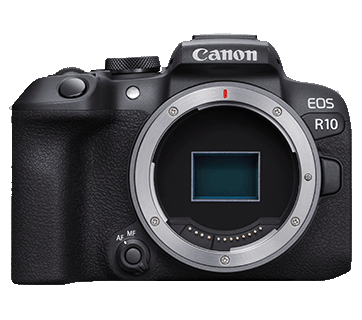
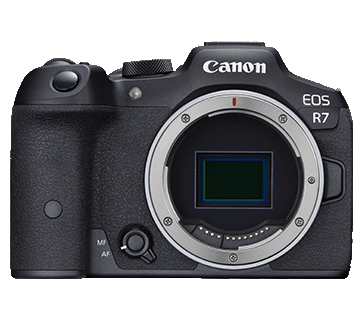
The Canon EOS R10 and EOS R7 are two demanding contenders in Canon's mirrorless APS-C lineup, targeting amateur enthusiasts, aspiring professionals, and vloggers alike. Both cameras feature the RF mount, providing a path for users to leverage Canon's expanding lens ecosystem. Those choosing between the two are typically evaluating their specific needs for photography and videography, especially where resolution, build quality, and stabilization may significantly influence the decision.
Specifications Comparison
Detailed Comparison
Image Quality
When considering image quality, the Canon EOS R7 has the upper hand with its 33-megapixel sensor compared to the R10's 24 megapixels. The increased resolution on the R7 allows for more detailed images, especially in landscape and portrait photography, making it more suitable for large print work or cropping without significant loss of quality. However, both cameras share the same ISO range of 100-32000, which ensures good performance in low-light situations. Both models begin to show noise at higher ISO levels; however, real-world performance tends to favor the R7 due to the extra megapixels that provide better detail resolution in challenging lighting conditions.
Autofocus System
Both the Canon EOS R10 and R7 are equipped with robust autofocus systems featuring 651 AF points, lending themselves well to fast-paced shooting scenarios. With AF inherited from Canon's advanced Dual Pixel CMOS AF technology, users can expect quick and accurate focus locking. The differences become apparent when utilizing advanced features; the R7 also supports animal detection and improved tracking capabilities, making it a stronger choice for wildlife or sports photography. However, for most casual users and those not needing specialized tracking, the autofocus performance on the R10 is commendable and sufficient for various photographic situations.
Video Capabilities
Both cameras offer 4K video recording at 30 frames per second, attracting videographers looking to shoot high-resolution content. While the R10 provides the core necessities for casual video use, the R7 includes built-in 6-stop image stabilization, which proves essential for handheld shooting scenarios, reducing shake and providing smoother footage. In terms of video quality and usability, the R7 may be found more appealing for content creators seeking polished results, especially for dynamic content like vlogging or action shots. Users looking at video primarily will likely favor the stabilization feature, making the R7 the better choice in this category.
Build & Ergonomics
Weighing 612 grams, the Canon EOS R7 is heavier than the R10, which weighs in at 426 grams, providing a more substantial feel that some photographers might prefer for stability. The R7 also boasts weather sealing, allowing it to withstand dust and moisture, making it a better companion for outdoor photography under various conditions. By contrast, the lighter weight and compact design of the R10 may appeal to travel photographers looking for a portable solution. Therefore, users must weigh their need for robust weather resistance against portability when deciding on the right camera for their lifestyle.
Battery & Storage
The Canon EOS R10 has a battery life rated at approximately 450 shots, which is decent for casual photography. However, the R7 offers an extended battery life of around 660 shots, which is advantageous for long shooting sessions or trips where charging may not be feasible. Both cameras utilize the same battery type, but the R7 allows for more extended use without the need for frequent changes. On the storage side, both models support similar SD card formats, so there is no advantage here, but knowing the battery life on the R7 may influence buyers needing that durability.
Value for Money
In terms of pricing, the EOS R10 is positioned at $979, making it distinctly more affordable than the EOS R7 at $1499. The R10 offers significant features for beginners or enthusiasts looking for a solid APS-C camera without breaking the bank. However, considering its features and build quality, the R7 provides a strong value proposition for those who require higher resolution, improved autofocus, and stabilization. Those willing to invest more in a camera that can adapt as they grow in their photographic journey may find the R7's additional features worth the higher price. Overall, the choice comes down to budget versus the desired capabilities.
Our Verdict
Overall, the Canon EOS R7 emerges as the superior camera largely due to its higher resolution, better autofocus capabilities, and built-in stabilization. It is well-suited for serious photographers and videographers who need those advanced features, especially in fast-paced or challenging environments. Meanwhile, the Canon EOS R10 makes a compelling case for those who prioritize budget and lightweight convenience, providing good value for casual photographers looking to enter the mirrorless system without overcommitting financially. In essence, each model serves its targeted audience well-the R10 for enthusiasts and the R7 for those who aspire to a more professional level of imaging.