Canon's RF lens mount has quickly become a go-to choice for both enthusiasts and professionals looking to maximize the performance of Canon's full-frame and APS-C mirrorless cameras. The RF ecosystem includes a wide variety of lenses—from versatile zooms to fast primes—designed to leverage the technological advances of mirrorless bodies. When considering the best RF lenses, important factors include image quality, maximum aperture, stabilization, autofocus performance, build quality, and compatibility with your camera format (full-frame vs. APS-C). Our ranking focuses on three recent Canon RF mount lenses suited for general-purpose photography, wide-angle work, and video. We evaluated these lenses based on optical performance, versatility, build quality, and value for money. Each lens has its unique strengths, and the ideal choice may depend on your shooting style, budget, and whether you use a full-frame or APS-C camera. The products below have been ranked based on their real-world performance, versatility across genres, and their balance of features relative to price.
Why Trust This List
Our rankings are based on aggregated opinions from real photographers across Reddit communities, combined with detailed specification analysis. We do not accept payment for placement or use affiliate links that influence rankings.
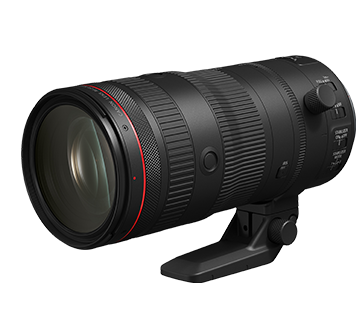
Canon RF 24-105mm f/2.8L IS USM Z
The Canon RF 24-105mm f/2.8L IS USM Z tops our list as the most versatile and high-performing RF lens currently available. With a constant f/2.8 aperture and a highly practical 24-105mm focal range, this lens caters to professionals seeking a single workhorse lens for everything from wide landscapes to tight portraits and even event coverage. The addition of image stabilization and Canon's robust L-series construction makes it a fantastic option for photographers and videographers who need reliability and sharpness in diverse shooting environments. Its advanced optical design delivers excellent sharpness, fast and quiet autofocus, and tremendous low-light capability compared to f/4 competitors. The build quality, weather sealing, and smooth zoom operation further solidify its top ranking. This lens is perfect for wedding, portrait, travel, and documentary shooters who want pro-level performance without swapping lenses. While it's heavier and pricier than some alternatives, its performance justifies the investment for many Canon RF users.
Pros
- Constant f/2.8 aperture throughout the zoom range
- Excellent sharpness and contrast across the frame
- Effective image stabilization
- Fast, accurate autofocus
- Robust weather-sealed L-series build
Cons
- Significant size and weight
- High price compared to f/4 zooms

Canon RF 28-70mm f/2.8 IS STM
The Canon RF 28-70mm f/2.8 IS STM is a capable all-rounder, offering a bright, constant f/2.8 aperture in a smaller and more affordable package than most f/2.8 zooms. Its useful focal range covers everyday shooting scenarios including street, portrait, and moderate wide-angle photography. The inclusion of image stabilization and STM focusing makes it a solid choice for both stills and video applications, especially on full-frame EOS R series cameras. However, the 28-70mm zoom range is slightly less versatile than the 24-105mm, making this lens less suitable for landscape or architecture work that benefits from a 24mm wide end. Its STM motor, while smooth, is not as fast or silent as Canon's top-tier USM designs. Overall, this lens is a fantastic option for enthusiast and semi-pro shooters who prioritize a bright aperture and attractive price without needing the extra range or L-series build.
Pros
- Constant f/2.8 aperture
- Compact and lightweight for a fast zoom
- Built-in image stabilization
- Smooth STM autofocus ideal for video
Cons
- Starts at 28mm, less wide than 24mm alternatives
- STM autofocus not as fast or quiet as USM
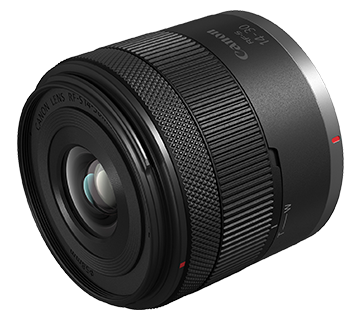
Canon RF-S 14-30mm f/4-6.3 IS STM PZ
Canon's RF-S 14-30mm f/4-6.3 IS STM PZ is a unique lens primarily aimed at APS-C EOS R shooters who want an ultra-wide to standard zoom for vlogging, travel, or general photography. Its standout features include a remarkably compact design, power zoom mechanism for smooth focal transitions during video capture, and effective stabilization. Especially for content creators and vloggers, its lightweight build and wide coverage make it an excellent walkaround lens. Nonetheless, the variable f/4-6.3 aperture limits its low-light performance and depth-of-field control. While its wide end is superb for group shots and interiors, it's less capable for subject isolation or shooting in dim conditions. This RF-S lens is best for creators who prioritize portability, video capabilities, and affordability on Canon’s APS-C mirrorless cameras.
Pros
- Ultra-wide to standard zoom range for APS-C
- Very compact and lightweight
- Power zoom is great for video work
- Effective image stabilization
Cons
- Variable and slow maximum aperture (f/4-6.3)
- Limited low-light capability
You Might Also Like
Frequently Asked Questions
Should I prioritize aperture or zoom range when choosing a Canon RF lens?
It depends on your shooting needs. A wider constant aperture (like f/2.8) is ideal for low-light scenarios, portraits with a blurry background, and freezing motion. A broader zoom range (like 24-105mm) offers greater versatility for capturing a variety of subjects without changing lenses. Choose aperture if you need shallow depth of field or low-light performance, and zoom range if you value flexibility and convenience.
Are RF-S lenses compatible with full-frame Canon mirrorless cameras?
RF-S lenses are designed for Canon's APS-C EOS R cameras and can physically mount on full-frame models. However, when used on a full-frame body, the camera automatically enters a crop mode, which reduces the image resolution and field of view. For full-frame shooters, native RF lenses are typically recommended.
Is image stabilization necessary if my Canon camera has in-body stabilization?
Lens-based image stabilization (IS) can work in conjunction with in-body stabilization (IBIS) for even better results, especially at longer focal lengths or when shooting video. If your camera lacks IBIS, choosing a lens with built-in stabilization is particularly important for handheld shooting.
What are the benefits of L-series lenses compared to standard RF glass?
Canon's L-series lenses offer superior optics, robust weather sealing, faster and quieter autofocus motors, and durable pro-grade build quality. They’re designed for demanding photographers and are best if you need exceptional image quality and reliability in challenging conditions.
Are STM or USM autofocus motors better for video shooting?
STM (Stepping Motor) designs are generally quieter and smoother, making them advantageous for video autofocus. USM (Ultrasonic Motor) options tend to be faster and more responsive for stills, but newer USM lenses manage to balance speed and quiet operation effectively in video as well. For vlogging or video, STM is often a solid choice; for action or pro work, USM offers superior speed.